Call us

+91-9240214610 (Bandra)
+91-9240214611 (Kandivali)
  • JAS-ANZ Accredited Certification
  • ICS Certified
  • NABH Certified Eye Hospital in Mumbai
Ojas Eye Hospital in Bandra, Kandivali, Mumbai

Tag: best LASIK specialist in Mumbai

Know About The Benefits Of Laser Surgery

Cataract surgery in mumbai

Lasik Eye surgery is used to correct defective vision. The surgery is done through Laser and the organ of the eye involved in the surgery is the cornea. If you want to undergo Lasik surgery in Mumbai, you should visit the best Lasik specialist in Mumbai.

What Is The Mechanism Behind Laser Surgery In Improving Vision?

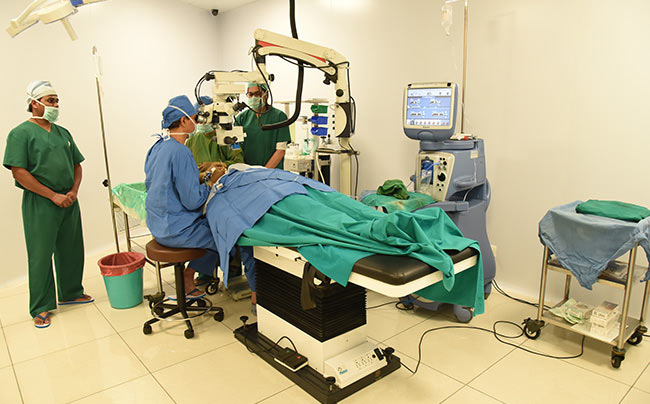
LASER is abbreviated as Light Amplification by Stimulated Emission of Radiation. LASER eye surgery is the delicate and complex treatment in which laser is given in the third layer of the cornea by the eye surgeon to achieve an effective visual outcome.

The mechanism involves, firstly putting the anaesthetic eye drops on the eye by the doctor. Then eyelids are held open with the help of a speculum. The cornea is then centered and by using the laser, a corneal flap is made and laser is given to the exposed underlying corneal tissue. Once done the flap is replaced and allowed to heal naturally.

What Are The Benefits Of Laser Surgery?

Laser eye surgery mainly involves the reshaping of the cornea (front part of the eye), in such a way that light focuses on the retina to produce clear and accurate vision. The benefits of laser surgery are:

  • Improves the refractive power of the eye
  • It helps to treat near-sightedness, farsightedness, and astigmatism.
  • Quick procedure and generally painless
  • Results are precise and accurate as the process is computer-guided.
  • Safe and effective as carried out by a qualified and experienced surgeon.
  • Long-lasting results.
  • Dependence on the glasses and lens decreases.
  • Improves driving at night.

Are There Any Risk For Laser Sye Surgery?

Different people respond to treatment differently.  Some risks associated with laser eye surgery are:

  • Mild irritation and light sensitivity during the first few days of the surgery.
  • Glare and double vision sometimes at night which reduces with time.
  • Temporary  Dry-eye.
  • Difficulty in seeing at night which usually lasts for a few days.

What Is The Average Cost Of Laser Eye Surgery In India?

About 1,00,000 people undergo laser eye surgery every year in India. It is carried out to treat the refractive power of spectacles like near-sightedness, farsightedness, and astigmatism. The cost of the procedure varies from center to center and many factors influence the price of the procedure e.g. Type of procedure, the technology used, hospital size, location, post-operative patient care, experience and success rate of the surgeon, etc. The average cost is about 20,000 INR TO 45,000 INR per eye. Some centers may offer a low price for the procedure which may be due to untrained surgeons, inferior technology, less follow-up care which increases the chances of after complications.

What Are The Criteria For Ideal Candidate For Laser Eye Surgery?

The criteria for the ideal candidate for laser eye surgery are:

  • 18 years of age or above
  • No history of corneal eye disease or corneal ulcers.
  • Not suffering from significant medical problems such as diabetes, glaucoma.
  • Not suffering from any diseases that reduce the effectiveness of surgery or delay the patient healing process.
  • Patient having  Myopia, hyperopia and astigmatism.

How To Choose Best Surgeon For Laser Eye Surgery?

The three steps to choose the best surgeon for laser eye surgery are: –

ASK: Ask your friend, family, relatives and other healthcare providers for their recommendations and experience. Get the additional references from the current and past patients about a particular surgeon and their work ethics.

RESEARCH: Search for the doctor who has experience and has no history of malpractice actions. Study well from the internet and medical organization about the qualification, experiences, and achievements of the surgeon.

CONSULT THE DOCTOR: Interview the doctor, ask for a consult appointment to meet and have a talk with them to get all your doubts cleared regarding the benefits and risks associated with the surgery.

What Are The Measures Followed For Post-Operative Care?

During the postoperative period, to prevent any injury or infection, the following special care should be taken: –

  • Avoid rubbing of eyes.
  • Avoid getting tap water in the eyes and also no swimming for at least a week after surgery.
  • Eye makeup should be avoided for a week.
  • No exercise for at least 2 days.
  • Sunglasses are recommended for initial four weeks on bright sunny days.
  • Don’t wash your hair or take shower until a few days after surgery.

Can Astigmatism Be Cured By Laser Eye Surgery?

Yes Astigmatism can be cured with Laser Vision Correction Surgery. Astigmatism is one of the common eye defects caused due to imperfections in the curvature of the cornea (corneal astigmatism) or the shape of the eye lens (lenticular astigmatism) and can be treated by laser eye surgery technique.

What Are The Things To Be Considered Before Lasik Treatment?

Cataract surgery in mumbai

Introduction

Lasik surgery is done to improve vision. It alters the shape of cornea so that the light properly gets focused on retina resulting in clear vision. Like with any other surgical process, various precautions and questions comes in the mind of person planning to undergo Lasik surgery.

What Are The Things To Be Considered Before Lasik Treatment?

Following are some of the tips you should consider before having Laser surgery:

  • Know about your surgeon: Know about your surgeon’s experience and the number of successful surgeries done by him/her. Choose a certified doctor for your treatment.
  • Know about the risk of Lasik treatment: As this is a surgical process which involves a vital organ i.e. eye, you should ask your doctors about the risk involved in Lasik surgery.
  • Ask questions about surgery: To avoid any surprise factor and anxiety, you should ask every minute detail’s related to Lasik surgery.
  • Learn for recovery process: Know the time and the recovery process, for example, how much time to wait for doing a physical activity such as sports, and using makeup.
  • Ask for LASIK alternative: If you are not a good candidate for Lasik surgery ask your doctor about the alternative treatment.
  • Get information about the refractive error: If you have severe myopia, you may require a repeat procedure known as refinements. More myopic a patient is, more are the chances of requiring refinement surgery.
  • Follow pre-surgery instruction: Your doctor may ask you to stop wearing the contact lenses. Patients who wear soft contact lenses should stop wearing 2 weeks before surgery while patient wearing hard lenses should stop them 3 weeks before surgery.
  • Know you are a good candidate for this surgery: Not all candidates are good for this treatment. The comprehensive ocular evaluation will determine your candidature for Lasik surgery.

Is Lasik Safe In Long Term?

Lasik treatment is safe and effective in the long term. With this surgery, the structure of the cornea is altered and near-sightedness, farsightedness, and astigmatism are corrected. In this procedure, the surgeon uses the excimer laser for removing the tissues of cornea. Lasik surgery is a permanent treatment and generally does not have any time limitation.

Does Lasik Surgery Cause Pain?

Lasik treatment usually does not cause pain before and after treatment. In rare case, the post-operative Lasik surgery causes pain in your eyes. If you have significant pain after surgery, immediately contact your doctor. Before performing a Lasik surgery, the doctor will administer an eye drop to avoid any type of pain and discomfort during surgery. Some doctor will also prescribe medications to relax your body during a Lasik treatment. As there is no incision on the eyes, this surgery does not involve any stitches. However, your doctor will prescribe you various antibiotics to prevent post-operative infections. You may feel some pressure on the eye after this treatment.

What Is The Best Age For Having Lasik Surgery?

Lasik surgery shows a good result at any age. But some factors affect this surgery at different age such as:

  • Lasik surgery at 18 ages: Lasik surgery is done at age 18 and over 18. But for best result, you wait for a few more years because, until age 24, your eyesight changes continuously.
  • Lasik surgery at 25-40 ages: Lasik is generally performed at 25-40 age. At this age, the stability of prescription of contact lens and eyeglasses is good which is prerequisite for a good candidate for Lasik.
  • Lasik surgery at 40-55: If you are a non-smoker and have good health after reaching this age range or do not have any medical history, you may have Lasik surgery.
  • Lasik surgery after 56: After 56, there are high chances that the person may suffer from cataract. Lasik in cataract is not recommended unless the cataract is stable and not significantly affecting vision.

Did The Use Of Glasses Get Completely After Lasik Surgery?

Lasik treatment in a patient with vision problem significantly reduces the need for eyeglasses. The need for glasses after Lasik treatment depends on the age of the patient and other types of vision problems. In some cases, people wear eyeglasses, particularly during reading.

Can A Person Have Lasik Surgery Twice?

There are no limits, how much time you may undergo this procedure. People may require enhancement surgery or refinement surgery if the prior Lasik failed to achieve the desired vision. But secondary Lasik and Lasik enhancement are based on thickness and size of cornea. The ophthalmologist will evaluate the condition of your eyes and analyze the risk involved with Lasik surgery depending upon your age and other parameters. There is a risk involved with secondary Lasik surgery and many patients are not eligible for enhancement surgery.

LASIK AND LASEK: Process, Benefits, And Differences

Digital Eye Strain

Introduction

LASIK and LASEK are important surgical options for the treatment of refractive errors such as near-sightedness, far-sightedness, and astigmatism. Both surgeries have their advantages and disadvantages. The third important surgery used for a similar purpose is PRK. All the three procedures operate on the cornea and alter the shape of the cornea for improving the focus of light on the cornea. The doctor will comprehensively evaluate the health of the cornea and suggest the patient the best surgical option which can be performed with minimum side effects along with the desired outcome.

LASIK Treatment

LASIK surgery is one of the best and most common surgeries conducted for refractive errors. This surgery is used to treat near-sightedness, far-sightedness, and astigmatism. Full form of LASIK is laser-assisted in-situ keratomileusis. The best advantage of this surgery is the speed of improving vision. Most of the improvement is obtained just after the surgery while the remaining vision gets stabilized within a few days after surgery.

LASIK surgery is virtually painless surgery. The time required to perform the surgery is just 20-25 minutes. The patient can see clearly without any eyeglasses or contact lens just after the surgery.

All patients may not be the right candidate for LASIK surgery. Comprehensive analysis of the eye is done to determine whether LASIK surgery is the correct option to correct refractive error. If the person failed to fulfill the criteria required to undergo LASIK surgery, the doctor may discuss other options available such as LASEK, PRK or Phakic IOL surgery. If the patient suffers from refractive errors, he should search for the best LASIK treatment in Mumbai.

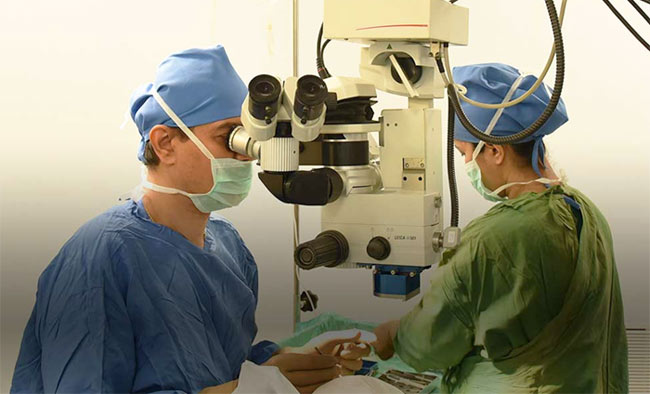
With a femtosecond laser or surgical tools such as microkeratome, the surgeon forms a flap on the corneal surface. The surgeon then folds the flap to get access to the stroma of the cornea. With the excimer laser, the surgeon ablates a small number of corneal tissues to reshape the cornea. As the surgery involve the eye, which is a vital organ, the patient should undergo surgery from the best LASIK specialist in Mumbai.

Reshaping of cornea helps in focusing the light right on the retina. This will help in clear vision which was not possible without eyeglasses or contact lenses before surgery.

Advantages Of LASIK Treatment

LASIK is one of the most preferred and old treatments for correcting refractive error. It is because of various advantages which are offered by LASIK surgery. Following are some of those advantages:

Pain-free: LASIK surgery is done through LASER and thus does not cause any pain. Mild irritation can be experienced in some patients.

Cost-effective: LASIK is a cost-effective surgery keeping in view the benefits it provides. The patient does not have to spend money on eyeglasses and contact lenses after LASIK surgery.

Life-long: The effects of the surgery are life-long and revision surgery is required only in few cases. However, the enhancement surgery can be done once the patient suffers from age-related long-sightedness.

No stitches required: As there is no incision done through instruments and the whole process is done under guided LASER, there is no need for stitches and bandages.

Rapid results: LASIK surgery provides rapid results. The patient can see immediately within a few hours after surgery.

LASEK Treatment

The LASEK treatment was first done in 1996 when the first LASEK surgery was done by Azar, however, it was Massimo Camellin who coined the term LASEK and helps popularize this surgical process.

LASEK(Laser-Assisted Subepithelial Keratectomy) surgery combines the advantages of LASIK (Laser in-situ keratomileusis) and PRK (Photorefractive keratectomy) while avoids their complications and disadvantages.

Like with other surgeries for correcting the refractive error through corneal reshaping, LASEK also uses excimer laser for corneal correction. During LASEK surgery, a partial incision is done on the edges of the cornea with the help of the trephine blade. Sterile ethanol solution is used to detach the epithelium from one side. Ablation with the excimer laser is then done. The corneal flap is repositioned to its original position.

For healing of the epithelium, a bandage contact lens is placed which remains for the time till cornea heals. Various pre-operative ocular evaluation tests are done to confirm the candidature of the patient to undergo LASEK surgery. These tests include Uncorrected visual acuity, tonometry, cycloplegic refraction, dilated fundus examination, slit-lamp examination, and ultrasound corneal pachymetry. Schirmer’s test is also done to evaluate the extent and severity of dry eyes, which is one of the factors to be considered while performing LASEK surgery.

Advantages Of LASEK Treatment

LASEK treatment is more advanced treatment in the field of refractive correction surgery. It offers various advantages to the patients. It imbibes the advantages of LASIK and PRK while minimizing the complications of LASIK and PRK. Following are some of the advantages of LASEK:

Thin corneal flap: The risk of complications associated with LASEK surgery is less as compared to LASIK an PRK as only a very thin epithelial layer is removed for performing surgery.

Minimum dry eyes: The chances of dry eyes are less in LASEK surgery as compared to in LASIK surgery. Patients undergoing LASEK surgery have to administer artificial tears less frequently.

No Flap to heal: As only the thin layer is removed in LASEK surgery and there is no removal of internal layers, people with LASEK surgery can resume sporting activities early as compared to LASIK surgery. The bandage contact lens is effective in healing the epithelial layer.

Proven results:Results of LASEK are comparable to LASIK surgery with fewer complications.

What Is The Difference Between LASIK And LASEK?

Various surgical options are available for correcting refractive errors. The refractive errors corrected most commonly are myopia, hyperopia, and astigmatism. Common surgical options include LASIK, LASEK, and PRK.

Following are some of the differences between LASIK and LASEK:

Evaluating the thickness of cornea:It is possible that all the options are not available for a particular patient. This may be due to the corneal thickness. The doctor will evaluate your cornea and advise the best possible surgery. If the patient is not eligible for LASIK, he may undergo LASEK surgery.

Recovery time: The recovery time for LASIK is less as compared to LASEK surgery. In LASIK surgery the patient began to see immediately or a few hours after surgery while LASEK surgery starts showing its impact after three days.

Disadvantages: Although the recovery time in LASEK is more but the risk involved is less due to a different process for surgery. LASEK causes less severe dry eyes as compared to LASIK surgery.

Process of surgery: LASEK and LASIK surgery have different processes. While LASEK only cut the uppermost layer of the cornea, LASIK generally involves a deep incision.

Ojas Eye Hospital A Center of Excellence for Contoura Vision, Femto Bladefree Lasik in Mumbai, India.