Call us

+91-9240214610 (Bandra)
+91-9240214611 (Kandivali)


  • JAS-ANZ Accredited Certification
  • ICS Certified
  • NABH Certified Eye Hospital in Mumbai
Ojas Eye Hospital in Bandra, Kandivali, Mumbai

Tag: Eye Doctor

Do Bright Lights Make Your Eyes Hurt? Find Out Why

Do bright lights suddenly feel uncomfortable?

Do festive lights, car headlights or even phone screens make you squint or close your eyes?

If yes, you are not alone.

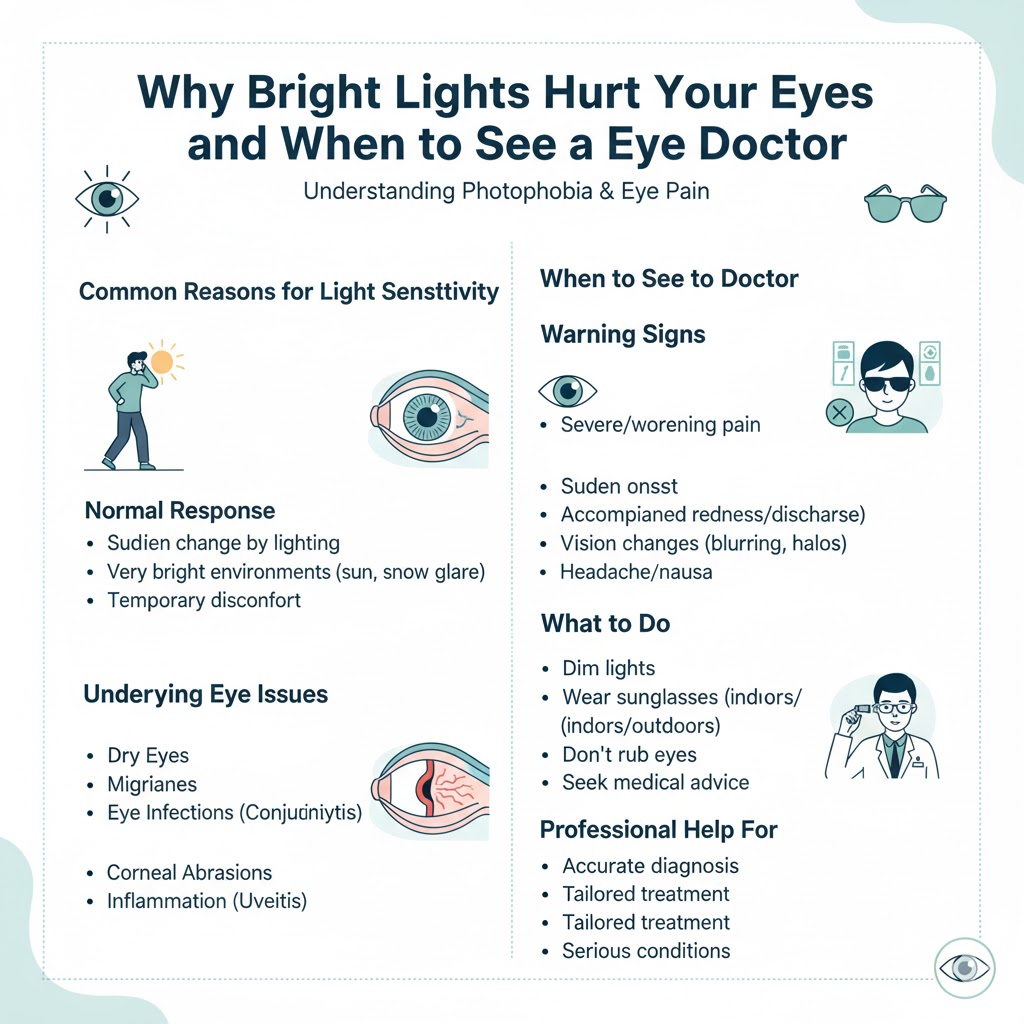
Sensitivity to light, also known as photophobia, is a common eye complaint. While it is sometimes temporary, ongoing discomfort with bright light may point to an eye condition that needs medical attention.

At Ojas Eye Hospital in Mumbai, many patients visit us with concerns like glare, haloes around lights or irritation when exposed to bright light. Let’s understand why this happens, what it may indicate, and when you should see an eye doctor.

Why Are My Eyes Sensitive to Bright Lights?

Our eyes are designed to handle light, but when something disrupts the way light enters or is processed, sensitivity can increase. This may involve the cornea, lens, retina or even the optic nerve.

Some common reasons include:

  • Dry eyes: When your eyes do not produce enough tears, the surface becomes dry and exposed, making light feel harsh and uncomfortable.
  • Migraines: Bright light is a well-known trigger for migraines and can worsen headache symptoms.
  • Eye strain: Long hours on screens, poor lighting or lack of breaks can tire your eyes and increase light sensitivity.
  • Eye conditions: Problems like cataracts, glaucoma or retinal issues can cause glare, haloes and discomfort around lights.
  • Corneal irritation or infection: Any irritation, injury or infection of the cornea can make the eyes react strongly to light.

Is Light Sensitivity Always Serious?

Not always. Mild sensitivity after being outdoors in strong sunlight or staring at a screen for too long is quite normal.

However, you should be careful if light sensitivity is:

  • Frequent or worsening
  • Associated with pain or redness
  • Accompanied by blurred vision
  • Linked with haloes or glare, especially at night

These signs may indicate an underlying eye condition that needs expert care. If ignored, some eye problems can progress silently and affect vision over time.

What Are Haloes and Glare Around Lights?

Haloes appear as glowing rings around lights, while glare looks like scattered or blurred light. These are especially noticeable while driving at night.

Common causes include:

  • Dry eye syndrome, which disturbs the tear film
  • Refractive errors, even small uncorrected vision issues
  • Cataracts, where the eye’s natural lens becomes cloudy
  • Post-surgical healing, after procedures like LASIK or cataract surgery

At Ojas Eye Hospital, advanced eye tests help identify the exact cause and guide the right treatment.

Simple Ways to Reduce Light Discomfort

If your symptoms are mild, these steps may help reduce daily discomfort:

  • Use anti-glare or anti-reflective glasses if prescribed
  • Wear good-quality sunglasses outdoors
  • Keep indoor lighting soft and evenly spread
  • Use lubricating eye drops if dryness is present
  • Follow the 20-20-20 rule for screen use

If these steps do not help, it is important to get your eyes checked.

When Should You See an Eye Doctor?

You should book an eye consultation if:

  • Bright lights consistently cause pain or discomfort
  • You notice sudden vision changes
  • Your eyes remain red or irritated
  • Haloes or glare interfere with daily activities

Early diagnosis allows timely treatment and helps protect long-term vision.

Why Book an Appointment at Ojas Eye Hospital in Mumbai?

Ojas Eye Hospital offers complete eye care services under one roof. Our experienced team handles a wide range of eye concerns, from routine eye check-ups to advanced treatments. We believe that eye comfort and clear vision should never be ignored or delayed.

If bright lights are hurting your eyes or you have any other eye concerns, book your eye consultation at Ojas Eye Hospital today.

The Key Tips for Taking Care of Your Eyes During Pregnancy

Expecting a baby is a very special time for a woman. And during this time, it’s important to take good care of your health, including your eyes. Changes in hormones during pregnancy can sometimes cause eye issues.

In this article, we’ll give you helpful tips to make sure your eyes stay healthy and your vision stays clear during this special time.

Tips to keep your eyes healthy during pregnancy:

  • Stay hydrated: Staying hydrated not only supports your overall health, but it’s also crucial for healthy eyes. Be sure to hydrate yourself well every day to prevent dry eyes and maintain optimal eye function.
  • Get your eyes examined: When you’re pregnant, your vision might change. That’s why it’s important to have a regular eye exam. In case your vision seems different while you’re pregnant, let your eye doctor know as soon as possible.
  • Put on sunglasses: Pregnancy can make your eyes more sensitive to light, so when you go outside, wear sunglasses.
  • Handle contact lenses with care: It’s okay to use contact lenses when you’re pregnant, but remember to take extra care. Clean them often, and don’t wear them for longer than your eye doctor advises.
  • Maintain hygiene: Make sure your hands are clean and don’t touch your face or eyes frequently. This helps prevent conjunctivitis and stye.
  • Eat a balanced diet: Eating a balanced diet and foods rich in omega-3 fatty acids are good for your eyes, as they help reduce inflammation and protect against dry eye syndrome.
  • Stay away from smoking: Smoking isn’t good for your health, and it’s bad for your eyes too. It raises the chances of getting cataracts and other severe eye issues.
  • Give proper rest to your eyes: During pregnancy, to help reduce strain and fatigue, take short breaks from screens and rest your eyes regularly.
  • Take care of your gestational diabetes: Having gestational diabetes can sometimes affect your eyes. Keep your blood sugar levels under control by eating healthy, staying active, and following your doctor’s advice.

Visit us at Ojas – Eye Hospital in Mumbai

Giving importance to your vision during pregnancy is crucial not only for your eye’s health but also for your overall well-being, especially during the third trimester of pregnancy, when there’s a higher chance of having eye issues related to pregnancy.

Prioritize your eye health and consider visiting Ojas – Eye Hospital in Mumbai for personalized advice and comprehensive eye care, from pregnancy to beyond.

Signs Indicating That You Need Glasses

Clear vision is a precious gift; however, as we grow older, our eyes may undergo changes that affect our ability to see clearly. If you’ve been having trouble with your vision, you might be thinking about getting glasses. You might notice it’s tough to read or that you have to squint at the computer screen to see words clearly. While some vision issues are temporary or minor and don’t last long, there are signs that show you might need glasses. These signs are different for everyone and depend on eye problems like myopia, hyperopia, and presbyopia.

Remember, your vision might not always stay perfect (20/20) because it can change over time. That’s why it’s important to know the signs that suggest you might need glasses. It helps keep your eyes healthy and your vision at its best.

In this article, we’ll talk about the common signs that tell you it might be the time to get glasses.

Signs indicating that you might need glasses

Below are the usual signs that show you might need glasses:

  • Frequent headaches or eye strain: Extended periods of reading, computer work, or other close-up tasks can lead to eye strain and headaches due to an effort to focus your eyes, so getting glasses might bring everything into focus and can help relieve the pain.
  • Squinting: Another sign that you might need glasses is if you find yourself squinting frequently, especially when reading or looking at screens, as it’s a sign that your eyes are working harder than they should be. Squinting temporarily changes the shape of the eye, allowing for better focus. Using eyeglasses or contacts would eliminate the need to squint altogether.
  • Blurred vision: It may affect day-to-day activities like reading, driving, or recognizing faces from a distance. One of the most obvious indicators that you may need glasses is blurred vision. If objects both near and far appear hazy or unclear, it’s a strong indication that your eyes may benefit from eyeglasses or contacts.
  • Difficulty seeing at night: Glasses with anti-glare coatings might be suggested to you if you find it difficult to see clearly in low-light conditions, as it may be an indication of a refractive error.
  • Seeing double: If you’re seeing two of everything, it’s important to get your eyes checked out, and sometimes, just getting the right glasses can make the double vision go away.
  • Halos around lights: You might see a halo around light if your eyes can’t focus when you look at it, and to correct this condition, you might need glasses that will enhance your visual clarity and reduce halos.
  • Rubbing the eyes: If you often rub your eyes, it could mean they’re tired or strained, and wearing glasses might be the appropriate solution.

Ojas – Eye Hospital’s conclusion

It is important to recognize the signs that you need glasses to maintain clear and healthy vision. If you notice any of these signs, make sure to book an eye check-up with an eye doctor at Ojas – Eye Hospital in Mumbai. Here, they will check your vision and suggest the right glasses if necessary. Remember, getting regular eye check-ups can keep your eyes healthy. It can catch vision issues early, before they get worse.

The Importance of Comprehensive Vision Exams for Students

As parents, we all want to ensure our kids have the best start in school. Clear vision is incredibly important for their education, enabling them to excel in schoolwork, make friends, and enjoy sports.

Students often visit the eye doctor only when they notice changes in their vision. However, it’s advisable to have their eyes checked regularly, even if everything seems fine. These check-ups can help identify eye problems and may even reveal other underlying health issues.

Regular check-ups can catch eye problems and serious illnesses early. How often a student needs an eye exam depends on factors such as age, family history, and whether they wear glasses or contacts. Most experts recommend getting eyes checked yearly.

In this article, we’ll explore why comprehensive eye exams are crucial for a student’s success in school.


Why are comprehensive eye exams important for all students?

When you have a comprehensive eye exam with an eye doctor, it’s not just about testing how well you see; rather, they use it to find various vision problems like trouble seeing far, difficulty with colors, irregular-shaped corneas, trouble coordinating hand and eye movements, and other issues with how both eyes work together. While these problems may not be immediately apparent, they can significantly hamper a student’s ability to concentrate, track objects with their eyes, and read. This can make schoolwork more challenging and less enjoyable.

How comprehensive eye exams support student success in school

Seeing clearly in class:

Clear vision is essential for reading books, viewing the board, and completing homework. If a student’s eyes aren’t functioning optimally, it can hinder their learning.

Preventing headaches and eye strain:

Prolonged reading or computer use can lead to headaches due to strained eyes. An eye exam can identify the right glasses or provide tips to prevent such discomfort.

The power of early detection:

Early identification and treatment of vision problems contribute to better academic performance. Whether a student needs glasses, special eye exercises, or other treatments, addressing these issues promptly can prevent them from worsening.

Spotting hidden problems:

Some eye issues may go unnoticed, but a specialized eye doctor can detect them during an exam. They can identify conditions like nearsightedness, farsightedness, and even lazy eyes.

Enhancing sports safety:

Good vision is crucial for sports enthusiasts. It enables them to catch balls, see teammates, and avoid accidents. An eye exam ensures they’re at their best on the field, promoting safety.

Boosting confidence:

Clear vision fills confidence in students when in class or during enjoyable activities.

Words from Ojas Eye Hospital in Mumbai

Comprehensive eye exams are extremely important for all students, as they enhance vision, learning, and confidence. If you haven’t had an eye exam recently, scheduling one would be a wise decision.

Visit Ojas Eye Hospital in Mumbai for top-notch eye exams and exceptional eye care services tailored to your needs. Our friendly team of eye experts is here to assist you with their extensive knowledge and skills.

When Should You See an Eye Doctor?

It’s crucial to protect vision because it’s one of our most important senses for interacting with the world around us. But how can you tell when it’s time to visit an eye doctor? In this post, we look at a few signs that will indicate that you should schedule an appointment with an eye doctor right away.

The Common eye problems

There are several common eye issues that might develop. These include:

  • Dry eyes
  • Blurry vision
  • Itchy eyes
  • Redness
  • Watery eyes
  • Eye fatigue
  • Sensitivity to light

It’s crucial to visit an eye doctor for a diagnosis if you experience any of these problems. They are able to identify the root cause of the issue and offer you the appropriate treatment.

The warning signs that indicate you should visit an eye doctor are:

A few signs you should see an eye doctor include:

Double vision:

Double vision may indicate an injury, stroke, tumor, or disease. Contact your eye doctor right away if your double vision is persistent or started suddenly.

Blurry vision:

Though blurry vision is a common eye issue, it could also be a sign of a serious eye condition.

It’s critical to see an eye doctor right away if you find out that your vision becomes suddenly blurry or more blurry than usual.

Frequent headaches:

Emotional and physical stress can cause headaches, which can range from a dull pain in and around the temples and/ or sharp pain around or behind the eyes. Eye problems are one of the many medical conditions that can cause headaches.

Chronic headaches may indicate glaucoma, infection, or eyestrain. You should make an appointment with your ophthalmologist if you frequently experience headaches.

Difficulty seeing at night:

One of the first signs of vision loss may be trouble seeing at night.

Having more difficulty seeing as you get older, whether it be while driving at night or in other low-light situations, can also be an indication of more significant ocular health issues, including a growing cataract or macular degeneration.

An eye doctor will be able to suggest the underlying cause of your "night blindness" and prescribe the best course of therapy.

Eye pain:

Any form of pain in the eyes or the surrounding area is abnormal and may indicate a serious problem.

Acute angle-closure glaucoma and ocular tumors are two conditions that can cause severe eye pain and quickly lead to blindness.

Other, more frequent causes of eye pain include irritation brought on by allergies or a foreign object in the eye, an infection like pink eye, dry eye syndrome, or a scratch on the cornea.

Large floaters or flashing lights:

Floaters are those tiny lines, circles, or squiggles that occasionally appear in your field of vision. They appear to be in front of your eyes, but they are actually shadows cast by minute fibers in the vitreous fluid of your eyes.

Dry eyes

You may be experiencing symptoms of dry eyes, i.e., eyes that feel dry or itchy.

Artificial tears could provide you with short-term relief.

They will be able to identify the root cause of your dry eyes and recommend a comprehensive approach that addresses the causes as well as the symptoms.

Watery eyes

Numerous conditions, from allergies to more serious conditions like conjunctivitis, can result in watery eyes. You should see an eye doctor if you have watery eyes since they may be a sign of a more serious eye condition that has to be diagnosed.

Eye discomfort using digital screens

The issue of computer vision syndrome is getting worse as many of us sit in front of a computer screen for hours, sometimes at work, or over phones, televisions, and laptops.
Excessive use of screens can cause:

  • Eye strain in adults
  • Reduced blinking, which results in signs of dry eyes
  • Children’s myopia which is progressing more quickly

If symptoms continue, your eye doctor will be able to evaluate the situation and make treatment suggestions.

Light sensitivity

You may experience some light sensitivity as you transition from indoor lighting to outdoor sunlight, which is normal.

However, if your eyes are sensitive to light, this may be due to serious eye conditions such as corneal abrasion, cataracts, or keratoconus.These conditions need to be addressed by an eye doctor.

However, excessive sensitivity to light could be a sign of a serious eye problem such as keratoconus, corneal abrasion, or cataracts, and an eye doctor needs to treat these condition.

Best eye specialist near you

The market if full of over the counter drugs and we casually use them, which is not right. So, always check with your doctor for any persisting eye symptoms or problem. Before even thinking about treatment, if you follow some good habits, you can even delay your eye doctor visit.

Here are few eye health tips

  • Protect your eyes all the time, for example wear protective eye gears, while working if you are working with power tools or chemicals because 80% of the eye injuries take place while working in factories.
  • Wear a hat and sunglasses when you are going outdoors as UV radiations can damage your eyes.
  • Stick to eating fresh and healthy food. Maintain a healthy lifestyle and quit smoking as it is not good for your blood vessels and may ultimately affect your eyes.
  • Follow a yearly health check-up routine including your eyes after 40 years of age.

How do I select right eye care specialist for me?

Choosing an eye doctor is one of the important decisions you make in your life. In this post we will give you tips how you can select right doctor for your vision care.

Look for specialisation

Eye care providers are Ophthalmologists, opticians and optometrists.

Ophthalmologists are physicians (MDs) who have specialized in diagnosing and medically or surgically treating diseases of the eyes and visual system.

Opticians are technicians are trained to design, verify and fit eyeglass lenses and frames, contact lenses, and other devices to correct your eyesight.

An optometrist is an eye care professional who has earned a degree in Optometry. Optometrists examine eyes for both vision and health problems, and correct refractive errors by prescribing glasses and contact lenses. Some optometrists also provide low vision care and vision therapy.

In many cases, both Optometrist and Ophthalmologist may be required to deal with the situation. This arrangement is called co-management. Few specialist are functional to just one particular field also like retina specialist, glaucoma specialist, cornea specialist. So your eye care provider can be selected based on the treatment you are looking for in an area of specialised work he is working for.

Experience of the professional

This is one of the most important aspect while selecting the specialist. Check for how long the eye doctor has been working in the field? what kind of surgeries he has performed? What is the success rate of his procedures?

Credentials of the Ophthalmologist

What kind of institution, your eye doctor has studied from? Is it a reputed one? Has he won any awards or certificates? Is he associated with any board or society in his field? Does he speak in medical conferences about the treatment modalities? Has he published any research papers? Is he enrolled with any fellowships? Is he part of continuing medical education systems?

Accreditation and standardisation of his working hospital

Is the hospital maintaining Patient treatment quality protocols? Is the hospital infrastructure equipped with the latest advances in the field? Is hospital a NABH accreditated institution? You can check for hygiene of the hospital. A good hospital need to have diagnostic measures and operation theatre within the same campus. 

Get Referrals

Talk to your family physician for eye doctor as he might be knowing a good professional in his circle of influence. Discuss with your family and friends about the procedure you are looking for, they may share their doctor’s reference. Make a list of the available eye surgeons from the reference and do a little personal research to find the best suit for you.

Look for patient’s testimonials

Now, your work speaks. If a patient is happy with your work, that is the best tip to choose a doctor. Look for reviews of the patient about hospitality of the care providers of the hospital. Is hospital staff responsive to patient’s problems? Do they attend patients in emergency with utmost care? Look for both positive and negative feedback to build an accurate picture of what to expect. Google Reviews is a good place to start.

Communications from the hospital and doctor

How well are they about communicating and good about explaining the treatment procedure to the patient? Look for their follow up program after the patient is discharged from the hospital. Postoperative care means a lot for a successful treatment outcome and communication plays an important role in that. Instructions and post operative medications need to be thoroughly explained to the patient.

Personal care

Even after selecting the doctor, meet your eye doctor in person. See yourself  that how much comfortable and confident you are with the doctor. Ask all the questions, you are having about the treatment. Look for the time and answers given by the doctor; are they justifiable. Surgeries are always a team work, check for the team, who is going to operate you. After all it is a matter of your vision, your research is worth enough because a good doctor is the difference between vision and blindness.   

If you’re still not sure about the specialist and confused between various hospitals, eye care providers, we can help. It is the doctor’s responsibility to educate patients and give them the knowledge they need to make an independent and well-informed decision regarding their treatment. Book a consultation for a comprehensive assessment of your eyes and a detailed discussion about your various surgery options. Call us at +919137462795 or visit our clinic at Bandra and Kandivali.

Do I need to visit an Eye Doctor?

Eyes form the mirror image of your inner self and to be precise this statement is both poetically and medically verified. Eyes reflect the beauty of your soul. You can tell everything from your eyes and they never lie. Also, they say a lot about your health than you can imagine. Your eyes are connected to your brain for visual recognition as well as they are connected to other vital organs of the body.

We understand that we all lead busy lives, But it’s important to set aside a time for an eye exam. As eyes are connected to different body parts, it is essential to get regular eye check-ups irrespective of your age or health status. Your eyes reflect the early signs of various diseases including high blood pressure, diabetes, high cholesterol levels, etc.

Is it important to have a regular eye check-up?

Most of us are under the impression that as long as we can see well, we do not need a routine eye check-up. Sometimes, we do visit to an optician to get a pair of glasses and we feel this is sufficient for our eye health.

The reality is entirely different, as most of the vision-threatening diseases do not have symptoms in the early stages, and cannot be picked up by a test for refractive error. Eye exams are performed by Ophthalmologists and involve not only checking your visual acuity and power of glasses, but also the comprehensive health of your eyes. It includes measuring your eye pressures, eye alignment, as well as evaluation of the Cornea, Lens and Retina.

There are people with certain conditions, who might require going for more than one eye check-up in a year, especially for those who are diabetic or over the age of 40.

Warning signs to visit eye doctor:

Following are some of the signs you should pay attention to and if these signs persist for a longer time, schedule a check-up accordingly:

  • Systemic diseases – Diabetic retinopathy is a consequence of diabetes. Lot of diabetic patients experience this in uncontrolled cases. Diabetes can act as catalyst to a lot of eye diseases such as glaucoma and cataract as well. This Disease damages vision on a slower pattern.
  • Eye pain – Eye pain is not normal most of the times and is considered as an alarming sign to visit your ophthalmologist. A persistent eye pain can be a sign of Glaucoma. Ignored eye pain may turn out be a disaster as in few eye medical emergencies, patients lose their eye sight in a short period of time. Symptoms like blurry vision, headache, nausea, and vomiting should never be taken casually.
  • Difficulty seeing at night or while driving – Few people report halo formations around lights and for them night driving is quite difficult. This may be a manifestation for early cataract development. Commonly, a pair of eye glasses solves the problem but if it doesn’t improve, it is advised to visit your eye doctor for thorough check up.
  • Red or pink eyes – Eye infection can range from allergies to medical emergency like Glaucoma. Having a red eye can be a sign of inflammation of conjunctiva (conjunctivitis). Allergies from pollens, mites may cause irritated and inflamed eyes. If the condition exceeds 48 hrs, it is the time to visit your eye doctor.
  • Frequent headaches – Eyes or vision issues are found linked to headaches quite often. It may be as simple as that you need to visit your optician for new pair of glasses. If you experience constant headaches, then it might be the right time to see an eye specialist. Diseases like Glaucoma can also trigger headaches. Visiting for routine eye checkups can provide you with early information about major eye issues and complications. People having jobs involved with more digital screen hours tend to experience tired and sticky eyes leading to headaches. If someone has been getting regular headaches, an ophthalmologist is of absolutely great help to figure out the cause of headache.
  • Seeing spots or flashes – Sometimes image is not formed properly on Retina and reason could be retinal detachment. It is considered as medical emergency. There is risk of vision loss if not attended by eye doctor in time. Sudden onset of flashes of light, black spots or dark shadows need immediate medical attention.
  • Eye discomfort when staring at a computer – Computer vision syndrome or digital eye syndrome can affect vision health. Long screen hours make eyes dull and tired. Eye doctor recommends 20-20-20 rule, Every 20 minutes, look into the distance at least 20 feet away from the computer or digital device. Do this for at least 20 seconds.
  • Tons of tears – Lot of tears can be a sign of dry eyes problem. Once the balance of tear composition is disturbed, it may lead to itchy and swollen eyes. It is extremely uncomfortable situation. Lubricating eye drops can be of some temporary relief.
  • Double vision – Such vision problem can be a sign of neurological medical sign like stroke. Although your eye doctor is equipped to diagnose the cause of double vision, it is never to be taken casually and left ignored. Sometimes retinal detachment can also cause double vision and promptness in treatment can save eyesight.

Never ignore the signs that your eyes are giving. Several eye problems can recover with prompt diagnosis and medication. If you are facing eye problems or want a routine eye check up feel free to consult our team of experts, call us at +91 9137462795 or visit our clinic at Bandra and Kandivali.

Ojas Eye Hospital A Center of Excellence for Contoura Vision, Femto Bladefree Lasik in Mumbai, India.