Call us

+91-9240214610 (Bandra)
+91-9240214611 (Kandivali)

  • JAS-ANZ Accredited Certification
  • ICS Certified
  • NABH Certified Eye Hospital in Mumbai
Ojas Eye Hospital in Bandra, Kandivali, Mumbai

Tag: LASIK procedure

Best LASIK Surgery in 2026: SMILE, SILK, Contoura, WaveLight Plus or IPCL – Which is Right for You?

If you are planning to remove your glasses in 2026, you may feel confused by so many advanced options available today. From SMILE and SILK to Contoura Vision, WaveLight Plus and IPCL, each treatment promises better vision – but which one is right for you?

At Ojas Maxivision Eye Hospital in Mumbai, we believe the “best surgery” is not the same for everyone. The right choice depends on your eye condition, lifestyle and expectations. Let’s understand each option so you can choose what suits you best.

What Is LASIK?

LASIK (Laser-Assisted In Situ Keratomileusis) is a procedure that reshapes the cornea to correct vision problems like myopia, hyperopia and astigmatism.

Over the years, LASIK has evolved into:

  • Flap-based procedures (LASIK, Contoura, WaveLight Plus)
  • Flapless procedures (SMILE, SILK)
  • Non-laser implant options (IPCL)

Modern procedures are safer, more precise and highly customized compared to earlier versions.

Types of Vision Correction Surgeries in 2026

1. SMILE (Small Incision Lenticule Extraction)

SMILE is a minimally invasive, flapless procedure where a small piece of corneal tissue (lenticule) is removed through a tiny incision.

  • A small incision is made in the eye
  • No flap is created
  • Cornea remains stronger
  • Faster healing

Suitable for:

  • People with active lifestyles
  • Those who want quick recovery
  • Patients worried about dry eyes
 

2. SILK (Next-Generation Lenticule Surgery)

SILK is a newer, more refined and advanced version of SMILE with a smoother procedure. SILK is designed to be even more minimally invasive, with reduced chances of dry eyes and quicker visual recovery.

  • More precise laser
  • Less disturbance to eye surface
  • better comfort and faster recovery

Suitable for:

  • People looking for the latest treatment
  • Those who want quicker visual recovery
 

3. Contoura Vision (Topography-Guided LASIK)

Contoura is an advanced LASIK procedure that creates a highly personalized map of the cornea to correct irregularities.

  • Maps the surface of your eye in detail
  • Corrects even small irregularities
  • Improves visual quality
  • Provides better night-driving vision

Suitable for:

  • Patients with irregular corneas
  • Patients with night vision issues (glare, halos)
 

4. WaveLight Plus (AI-Based LASIK – The Latest Innovation)

WaveLight Plus (also called InnovEyes) is considered the most advanced LASIK surgery in 2026.

  • Uses advanced eye mapping and AI
  • Creates a detailed model of your eye

Suitable for:

  • Patients seeking premium results
  • Patients with high or complex power
  • Those wanting maximum customization
 

5. IPCL (Implantable Phakic Contact Lens)

IPCL is not a laser surgery. Instead, a lens is implanted inside the eye to correct vision.

  • No corneal cutting
  • Natural lens remains untouched

Suitable for:

  • Very high spectacle numbers
  • Thin cornea
  • Patients not fit for LASIK

Comparison of LASIK Technologies in 2026

Feature SMILE SILK Contoura WaveLight Plus IPCL
Type Flapless Flapless Flap-based AI-based LASIK Implant
Customization Moderate Moderate High Very high Not laser
Dry Eye Risk Low Very low Moderate Low Very low
Recovery Time Fast Very fast Fast Very fast Moderate
Best For Active lifestyle Safety-focused patients Corneal irregularity Premium results High power
Technology Level Advanced New Advanced Most advanced Non-laser

How to Choose the Right Procedure?

There is no single “best” option for everyone. The right treatment depends on:

  • Your eye number
  • Corneal thickness
  • Eye health
  • Lifestyle and daily activities
  • Doctor’s evaluation
 

Which LASIK Surgery Is Right for You?

Choosing the right procedure depends on several factors:

1. Your Eye Power

  • Low to moderate: SMILE / SILK
  • High power: WaveLight Plus / IPCL
 

1. Corneal Thickness

  • Thin cornea: SMILE / SILK / IPCL
  • Normal cornea: All options
 

3. Lifestyle

  • Sports / active life: SMILE / SILK
  • Screen-heavy work: WaveLight Plus
 

4. Visual Expectations

  • Basic vision correction: SMILE / Contoura
  • Premium vision quality: WaveLight Plus
 

5. Budget

  • Affordable: SMILE / Contoura
  • Premium: WaveLight Plus / IPCL

How Do You Decide Which Vision Correction Surgery Is Right for You?

The best way to decide is through a detailed eye check-up, including:

  • Corneal mapping
  • Eye power measurement
  • Tear film analysis
  • Retina evaluation

Only after this an eye specialist can recommend the right procedure for you.

What Do Expert LASIK Eye Surgeons Recommend in 2026?

Today, eye specialists prefer a personalized approach. They suggest treatment based on each person’s eyes. In general, WaveLight Plus is often chosen for very precise and personalized results, while SMILE or SILK are preferred for being gentle and less invasive. IPCL is usually recommended for people with very high eye power.

However, it is important to understand that the result does not depend only on the procedure. Your eye condition and the experience of your doctor play an even bigger role.

Book Your Consultation

Modern eye treatments offer excellent results, but the right choice depends on your unique eye condition. Whether it is SMILE, SILK, Contoura, WaveLight Plus or IPCL, each option has its own benefits.

If you are planning for the best LASIK surgery in 2026, start with a proper consultation instead of choosing based on trends.

Visit Ojas Maxivision Eye Hospital in Mumbai for a detailed eye check-up and personalized advice from experienced eye specialists to choose the best LASIK surgery in Mumbai. The right diagnosis is the first step towards clear vision.

Clear vision begins with the right choice – make yours with confidence.

Best LASIK Eye Surgery in Mumbai – Cost, Benefits, Procedure, & Best Hospitals in 2025

Are you sick and tired of putting on glasses or contacts every single day? If you relate to any of these thought processes, let LASIK (Laser-Assisted In Situ Keratomileusis) be your light at the end of the tunnel. Nowadays, medical advances in ophthalmology and laser treatments, LASIK is one of the most commonly performed and safest elective procedures performed for corrective vision around the world. The task of selecting the right hospital for your LASIK needs by 2025 is very easy, as it can be found in Mumbai. This place is famed for medical excellence.

This article is a comprehensive account of the LASIK procedure, its benefits, the cost in Mumbai, the diagnostic and treatment services, and finally, why Ojas Eye Hospital tops the list for LASIK surgery in India.

What is LASIK Eye Surgery?

LASIK, the quick, painless, and safe laser correction surgery, alters the shape of the cornea so that the focused light rays strike properly on the retina. It treats effectively:-

  • Myopia (Nearsightedness)
  • Hyperopia (Farsightedness)
  • Astigmatism

LASIK reduces or eliminates dependency on glasses or contact lenses. The entire procedure, on average, takes 15 minutes per eye, and the majority of patients obtain clear vision without glasses within 24 hours.

How Is the LASIK Procedure Performed?

LASIK is a specialised procedure and is performed in multiple steps:-

  • Cornea Mapping: Before the surgery, the cornea is mapped using advanced technology for topography to know its shape, thickness, and curvature.
  • Creating a Corneal Flap: A thin flap is created on the cornea’s surface with a femtosecond laser or microkeratome blade.
  • Laser Reshaping: The corneal tissue is reshaped using the excimer laser to correct the refractive error.
  • Flap Repositioning: Once the laser treatment is completed, the corneal flap is placed back into its position, and healing occurs naturally without stitches.

Types of LASIK Surgery:

By 2025, LASIK technology will have become more refined and precise. The most commonly practised types include:-

  • Standard LASIK
  • Bladeless LASIK (Femto-LASIK)
  • Custom LASIK (Wavefront-guided)
  • Contoura Vision LASIK
  • SMILE (Small Incision Lenticule Extraction)–Even though it is not technically LASIK, it is an alternative for laser eye correction.

Patients at leading clinics such as Ojas Eye Hospital receive tailored recommendations based on corneal thickness, refractive error, lifestyle, and other eye health parameters.

Advantages of LASIK Eye Surgery

LASIK has provided multiple life-changing advantages:-

  • Better vision-Most patients have 20/25 vision or better
  • Fast recovery-Most can return to normal activities within 1 to 2 days
  • Least discomfort-Anaesthetic drops dull any pain
  • Long-lasting results-Normally permanent
  • Freedom from glasses and lenses-For the active types
  • Extra boost of confidence and appearance

Is it safe to undergo LASIK eye surgery, and who can afford it?

The LASIK procedure is FDA-approved, has been performed on millions of patients worldwide, and has been done successfully since its inception. But it is not for everyone.

Best Candidates for LASIK:

  • Age 18+ with stable vision
  • Free from corneal diseases like keratoconus
  • No history of severe dry eyes or autoimmune conditions
  • Not pregnant or breastfeeding

A comprehensive eye evaluation will be required to determine if you are eligible for LASIK.

Pre-LASIK Evaluation: What to Expect

This evaluation usually entails a thorough examination of these basic criteria:-

  • Visual Acuity Test
  • Corneal Topography
  • Pachymetry (corneal thickness)
  • Wavefront Analysis
  • Dry Eye Assessment
  • Pupil Size Measurement
  • Retinal and Optic Nerve Check

Advanced hospitals like Ojas Eye Hospital conduct these tests with high-precision equipment to ensure the best possible outcomes.

Care and Recovery after Surgery

The recovery from LASIK is generally smooth with proper aftercare:-

  • Take prescribed eye drops to prevent infection and dryness
  • DON’T touch or rub your eyes
  • No swimming/makeup for at least one week
  • Protective glasses in dusty conditions
  • Regular follow-up visits

Most patients resume work in 2 to 3 days with greatly improved vision.

Best Eye Hospitals for LASIK Eye Surgery in Mumbai (2025)

Mumbai hosts some advertising LASIK eye surgery hospitals. These are numerous, but very few, along with up-to-date technology, clinical expertise, personalised treatment, and price, are in place. Ojas Eye Hospital is one of them.

Why You Should Choose Ojas Eye Hospital for LASIK Eye Surgery in Mumbai

Ojas Eye Hospital is considered one of the best places in Mumbai to have LASIK surgery. Here is a run-down on why it is a trusted name in eye care:-

Sophisticated LASIK Technologies

Ojas employs the latest Wavefront-guided LASIK, Femtosecond LASIK, Contoura Vision, and Bladeless LASIK technology for the most precise corrections and has the highest focused light delivery, all under one roof.

Full Diagnostic Facilities

Every single test, whether corneal mapping, OCT, topo, pachymetry, or wavefront analysis, is done using globally recognised diagnostic tools in one place.

Focus on Patient Care

Each candidate for LASIK is assessed and treated on a case-by-case basis, with extreme transparency regarding the surgical procedure, its benefits and risks, and the cost involved.

Modern Operating Theatres

These are equipped with modern, infection-controlled laser suites designed for such surgeries.

Importance Attached to Affordability and EMI Options

They strive for one thing: to see things. LASIK packages are priced reasonably, if not most affordably, stretching the money comfortably far enough for needy patients. Patients have many EMI options, so they decide on the right one based on their financial situation.

Eager Caregivers

The doctor and team are very attentive in giving the support patients need after the treatment, ensuring speedy healing, regular follow-ups, and guidance in recovering.

Spread Across Many Centres in Mumbai

In Andheri, Bandra, Kandivali, and Chembur, Ojas has the most convenient locations in the city.

Concluding Note

LASIK is an aesthetic enhancement and a life-changing investment in sight and quality. LASIK in 2025 is much safer and more effective due to technological advancements, expertise, and case evaluation. For LASIK eye surgery in Mumbai, Trust Ojas Eye Hospital for a conducive treatment, cutting-edge laser treatments, and a laser-thin way from glasses.

Get Your LASIK Check-Up Today.

Visit: www.ojaseyehospital.com

Locations: Andheri | Bandra | Kandivali | Chembur

Call: +91-XXXXXXXXXX

For Clear Vision, Bright Future: Opt for LASIK Surgery in Mumbai Before Your Wedding

Your wedding day is one of the most significant events of your life, filled with moments you’ll cherish forever. Amidst all these excitements, you must expect your vision to be crystal clear, allowing you to fully witness and enjoy all the magical moments. However, if you’ve been using glasses or contact lenses, you may worry about their inconvenience or potential interference with your wedding experience. This is where LASIK surgery comes in, offering a life-changing solution to enhance your vision and confidence.

In this article, we will discuss the transformative impact of LASIK surgery before your wedding, highlighting its benefits in maximizing visual clarity and confidence for your special day.

Understanding LASIK Surgery

LASIK (Laser-Assisted in Situ Keratomileusis) surgery is a revolutionary procedure designed to correct refractive errors such as nearsightedness (myopia), farsightedness (hyperopia), and astigmatism. By reshaping the cornea using advanced laser technology, LASIK aims to improve the eye’s focusing ability, reducing or eliminating the need for corrective eyewear.

Why LASIK Surgery

The procedure is quick, virtually painless, and boasts a high success rate, making it a popular choice for individuals seeking freedom from glasses and contact lenses. The procedure usually takes approximately 10 minutes for both eyes. Many patients commonly describe minimal to no discomfort throughout the procedure.

Benefits of LASIK Surgery Before Your Wedding

Imagine waking up on the morning of your wedding day and seeing the world with clarity, without the hassle of searching for your glasses or inserting contact lenses. LASIK surgery offers countless benefits that can significantly enhance your wedding experience:

  • Visual freedom: Say goodbye to the inconvenience of glasses and contacts. LASIK provides long-term vision correction, allowing you to enjoy clear, unobstructed vision without the need for corrective eyewear.
  • Enhanced confidence: Your wedding day is a time to radiate confidence and beauty. LASIK can boost your self-assurance by giving you the freedom to showcase your natural beauty without the distraction of glasses or the worry of contact lens discomfort.
  • Seamless wedding preparations: From bridal fancy clothes to beautiful makeup, LASIK surgery ensures that you can fully engage in every aspect of wedding preparation with clear vision. Bid farewell to concerns about glasses interfering with your bridal look or contacts causing irritation during your best moments of life.
  • Picture-perfect memories: Capture every precious moment of your wedding day with clarity and precision. LASIK enhances your visual acuity, allowing you to relish every smile, tear, and loving glance without the hindrance of glasses or contact lenses.
  • Lasting investment: LASIK isn’t just a temporary fix; it’s a lasting investment in your vision and quality of life. By undergoing LASIK surgery before your wedding, you’re investing in a future filled with clear, unhindered vision for all the special moments yet to come.

Preparing for LASIK Surgery Before Your Wedding

Before undergoing LASIK surgery, it’s essential to consult with a qualified eye surgeon to determine your candidacy and discuss the procedure in detail. During your consultation, your eye surgeon will evaluate your eye health, refractive error, and overall suitability for LASIK. Factors such as corneal thickness, pupil size, and ocular health will be assessed to ensure optimal outcomes. Once you are considered a suitable candidate for LASIK surgery, your surgeon will provide personalized pre-operative instructions to prepare you for the procedure.

For maximum benefits from LASIK surgery before your wedding, careful planning is essential. It’s advisable to arrange the surgery, ideally one to three months before your wedding day. This timeline permits a smooth recovery, guaranteeing optimal vision for your special occasion.

The LASIK Procedure

SILK eye surgery and Contoura vision surgery are advanced, bladeless procedures that ensure precise, painless correction, offering optimal outcomes and rapid recovery for your eyes.

SILK Eye Surgery in Mumbai

The SILK (Small Incision Lenticule Keratoplasty) procedure is a cutting-edge laser eye treatment technique, known for being both flapless and bladeless. This advanced method utilizes a femtosecond laser to create microscopic bubbles within the cornea and subsequently removes the corneal lenticule, a small piece of corneal tissue, through a small incision. This technique eliminates the need for creating a flap, making the procedure less invasive and reducing the risk of complications associated with flap creation. The SILK procedure offers quick recovery times and precise vision correction. 

Unique Features of The SILK Procedure:

  • Flapless: No flap is created, reducing the risk of flap-related complications.
  • Bladeless: Uses a femtosecond laser, enhancing precision and safety.
  • Minimally invasive: Involves a small incision, promoting faster healing.
  • Quick recovery: Patients usually experience rapid visual recovery and minimal discomfort.

Contoura Vision Surgery in Mumbai

Contoura vision Surgery is another advanced form of LASIK surgery that eliminates the use of a microkeratome, a traditional blade instrument used to create a corneal flap. Instead, Contoura vision is a painless, bladeless laser eye surgery that creates a corneal flap using a Femtosecond laser. The procedure then utilizes an Excimer laser to reshape the cornea to correct refractive errors. This technology ensures highly individualized treatment and optimal visual outcomes.

Unique features of the Contoura Vision Surgery:

  • No microkeratome: The flap is created using a femtosecond laser, enhancing precision.
  • Laser-created flap: Ensures uniformity and reduces the risk of irregular flaps.
  • Customized treatment: Utilizes topography-guided technology for personalized vision correction.
  • Enhanced safety: The bladeless approach minimizes complications and promotes quicker recovery.

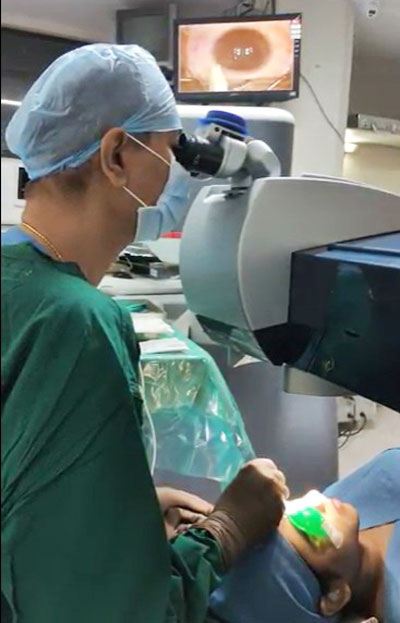
Watch the Procedure

Recovery and Results of LASIK Surgery Before Your Wedding

SILK and Contoura Vision surgeries offer rapid visual recovery, with many patients achieving 6/6 vision within 24 to 48 hours. Initial improvements are often seen within hours of the procedure, with vision becoming even more clearer within 10 to 15 days.

As your eyes heal and stabilize, you’ll gradually notice the full benefits of LASIK, including clearer vision and reduced reliance on glasses or contacts. By adhering to your surgeon’s post-operative instructions and attending scheduled follow-up visits, you can optimize your recovery and ensure long-term success.

A Note from Ojas – Eye Hospital

Your wedding day symbolizes the beginning of a beautiful life shared with your partner, family, and friends. By choosing LASIK surgery before your wedding, you’re not only investing in clearer vision but also embracing a newfound sense of confidence and freedom. Imagine the joy of seeing your partner’s loving gaze, the sparkle of your wedding ring, and the beauty of every moment with unmatched clarity and precision. By getting the best LASIK Surgery in Mumbai, you can step into your wedding day with confidence, knowing that your vision is perfect.

At Ojas – Eye Hospital, we understand the importance of your wedding day and the desire for visual perfection. Our team of experienced eye surgeons in Mumbai is dedicated to providing personalized care and state-of-the-art LASIK technology to help you achieve your vision goals. Contact us today to schedule a consultation and take the first step toward maximizing clarity and confidence before your wedding.

Tests Before Lasik Surgery

Introduction

Like any other surgery, LASIK also has risks and a healing and recovery process. Some patients have a high risk of complications and a slow healing process than a healthy person. Thus, the doctor needs to comprehensively evaluate the eyes and whole body to determine your eligibility.

Tests Before Lasik Surgery

To optimize the outcome and reduce the risks and complications associated with the LASIK surgery, the doctor may perform the following tests before the procedure:

  • Comprehensive ocular evaluation: The doctor may evaluate your eye health in great detail. During the analysis, the doctor obtains information about the eye. It may include measuring the current prescription and the correction required. The doctor may also determine any infection or ocular redness that makes you ineligible for surgery.
  • Corneal Composition, Shape, and Thickness: LASIK surgery requires corneal flap formation. Thus the cornea should be healthy to withstand the trauma and healing. The ophthalmologist evaluated the thickness, shape, and composition of the cornea. The doctor will perform a corneal topography to map the cornea and measure its curvature. Patients with thick cornea may have complications after the LASIK surgery and are, thus, ineligible for LASIK surgery.
  • Intraocular pressure: The doctor will also examine the intraocular pressure of the eye before performing LASER. The pressure building inside the eye may damage the optic nerve and affects the vision. It is due to an abnormal drainage system of the eye.
  • Refractive error: The doctor also analyzes the type of refractive error, whether nearsightedness, farsightedness, or astigmatism. You should have a stable prescription for at least one year to make you eligible for the LASIK procedure.
  • Tear film tests: The doctor determines the level of the tear film over your eyes. You may also undergo the evaluation of the functioning of the tear duct. An adequate amount of tears and good tear film reduces the complications after LASIK surgery and accelerates corneal healing.
  • Pupil measurement: Pupil size measurement is crucial to predict the outcome of the side effects after surgery. If you have a large pupil size, you are at increased risk of developing glare and halos after the surgery. However, the advanced technology that doctors are using today has fewer side effects in patients with large pupil sizes.
  • Binocular Vision Assessment: Some patients have binocular vision problems that may affect the overall outcome of the LASIK surgery. Such patients have a muscle alignment problem and may suffer from lazy eyes in their childhood.
  • Wavefront analysis: Wavefront analysis is the advanced method to determine the site-specific errors on the cornea. Through this method, there is less dependency on the patients when it comes to defining vision errors.
  • Retinal evaluation: You may also undergo a complete retinal evaluation before the LASIK surgery. If there is any retinal hole, as seen in the patients with severe myopia, the doctor seals the hole. After the retinal healing, the patient undergoes LASIK surgery.
  • Other underlying diseases: You should have otherwise healthy eyes and a healthy body for undergoing LASIK surgery. Patients with glaucoma, retinal detachment, corneal trauma, and conditions such as systemic lupus erythematous are generally ineligible for the LASIK procedure.

Lasik Surgery: Advancements And Future

Introduction

LASIK is Laser in-situ keratomileusis. It is one of the most popular vision correction surgery for people with vision problems such as myopia (nearsightedness), hyperopia (farsightedness) and astigmatism. It allows a person to be free from glasses and contact lenses.

LASIK has created a remarkable transition in ophthalmic and refractive surgery. LASIK provides quick recovery and with about 98% satisfactory results with 20/20 vision. The results of LASIK have become better and better with time as more advanced technologies have developed.

Femtosecond laser in LASIK surgery has revolutionized the procedure, offering precise results with ultimate safety without using a blade. Other advanced technologies offer the visual map creation of irregularities to provide customized and precise vision correction outcomes.


Applications Of Lasik Surgery

Lasik surgery practised for the treatment of vision problems such as:

Nearsightedness

It is the condition in which a person cannot see the objects placed at some particular distance. But can easily see the objects placed near to him. The light does not fall on the retina properly and gets focused in front of the retina and this makes  the distance vision blurry.

Farsightedness

In this condition the person can see far objects but near vision is blurry. The  light gets focused  behind the retina instead of on the retina and this makes the near vision blurry.

Astigmatism

The condition is a combination of both nearsightedness and farsightedness. The person is not able to  focus at  near or distant vision as light gets focused at multiple points either in front or behind the retina.

Advancements Of Lasik Surgery

Customized LASIK Treatment: It is considered a safe and effective future of LASIK without any postoperative complications. Customized LASIK treatment uses a computer called a wavefront device. The device is used to carry out an examination of the cornea and figure out how to improve the vision without compromising the shape of the cornea.

Microkeratome Technology: A microkeratome is a bladed instrument used to make a thin cut in the cornea and create a flap of the cornea. To impart the laser energy the flap is then lifted. The laser energy reshapes the eye for vision correction. The technology is referred to as microkeratome technology.

Femtosecond LASER: Femtosecond LASER is an alternative technology of microkeratome. It includes a high-energy laser instead of using a blade. It is often known as bladeless or all-laser LASIK.

Visual Supportive Technology: The new technology used to detect forme fruste keratoconus, the corneal surface irregularities and reduce the risk of post-LASIK ectasia. It maps the anterior and posterior surfaces of the cornea. The technology includes videokeratography, Placido-disc based topography and optical coherence tomography that provide comprehensive detail of patients’ suitability for LASIK.

Future Of Lasik Surgery

Customized Ablation

Customized ablation uses wavefront technology to measure and treat optical imperfections in the human eye or cornea. A targeted beam of light is sent through the eye. The light beam emerges out of the eye s optical structures. A sensor captures and analyses it to detect any irregularities in the wavefront pattern of light. It creates a 3D visual map of the optical system and captures it in the computer system to create a customized treatment profile.

Intralase

Intralase is blade-free laser technology. It replaces the traditional way of creating the corneal flap through the microkeratome. It decreases the majority of complications that arises due to the use of microkeratome.

Adaptive Optics

When the eyes surface irregularity (corneal aberration) creates distortion of images, adaptive optics is used in ophthalmic surgery to correct the wavefront aberration of the human eye.

LASEK and Epi-LASIK

LASEK (laser epithelial keratomileusis) the surface of the cornea is removed with diluted alcohol. In this process, the laser reshapes the cornea and the surface of the cornea heals over few days at the same place.

Epi-LASIK is similar to LASEK but the surface of the cornea is lifted through a special equipment called epikeratome then allowing the laser to reshape the cornea.

Both the procedures are used to reshape the cornea thereby improving vision by allowing the light to focus on the retina.

Contoura Vision

Conclusion

Advancement in LASIK surgery is an ongoing process. A move from using the manual blade in surgery to bladeless lasers for flap cutting has reduced the complications and improved the accuracy. Choosing an eye surgeon and making up the decision to undergo surgery take a deep study regarding the benefits and risk of the surgery. You can take advice from a trusted eye care professional about surgery. You may also ask your doctor about the advancements in the surgery that might help you make the correct decision to undergo delicate eye surgery.

Say good – bye to dependence on glasses and contact lenses

Ocular migraines

So what can CustomLASIK do for me?

Clinical studies have shown that CustomLASIK can improve not only you can see but also how well you can see. In the past, vision was measured using a standard vision chart. If you could see the letters, the doctor would proclaim your vision as a number, such as 20/20, 20/100, etc. But now, with CustomLASIK, doctors are also able to focus on the quality of your vision. Many patients who have had undergone custom LASIK procedure, report clear vision than ever before. It’s as if someone had taken an ink pad ans freshly stamped each letter on the vision chart in bold black letters. Because Custom LASIK corrects the unique imperfections in each individual’s vision, it is likely that the patient will have improved night vision.

What does CustomLASIK cost?

The cost of CustomLASIK is generally higher than the cost of conventional LASIK. CustomLASIK is performed using some of the most advanced technology in the vision industry. The procedure combines the technology of the wavefront analyzer with the precision of a computerized laser and the skill of the eye surgeon.

How will I know what procedure I need to have?

Your surgeon is the best person to tell you which procedure is the best suited for you. Everyone’s eyes are different and your eyes may best be treated with CustomLASIK. Schedule a consultation with-your eye doctor & together, you can determine which procedure is right for you.

What is CustomLASIK?           

CustomLASIK is a procedure that involves the use of a wavefront analyzer which enables your surgeon to customize the Conventional LASIK procedure to your individual eye. This customized procedure can result in patients seeing clearer and sharper than ever before.

What is the difference between CustomLASIK Conventional LASIK?

CustomLASIK uses an equipment called the wavefront analyzer (aberrometer) to accurately measure the way light travels thru the eye. The resulting map of the eye is then programmed into the laser, and the laser treats the eye based on the personalized 3D map. CustomLASIK helps to treat “higher order” aberrations, which are tiny imperfections in the optical system of eye. They have a significant impact on quality of vision. In fact, higher order aberrations have been linked to visual glare and halos. Higher order aberrations were previously untreatable with contact lenses, glasses or conventional LASIK.

Is the actual LASIK part, performed the same way? Or is it a completely different procedure?

The actual LASIK procedure is performed in exactly the same way in both Conventional LASIK and CustomLASIK. However, the pre-op testing for conventional LASIK and custom LASIK differ greatly. The wavefront analyzer used with CustomLASIK brings a whole new level of knowledge and accuracy for the surgeon to perform this advanced procedure.

Ojas Eye Hospital A Center of Excellence for Contoura Vision, Femto Bladefree Lasik in Mumbai, India.