Call us

+91-9240214610 (Bandra)
+91-9240214611 (Kandivali)
  • JAS-ANZ Accredited Certification
  • ICS Certified
  • NABH Certified Eye Hospital in Mumbai
Ojas Eye Hospital in Bandra, Kandivali, Mumbai

Tag: Keratoconus Treatment In Mumbai

Best Keratoconus Treatment in Mumbai: A Complete Guide to C3R, Intacs & Corneal Transplants

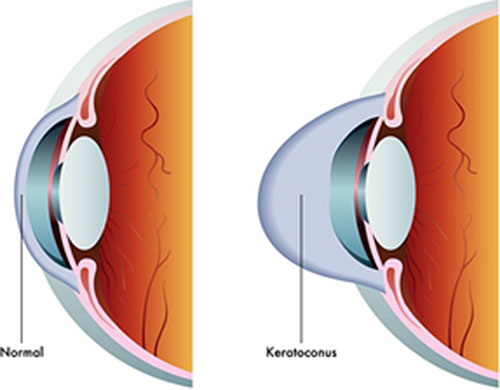
Keratoconus is a progressive eye condition in which the normally round cornea becomes thin and gradually bulges into a cone-like shape. This irregular shape affects how light enters the eye, leading to blurry vision, increased light sensitivity and in severe cases, significant visual impairment.

With the advancement of modern ophthalmic care, treatments such as C3R procedure in Mumbai, Intacs, and corneal transplants have transformed the prognosis for patients. Today, early diagnosis and expert care from the best eye surgeon in Mumbai can effectively slow keratoconus progression and help restore clearer vision.

This detailed guide explains keratoconus treatment and highlights why choosing the best eye hospital in Mumbai is essential for successful results.

What Is Keratoconus?

Keratoconus usually begins during teenage years or early adulthood and progresses over time. The cornea gradually weakens, resulting in:

  • Blurred or distorted vision
  • Frequent changes in eyeglass prescription
  • Sudden worsening or clouding of vision
  • Increased glare and light sensitivity
  • Difficulty seeing at night
  • Eye strain and headaches

Early detection is essential because timely intervention can prevent severe corneal damage and reduce the need for advanced surgical treatments.

Causes and Risk Factors of Keratoconus

Keratoconus is often an inherited corneal disorder, so about half of close family members may develop it. However, it can also occur randomly with no family history. It affects both men and women equally and appears in both eyes in most cases. Several other risk factors include:

  • Chronic eye rubbing
  • Genetic predisposition
  • Allergic eye disease
  • Connective tissue disorders
  • Oxidative stress damaging corneal tissues

Understanding these triggers helps in choosing the right keratoconus treatment in Mumbai tailored to the patient’s condition and stage.

Modern Keratoconus Treatment Options

Today’s ophthalmology offers multiple ways to stabilize or improve vision in keratoconus patients. The treatment choice depends on disease severity, corneal thickness and the patient’s visual needs.

Corneal Collagen Cross-Linking with Riboflavin (C3R)

The C3R procedure in Mumbai, also known as Corneal Collagen Cross-Linking (CXL), is a highly effective method to slow or stop keratoconus progression. This advanced treatment reinforces the cornea by combining riboflavin (vitamin B2) eye drops with controlled ultraviolet (UV) light. C3R (Corneal Collagen Cross-Linking with Riboflavin) stops keratoconus from progressing and prevents further bulging. It delivers the best results when performed in the early stages. With rising keratoconus cases in India, this treatment has become widely available and commonly advised. Getting evaluated by the best cornea specialist in Mumbai ensures accurate assessment before the procedure.

Benefits of C3R:

  • Stops keratoconus progression in most cases
  • Increases corneal stability
  • Reduces chances of needing a transplant
  • Safe, minimally invasive, long-term results

Intacs for Keratoconus

Intacs are small, crescent-shaped corneal inserts that help reshape and flatten the bulging cornea. They work well for moderate keratoconus and can greatly improve vision. These implants can be adjusted or removed if required, providing flexibility. Scleral lenses may also be used with Intacs for better visual correction. Intacs help strengthen thin areas of the cornea, reduce distortion and improve tolerance for glasses or contact lenses.

Benefits of the best Intacs for keratoconus in Mumbai

  • Quick recovery
  • Reversible and adjustable
  • Often combined with C3R for better results

Intacs in Mumbai are ideal for patients who are not yet candidates for corneal transplant but need more than cross-linking alone.

Advanced Corneal Transplant in Mumbai

When the cornea becomes too thin or scarred, corneal transplantation is the best option. Two major options include:

  • DALK (Deep Anterior Lamellar Keratoplasty)
  • PK (Penetrating Keratoplasty)

DALK removes only the damaged layers while preserving the healthy inner layer (endothelium), reducing rejection risks. PK is a full-thickness transplant used for severe scarring or extremely thin corneas.

Both surgeries require an experienced surgeon to ensure precision and best results. Choosing the cornea transplant surgeon in Mumbai increases the success rate and long-term visual stability.

When Should You See a cornea Specialist in Mumbai?

You should consult an eye specialist if you notice:

  • Rapid prescription changes
  • Distorted or double vision
  • Increasing glare sensitivity
  • Trouble driving at night
  • Family history of keratoconus

Early diagnosis by the best eye specialist in Mumbai can prevent irreversible damage and offer expert treatment options.

What Are the Benefits of Early Keratoconus Treatment?

  • Prevents worsening of the disease
  • Reduces reliance on strong prescription lenses
  • Improves overall quality of vision
  • Avoids the need for transplant in many cases
  • Offers long-term corneal stability

Which Eye Hospital Is the Best for Keratoconus Treatment in Mumbai?

Ojas Eye Hospital is recognized as the best eye hospital in Mumbai, known for its cutting-edge facilities, expert diagnostics and top cornea specialists. The hospital is a trusted center for keratoconus treatment in Mumbai, offering advanced options such as the C3R procedure, best Intacs for keratoconus and modern corneal transplant surgeries under one roof.

We are always at your service, helping you see the world clearly.

How to stop rubbing eyes?

Iris implantation, Iris implant surgery, Best Eye Surgeon in Mumbai, Eye Hospital in Mumbai, Best Eye Hospital in Mumbai

When people rub their eyes they are doing damage to the most important sensory organ in their body. The skin of the eyelids is the thinnest skin in the body.

This skin does not do well with constant trauma. "Pigmentary changes (darkening of skin) and loss of retro-orbital fat can lead to an unwanted facial appearance."

Rubbing the eyes fractures mast cells, which resemble tiny raspberries, with each saccule containing the chemicals histamine, heparin, and serotonin. Histamine makes eyes itch, heparin makes the eyes red, and serotonin keeps the inflammation going.

"The actual rubbing puts pressure on the eye sometimes up to 60mm Hg, which results in an immediate decrease of the itch response." "But minutes later it returns, often more intensely."

Additionally, eye rubbing inflames the ocular surface, which can make any inflammatory ocular surface disease, such as dry eye, worse.

Although the exact mechanism by which eye rubbing impacts keratoconus specifically is unknown (although increased inflammation may be a component), it is known that eye rubbing is highly associated with keratoconus.

"In some patients it may cause keratoconus, while in others it appears to exacerbate the keratoconus."

"The basic increased elasticity or decreased scleral rigidity of keratoconus is adversely affected by eye rubbing."

Also associated with keratoconus is increased allergies and atopic dermatitis.

"Both of these lead to vigorous eye rubbing,"  "The result is increased severity of keratoconus in these patients."

The incidence of floppy eyelid syndrome (FES) is approximately 59% of patients in the 45-60 age group. The presence of this condition has several negative effects on the ocular surface including papillary conjunctivitis, dry eye, severe meibomian gland disease, and exposure keratitis.

FES affects the quality of the lid closure and therefore the wetting of the ocular surface. In more severe case, the eyelids may actually open at night time, which leaves the corneal surface very exposed. Other severe case occur from an override of the upper lid over the lower lid (lid imbrication syndrome), which damages the underside of the upper lid and the corneal surface.

Identifying clinically significant eye rubbing can also entail observation, including darkening of skin around the eyes, increased erythema, and signs of mucus fishing syndrome, Dr. Perry said.

How to stop rubbing

Effective approaches to arresting eye rubbing are linked to the cause of the behavior.

Sometimes the behaviour is caused by allergies, so treatment of the allergies is key. Effective treatments include the use of topical and systemic anti-allergy medications, allergen avoidance, frequent showering and washing of clothes, and cool or cold compresses.

"Often it’s from habit, which is a lot harder to treat."

Suggests wearing glasses and taking preservative-free tears, mast cell stabilizers, or occasional topical steroids to break up the cycle of itching. Additionally, patients may consider desensitization therapy by an allergist.

Non surgical treatment for Keratoconus – latest advancement with eye drops

Common Eye Myths And Myth Busters

IVMED-80 (iVeena), which has received an orphan drug designation from the FDA. This  drug  has copper as an active ingredient, to enhance the activity of lysyl oxidase. Keratoconus occurs, Dr. Ambati explained, when there is a deficiency of natural crosslinks in the cornea, which is associated with lysyl oxidase mutations.

Donor tissue that had been treated with IVMED-80 showed better stress-strain curves, Dr. Ambati said. In vivo rabbit studies with IVMED-80 showed increased ysyl oxidase activity, which he noted as biomechanical evidence of increased crosslinking. There have been no toxic or adverse events. Currently, a Phase 1/2a clinical trial in Mexico is taking place with 36 keratoconus or post-LASIK ectasia patients who take two drops a day of either vehicle or IVMED-80. The primary end-point is reduction of kmax and kmean at 6 months with a secondary endpoint of biomechanical stiffness. At 1 month, 0.6 D of flattening seen at 1 year with the Dresden crosslinking protocol.

A pharmacologic method of flattening the cornea, Dr. Ambati and should, perhaps, take more of Dr. Ambati’s focus. From a financial/investment standpoint, Dr. Link said that this would be a relatively expensive project to do properly and the first quality investment would need to see detailed planning out to FDA approval.


Keratoconus

Keratoconus Treatment In Mumbai, symptoms & signs of keratoconus, causes of Keratoconus, CORNEAL TRANSPLANT, Treatment options for keratoconus

Keratoconus is a progressive disease of the outer transparent layer of the eye ball called the cornea affecting children and young adults. It is characterized by progressive weakening and thinning of the normally round cornea causing it to bulge forward and assume a cone like shape .This corneal steepening and irregularity results in the formation of distorted image of objects on the retina & gives rise to blurred vision. It generally affects both eyes but can also occur only in one eye.

What are the symptoms & signs of keratoconus?

Keratoconus

Keratoconus is detected usually on routine eye examination by the eye doctor. Keratoconus patient may have frequent change of glasses, presence of high cylindrical power (astigmatism) and also have increased habit of eye rubbing.

In advanced stage of keratoconus glasses do not help the patient to see clearly and they have to switch to using hard or semi-soft contact lenses to see clearly.

Eye specialist can diagnose early stage of keratoconus after a detailed eye examination which includes retinoscopy, slit lamp examination and specialized tests like topography to check the shape and curvature of cornea, pachymetry to determine the thickness of the cornea. Pentacam test is the gold standard for detecting early keratoconus.

What causes Keratoconus?

The exact cause of keratoconus is not known but latest research suggests that the cornea becomes weakened due to an imbalance of enzymes within the corneal tissue.

Keratoconus also shows some genetic predisposition. It may transmit from parent to children and affect morethan one family member. It is also associated with excessive eye rubbing as it is more common in allergic conjunctivitis patients who have itching and tend to rub their eyes more frequently.

Treatment options for keratoconus

In the early stages of keratoconus, corrective glasses or contact lenses can help the patient. As keratoconus advances, the corneal surface becomes increasingly irregular and these options do not help adequately. The treatment options for moderate to severe keratoconus are directed towards preventing the progression of keratoconus and for improvement in vision.

Avoiding eye rubbing is of utmost significance.

C3-R TREATMENT (Corneal Collagen Cross Linkage with Riboflavin)

It is a treatment which strengthens the inter-linkages between corneal collagen fibers. Eyedrops containing Riboflavin (Vit B2) are applied over cornea which is followed by ultraviolet light application.

C3R treatment increases the interfibrillar collagen linkages causing strengthening of the cornea, preventing outward bulge and further progression of keratoconus. It is a US FDA approved treatment procedure for Progressive Keratoconus.

Newer Advances:

  • Rapid/AcceleratedCrossLinking (KXL)
  • CXL in thin cornea (a special Hypotonic Riboflavin dye is used for corneas thinner than 400 µ)

For visual rehabilitation, we have options like glasses, contact lenses, INTACS, PRK, ICL.

Contact lenses with good fitting help regularise the irregular conical cornea and eliminate aberrations, improving vision and its quality.

Special contact lenses like Rigid gas permeable lens (RGP), multicurved ROSE K lens are most effective.

They are the treatment of choice when glasses fail to help the patient. They provide a smooth refractive surface replacing the irregular cone like surface of the cornea, thus enabling the patient to see clearly.

Larger diameter minisclerallens( 14-16 mm ) and boston scleral lens ( 18-24 mm) provide good vision even with advanced cones and can be worn for longer hours.

INTACS

INTACS

Intacs is a procedure which involves implanting one or two, tiny, clear crescent-shaped implants of a special polymer into a channel created within the cornea with a femtosecond laser. Intacs help to improve vision in patients with keratoconus by flattening the cornea.

Suitability

Intacs is ideal for adults over twenty one years of age, who suffer from keratoconus. The intacs prescription inserts are advised for patients to correct myopia and astigmatism when contact lenses are notsuitable.

Benefits

  • Simple outpatient procedure
  • Improvement in vision
  • Reversible and exchangeable
  • Minimally invasive as compared to corneal transplantation
  • Can be combined with C3R in the same sitting

Advanced Surface Laser Treatment (Photo Refractive Keratectomy)

Can be combined with C3R for visual improvement in mild KC. It also helps to regularise irregular corneal curvature.

Implantable Phakic Lens For High Myopia And Astigmatism

A collamer lens is permenently implanted in the eye of patients with stable Keratococnus and high myopia for improving vision and reducing the dependence on glasses and contact lenses

Corneal Transplant for severe keratoconus to get optimum useful vision.

  • DALK: Deep Anterior Lamellar Keratoplasty: Partial thickness corneal transplant: It is a procedure of transplanting only the upper few layers of cornea.It has the advantage of faster visual recovery and least risk of rejection
  • FULL THICKNESS CORNEAL TRANSPLANT (PK): Is done in cases of Severe Keratoconus with opacity.In this procedure the whole cornea (transparent outer covering of the eye) is replaced by a full thickness donor cornea. It needs regular follow-up after surgery.

Ojas Eye Hospital A Center of Excellence for Contoura Vision, Femto Bladefree Lasik in Mumbai, India.