Call us

+91-9240214610 (Bandra)
+91-9240214611 (Kandivali)


  • JAS-ANZ Accredited Certification
  • ICS Certified
  • NABH Certified Eye Hospital in Mumbai
Ojas Eye Hospital in Bandra, Kandivali, Mumbai

Tag: diabetic eye diseases

What is diabetic retinopathy and can it be cured? Causes, Symptoms & Treatment Options

Diabetes, one of the most challenging health conditions that continue to be a major concern, doesn’t just affect our overall health but has a serious impact on our eyes as well. With significant risk of triggering diabetic eye disorders, diabetes, if not managed properly, can lead to significant vision loss or absolute blindness.

Highlighting major causes of diabetic eye problems as well as the symptoms to watch out for, this article focuses on effective prevention and treatment of diabetic eye disorders to help you take the right call on when to consult an expert Ophthalmologist

It is important for diabetic patients to undergo regular annual eye check ups to diagnose any signs of diabetic problems in the eye at an early stage thus enabling early treatment and good results.

What are the major eye problems caused by diabetes?

Diabetic retinopathy, macular edema, progression of cataract and glaucoma are some of the major eye problems caused by diabetes. These can lead to vision loss and even blindness if not diagnosed and treated on time.

What is Diabetic Retinopathy?

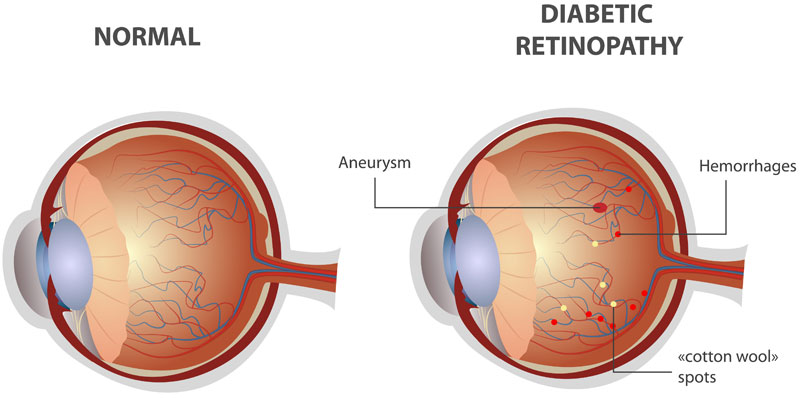
Having become a leading cause of irreversible blindness in adults, Diabetic Retinopathy remains a critical condition in which high blood sugar level causes damage to small blood vessels in the retina, causing leakage of fluid into the retina and resulting in loss of vision. Classified based on the nature of the condition, Early or Non-Proliferative Diabetic Retinopathy, and Advanced or Proliferative Diabetic Retinopathy are the two types of Diabetic Retinopathy.

Some of the major symptoms of Diabetic Retinopathy you should be concerned about:

  • Blurred vision
  • Dark spots in the vision
  • Color defects in vision
  • Complete vision loss
  • Dark threads or spots floating (floaters) in front of vision

What are the best treatment options for Diabetic Retinopathy?

Treatment of diabetic retinopathy has the following options:

  • Keeping blood glucose levels under control
  • Laser treatment or photocoagulation
  • Injections of medications into the eye (antiVEGF or steroid medications)
  • Vitrectomy surgery in more advanced cases to prevent or reduce vision loss

What is the link between Glaucoma and Diabetes?

Yet another common eye condition that puts diabetic patients at greater risk of peripheral vision loss and even complete blindness, Glaucoma refers to the damage to optic nerve due to increased pressure within the eye. Making patients even more prone to complications and vision problems, diabetes is considered as one of the major factors for advanced Glaucoma.

Key symptoms to watch out for diabetes-related Glaucoma

  • Eye pain
  • Red eyes
  • Nausea
  • Halos around lights
  • Loss of peripheral vision

What are the treatment options for Glaucoma?

  • Anti-glaucoma medication (eye drops and tablets)
  • Laser procedures like iridotomy
  • Trabeculectomy surgery
  • Minimally invasive glaucoma surgery (MIGS)
  • Cyclophotocoagulation

Does Diabetes Cause Cataracts?

A common eye problem in patients with diabetes, cataracts remain one of the biggest factors behind the damaging impact on eye lens as they get cloudy or foggy, resulting in blurry or hazy vision. Making patients more likely by two to five times of developing it, diabetes leads to even greater risk for Cataracts even at an earlier age with rapid progression.

Main symptoms of diabetes-induced Cataracts

  • Cloudy vision
  • Light sensitivity
  • Double vision
  • Halos around lights

What are the treatment options for Cataracts?

  • Keeping the blood sugar and blood glucose levels under control in diabetic patients can prevent or slow down the progression of cataracts.
  • Cataract surgery is done to remove the clouded lens and replace it with an artificial lens to restore clear vision.

What is Diabetes-Related Macular Edema? 

Diabetes-Related Macular Edema, is caused due to damaged vessels leaking fluid into the macula (central part of the retina), causing it to swell that primarily leads to distorted and blurred vision.

Key symptoms for Diabetic Macular Edema are:

  • Blurry vision
  • Double vision
  • Dark spots
  • Difficulty seeing colors
  • Difficulty seeing in bright light
  • Distorted or wavy lines are seen

Treatment of macular edema has the following options:

  • Keeping the blood sugar levels under control
  • Anti-VEGF injections
  • Retinal Laser

How to prevent diabetic eye disease?

Controlling blood sugar levels can go a long way in preventing and managing diabetic eye disease.

Here are some of the ways diabetic patients can prevent major eye complications from diabetes:

Controlling diabetes – Timely and calculated management of diabetes by keeping blood sugar levels within the ideal range is the only best way to prevent such eye disorders and complications. By taking a balanced diet, being consistent with exercise, monitoring blood sugar levels regularly and taking the right prescribed medications, patients with diabetes can effectively protect their eyes from serious problems.

Being regular with eye-checkups – As diabetes triggers a range of eye-related complications, regular eye-checkups can help detect early signs of diabetic eye disease and can help patients and the eye specialist to effectively take immediate measures for better treatment.

Manage blood pressure and cholesterol – High blood pressure and cholesterol levels can worsen diabetic eye disease and timely and frequent management by being conscious of your food intake as well as blood pressure can help prevent aggravation of critical eye problems.

Choose healthier living – Maintaining ideal weight, having a balanced nutritious diet comprising fruits, vegetables, and whole grains and staying physically active ultimately help to manage diabetes and protect your eyes.

The Takeaway

As diabetes leads to rapid progression of eye diseases like cataract and glaucoma, it is necessary to control the blood sugar levels strictly. The treatment for diabetic eye problems depends on the type of condition and the extent of damage caused by it.

Diabetic patients must remain consistent with regular eye checkups for identification and timely retina treatment in case of any signs related to Diabetic Retinopathy, or treatment for Glaucoma or Cataract.

As proper management of diabetes coupled with timely eye checkups are the key to prevention of diabetic eye diseases, Ojas Eye Hospital provides expert timely diagnosis and treatment for diabetic eye diseases for effective management and control.

Eyesight Challenges in Diabetes: What You Should Be Aware of?

Due to unhealthy lifestyle and eating habits, diabetes has become a common health problem all around the world. We are all familiar with the impact of diabetes on blood sugar levels and its impact on our general health, but it’s important to understand that diabetes can also have serious effects on our eyes. Diabetes increases the likelihood of developing diabetic eye disorders, which are eye conditions that are brought on by diabetes, and if these conditions are not managed properly, they can severely damage your eye health and even lead to vision impairment or blindness.

In this article, we’ll discuss everything you need to know about diabetic eye problems, their causes, symptoms, prevention, and treatment.

Diabetes and your eyes: the major eye problems

A group of eye conditions that can affect people with diabetes are referred to as diabetic eye diseases. The blood vessels in the retina, the light-sensitive tissue at the back of the eye, are affected by diabetes, which leads to several diseases. The most prevalent diabetic eye issues include diabetic retinopathy, glaucoma, cataracts, and diabetic macular edema.

Diabetic Retinopathy

Diabetic retinopathy is a leading cause of irreversible blindness in adults. In our eyes the images are formed at the light-sensitive part i.e., the retina, and when the blood sugar level is high, it causes damage to the small blood vessels in the retina.

Symptoms include:

  • Blurred vision
  • Dark spots in the vision
  • Color defects in vision
  • Complete vision loss
  • Dark threads floating (floaters)

Diabetic retinopathy is of two types:

  • Early non-proliferative diabetic retinopathy
  • Advanced or proliferative diabetic retinopathy

Glaucoma

Glaucoma is another common eye condition that diabetic patients are more likely to develop. In this eye condition, sometimes the fluid present inside the eye doesn’t drain and leads to a pressure buildup in the eye. When this pressure within the eye increases, it causes damage to the optic nerve. Diabetic patients are twice as prone to develop glaucoma as their peers without diabetes, and if it is left untreated, it can lead to peripheral vision loss and even permanent blindness.

Symptoms include:

  • Eye pain
  • Red eyes
  • Nausea
  • Halos around lights
  • Loss of peripheral vision

Cataracts

Cataracts are a common eye problem in people with diabetes, affecting the eye lens. Diabetic patients are two to five times more vulnerable to cataracts than those without diabetes and at a higher risk of developing them at an earlier age, making them progress more rapidly. In cataracts, the lens of the eye gets cloudy or foggy, which results in blurry or hazy vision.

Symptoms include:

  • Cloudy vision
  • Light sensitivity
  • Double vision
  • Halos around lights

Diabetic Macular Edema

A complication of diabetic retinopathy is diabetic macular edema, which occurs when the damaged blood vessels leak fluid into the macula, and this fluid accumulation can cause the macula to swell, leading to distorted or blurred vision.

Symptoms include:

  • Blurry vision
  • Double vision
  • Floaters
  • Dark spots
  • Difficulty seeing colors
  • Difficulty seeing in bright light
  • Distorted or wavy lines are seen

Prevention from diabetic eye diseases

It is difficult to control diabetes and eye damage, but there are several steps you can take to prevent or manage them effectively:

  • Control your diabetes: The best way to significantly reduce the risk of diabetic eye problems is to keep your blood sugar levels within a targeted range. A healthy lifestyle that includes a balanced diet and regular exercise, along with regular monitoring and medication, is essential for diabetes management.
  • Get regular eye exams done: If you are a diabetic patient, it’s a must to visit the ophthalmologist at least once a year. Early detection of any eye issues can result in more successful treatment outcomes.
  • Blood pressure and cholesterol management: High blood pressure and cholesterol levels can exacerbate diabetic eye problems; monitoring and managing them can help protect your eyes and overall health.
  • Healthy lifestyle: Maintaining a healthy weight, eating a balanced diet rich in fruits, vegetables, and whole grains, and staying physically active can help manage diabetes and thus protect your eyes.

Treatment of diabetic eye diseases

Treatment for diabetic eye problems depends on the specific condition and its severity.

Treatment of diabetic retinopathy has the following options:

  • Keeping blood glucose levels under control
  • Laser treatment or photocoagulation
  • Vitrectomy
  • Injections of medications into the eye
  • Anti- VEGF or an anti-inflammatory medicine
  • Surgery in more advanced cases to prevent or reduce vision loss

Treatment of macular edema has the following options:

  • Keeping the blood sugar and blood glucose levels under control
  • Laser surgery
  • Anti-VEGF therapy

Treatment of glaucoma has the following options:

  • Keeping the blood sugar and blood glucose levels under control
  • Eye drops
  • Laser surgery
  • Trabeculoplasty
  • Oral medication
  • Iridotomy
  • Microsurgery
  • Cyclophotocoagulation

Treatment of cataracts has the following options:

  • Keeping the blood sugar and blood glucose levels under control in diabetic patients can prevent or slow down the progression of cataracts.
  • Cataract surgery is done to remove the clouded lens and replace it with an artificial lens to restore clear vision.

Final thoughts from Ojas – Eye Hospital in Mumbai

For those who have diabetes, diabetic eye problems are a serious concern, but with proper management and early detection, the risk of vision loss can be greatly reduced. You can actively safeguard your eyes and preserve your vision by managing your blood sugar levels, getting regular eye exams, and leading a healthy lifestyle.

Booking an appointment with the eye specialists at Ojas – Eye Hospital in Mumbai can help you properly monitor and diagnose your eye health issues if you have diabetes.

Managing your overall health and well-being includes taking care of your eyes as well.

Ojas Eye Hospital A Center of Excellence for Contoura Vision, Femto Bladefree Lasik in Mumbai, India.