Call us

+91-9240214610 (Bandra)
+91-9240214611 (Kandivali)


  • JAS-ANZ Accredited Certification
  • ICS Certified
  • NABH Certified Eye Hospital in Mumbai
Ojas Eye Hospital in Bandra, Kandivali, Mumbai

Month: January 2023

January 2023, Glaucoma Awareness Month: What’s New And What Do I Need To Know About Glaucoma?

January is Glaucoma Awareness Month, making it the perfect time to talk about how to spread the word about this condition that can cause blindness. Early detection of glaucoma is necessary for receiving proper treatment.

Alarming key facts about glaucoma:

  • 50% of glaucoma sufferers are unaware of their condition.
  • 80 million people globally have glaucoma.

What is glaucoma?

Glaucoma is a group of eye conditions that damage your optic nerve and is usually caused when fluid builds up in the front part of your eye. This increased fluid exerts pressure on the optic nerveswhich can permanently affect eyesight if not diagnosed in time and treated. It is also noticed that some people have normal eye pressure but still get glaucoma. Untreated or poorly managed glaucoma can cause blindness and irreversible vision loss, which makes it the second most common cause of blindness worldwide.

What mostly causes glaucoma?

Aqueous humor is the fluid inside your eye, normally flows out of the eye through a channel. The liquid might build up if this channel gets blocked or if the eye is producing too much fluid, leading to a rise in pressure inside the eye and thus damaging the optic nerve.

What are the types of glaucoma?

There are various types of glaucoma, such as:

Open-angle glaucoma:

This is the most common type that happens when resistance builds up in the eye’s drainage canals. Because most people don’t have symptoms, the condition may go unnoticed for years.

Closed-angle glaucoma:

This is a rare type of glaucomathat often manifests suddenly. It happens when the angle between your iris and cornea is too small. It might happen if the pupil changes and dilates too quickly. This restricts the flow of aqueous fluid out of your eye and blocks your drainage canals, increasing eye pressure. Eye pain and headaches are two symptoms that can be very severe and need immediate medical attention.

Normal-tension glaucoma:

Even in the few cases where eye pressure is normal or not too high, optic nerve damage occurs.

Congenital glaucoma:

Some babies are born with improperly formed drainage canals from the womb. Your baby’s glaucoma symptoms may be visible to your doctor from birth, or symptoms may become noticeable in childhood.

What symptoms exist for glaucoma?

Some forms of glaucoma don’t have any early warning symptoms, and vision problems might occur gradually, making it easy to miss the symptoms. Regular eye examinations are crucial for catching this disease in its earliest stages. Since glaucoma damage is irreversible, early detection and treatment are essential to prevent blindness.

You might experience:

  • Pressure or pain in the eyes
  • Headaches
  • Red eyes
  • Sensitivity to light
  • Vomiting and nausea
  • Lights with rainbow-colored halo effects
  • Vision problems include tunnel vision, low vision, blurriness, or blind spots

If you encounter these symptoms, you should get immediate medical attention.

Who is more at risk of getting glaucoma?

Several significant risk factors have been found, which include:

  • Age greater than 60 years
  • A first-degree relative with glaucoma
  • A history of eye trauma or multiple surgeries
  • Chronic eye conditions like diabetic eye disease
  • Extreme nearsightedness or farsightedness
  • Use of steroid medications

How is glaucoma diagnosed?

It’s possible that you have glaucoma and may not even be aware of it. For the purpose of detecting glaucoma or other eye issues, routine eye exams are important. The eye exams can assess your optic health and vision loss.

An eye specialist may do one or more of these tests to check for glaucoma:

  • Visual acuity test
  • Visual field test
  • Dilated eye exam
  • Pachymetry
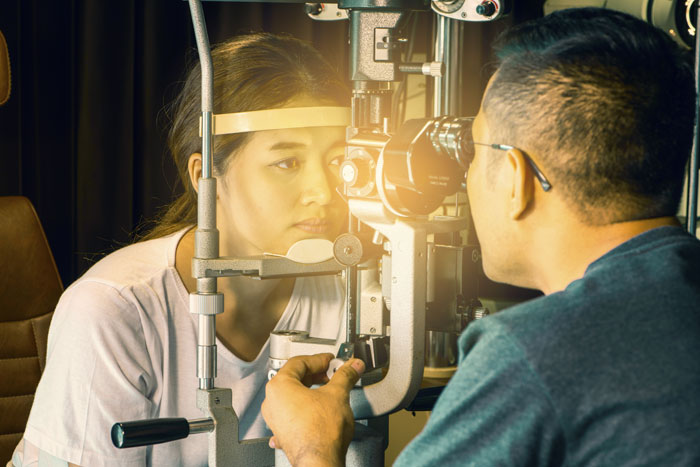
  • Slit-lamp exam
  • Ocular pressure test
  • Gonioscopy Optical coherence tomography (OCT)

How is glaucoma managed or treated?

Glaucoma, if left untreated, can lead to the faster development of permanent blindness or permanent vision loss. Treatments can slow down additional eyesight loss, but they cannot restore the lost vision. If you experience eye pain, severe headaches, or vision issues, it’s crucial to see an eye specialist as soon as possible.

Medications to treat glaucoma:

Glaucoma can be treated with a variety of prescription eye drops.

Laser therapy to treat glaucoma:

Your eye specialist uses a laser to enhance fluid outflow from your eye, and they might advise using lasers as a first-line treatment in place of or in addition to eye drops.

Surgery to treat glaucoma:

Surgery is another method to lower ocular pressure. As compared to drops or lasers, it is more invasive but also more quickly leads to improved ocular pressure control.

Is glaucoma curable?

No, glaucoma cannot be cured, but you can control the disease’s progression and its symptoms.

The best ophthalmologist in Mumbai can help you plan your glaucoma treatment

While there is no known cure for glaucoma, there are therapies that can manage eye pressure and prevent eyesight loss. Eye exams might save your vision by detecting the condition early, and you can prevent glaucoma from getting worse and leading to irreversible vision loss or blindness by carefully selecting your course of therapy. If you have glaucoma or are at high risk of developing it, it’s important to schedule an appointment at Ojas-Eye Hospital in Mumbai right away.

How Long Should I Wait To Exercise After Cataract Surgery?

Following cataract surgery, you can return home right away, which is usual and safe. However, you will need to wait before returning to your regular workout routine, as with most surgeries.

 Within the first week, you can engage in some light exercise, but you should hold off on more demanding activities for a few weeks. This will guarantee that your eye heals properly.Continue reading to discover more about safe exercises after cataract surgery.

How long after cataract surgery should you avoid exercising?

The best guidance regarding when you can exercise after cataract surgery comes from your eye specialist. Be sure to stand by their recommendations since they may have knowledge of your specific situation.

The following timeline provides a basic guideline for when you can resume certain types of physical activity:


Week 1 following surgery

You can engage in low-impact physical activities the week following surgery, such as:

  • Walking outside
  •  Light stretching
  • Mild treadmill exercise
  • Simple household work

Avoid bending over or lifting anything that weighs more than 10 to 15 pounds, including groceries and laundry. Your eyes may become more stressed as a result, which might prevent appropriate recovery.

Week 2 following surgery

Your doctor might give you the go-ahead for moderate-intensity exercises after two weeks, including:

  • Yoga
  • Jogging
  • Brisk walking
  • Slow dancing

4 to 6 weeks following surgery

You should be able to start doing more strenuous physical activities again. These may consist of:

  • Lifting weights
  • Running
  • Swimming
  • Hard cycling

Once more, consult your ophthalmologist before starting this intensity of exercise.

Do not forget to ask any further questions you may have regarding cataract surgery! Our eye specialists at Ojas – Eye Hospital in Mumbai are available to assist you through this operation so you may once again see clearly and precisely!

Cataract Surgery: Why You Should Not Delay Or Avoid It!

Although cataract surgery is a simple solution for cataract in older folks, some people are anxious about it. ‘What if my doctor finds cataracts?’, ‘Should I proceed with the procedure?’are common concerns that run through a patient’s mind. Continue reading to learn what can occur if you delay having this major operation.

How do cataracts occur?

Our eyes have a natural lens inside them to aid with vision, the lens bends or refracts light rays entering the eye. Cataract is clouding of this natural lens in your eye. Although mild cataracts may not show any symptoms, as they progress, cataracts can alter your vision.


What happens if cataract surgery is delayed or avoided?

This procedure is not urgent, so you can put it off for some time. However, if it is interfering with your regular activities, like night driving, reading , fine work etc.  you should think about having the operation done as soon as possible.

It can worsen and cause the following issues if postponed or ignored for a long period of time:

  • Impact on your day-to-day activities: The cataract develops relatively gradually, but if it becomes advanced, it can interfere with your normal activities. You might not be able to carry out routine tasks like reading a newspaper, knitting, using electronics, etc.
  • Inability to drive at night: The very first indication of a cataract is poor night vision. As a result, nighttime driving becomes challenging.
  • Cataracts are one of the main causes of vision loss: If neglected, they can seriously impair your vision. It is impossible to identify the contributing components or predict how quickly they grow. Therefore, it is advised to have cataract surgery as soon as possible.
  • A cataract may become hyper-mature: If you put off having cataract surgery for a longer period of time, the cataract may hyper-mature (over – ripe)  and operating on such cataracts becomes challenging and the risk of complications also increase.
  • Increased recovery time: Recovery period post surgery in advanced cataracts is prolonged.

The following are the additional risks of delaying cataract surgery:

  • Glaucoma
  • Poor vision
  • Sudden headache
  • Eye inflammation

You shouldn’t avoid or delay having surgery due to the risks and problems listed above, because doing so would lower your quality of life and productivity. For the best outcomes, have the operation performed by a well-qualified and skilled ophthalmologist.

Why you should visit Ojas – Eye Hospital for cataract surgery?

Ojas – Eye Hospital is the place to go if you’re seeking for an eye hospital to have cataract surgery. In Mumbai, we have treated many patients who had cataracts by performing lots of cataract operations. To make the procedure simple and comfortable for our patients, we use the newest tools and technology. Why are you holding out? Make an appointment with the best eye specialists at Ojas – Eye Hospital in Mumbai right away.

Strabismus (Squint Eye) vs Amblyopia (Lazy Eye): How Are They Different From Each Other?

People typically misunderstand the terms strabismus and amblyopia and frequently use them interchangeably, so let us talk about both today. And everything you need to know about each of these disorders, from their causes to treatments, is provided below.

What is a squint eye?

Squint eye and cross-eye both refer to the same ailment, also known as strabismus. Due to this problem, the eyes do not look in the same direction at the same time. The direction of one or both eyes can be inward, outward, upward, or downward. The brain finds it challenging to bring together images from each eye to generate a single image. This problem can be either continuous or intermittent.

What is a lazy eye?

A lazy eye occurs when one of your eyes has not developed its vision adequately. The word used by doctors to characterize this problem is amblyopia. If you don’t receive treatment, your brain will eventually learn to disregard the image coming from your weaker eye. As a result, with time, vision problems could develop.

What are the causes of squint eye?

Hereditary, traumatic factors, amblyopia etc. may be responsible for squint eye. 

What are the causes of lazy eye?

The causes differ depending on the condition that a person has. Uncorrected refractive errors in the eye cause refractive amblyopia. Amblyopia can be brought on by cataracts. A misaligned eye’s input is ignored by the brain, which can result in amblyopia.

What are the symptoms of squint eye?

Whether it is persistent or intermittent depends on the type of strabismus. However, a few of the most widespread signs are as follows:

  • Uncoordinated eye movements
  • Tilting or twisting of the head to try to focus on to something

What are the symptoms of lazy eye?

Amblyopia cannot be identified by mere observation because it has no outward signs. However, a few widespread symptoms and indicators include:

  • A poor sense of depth
  • Head tilting and eyes that seem to be out of alignment
  • An eye that strays from blinking or closing abnormally

What is the treatment for squint eye?

There are numerous strabismus treatment possibilities. Your eye doctor will suggest the most appropriate course of action based on the underlying cause of the disease.

  • Prescription glasses for vision treatment
  • Eye exercises both inhouse and at home
  • Eye muscle surgery

What is the treatment for lazy eye?

The severity of the condition and the cause of lazy eye affect the available treatments. Either is possible.

  • Corrective eyewear
  • Eye patches

Why to choose Ojas – Eye Hospital?

No matter what kind of health issue we discuss, it is apparent that each one requires immediate treatment before it becomes fatal. The same is true for lazy eyes and squinting, so contact a reputable eye hospital right away to obtain the proper care. We have skilled ophthalmologists on staff to give you a satisfying experience. We take care to ensure that you receive the greatest care and are at ease. Ojas – Eye Hospital in Mumbai, is where you can discover the greatest ophthalmologists. It is among the top eye care facilities in India. To schedule an appointment, call us at +91-9930084855 or go to our website.

Color Blindness: Is It Dangerous?

People who are color blind have numerous challenges in their daily lives that normal people are simply unaware of. Even the simplest activities, like choosing and cooking food, gardening, playing sports, operating a motor vehicle, and deciding what to wear, might present challenges. Color vision deficiency (CVD) or color blindness is also termed "poor color vision."

What is color blindness?

If you’re color blind, you see colors differently from the majority of people. Color blindness frequently makes it challenging to distinguish between particular colors.

Color blindness typically runs in families. Specialized glasses and contact lenses can help, but there is no cure. The majority of color blind people are adaptable and have little trouble going about their daily lives.

Instead of the reds, greens, and teals that others see in color charts, most color blind people see the following hues:

  • Yellow
  • Gray
  • Beige
  • Blue

What are the types of color blindness?

Red and green color blindness:

  • The most prevalent type of color blindness
  • This kind of color blindness can make it challenging for a person to distinguish between red and green in any situation.
  • Cone cells (a type of specialized retinal cells) are not fully developed to distinguish red and green colors , as there are no light-sensitive pigments present.

Blue and yellow color vision deficiency:

  • Blue and yellow color blindness is less common
  • The cone cells that are in charge of recognizing blue and yellow colors are immature and defective due to the absence of light-sensitive pigments.
  • Blue is frequently confused with green when people are trying to understand it, and yellow is frequently mistaken for blue.

Complete color blindness:

  • The most severe and uncommon type of color blindness.
  • This type of color blindness renders the sufferer completely color blind.
  • Since none of the cone cells responsible for determining color react to color, the only colors the person can sense are black, white, and grey.

What causes color blindness?

The most prevalent types of color blindness are hereditary, or passed down from one’s parents.

Damage to the eye or the brain can also result in color blindness. Additionally, as you age, your color vision may deteriorate as a result of cataract.

What are the signs and symptoms of color blindness?

Being unable to perceive colors as most people do, is the basic sign of color blindness. If you’re color blind, it could be challenging to see:

  • The difference between colors
  • Different shades of colors
  • The intensity of the colors

The signs of color blindness can frequently be so subtle that you might not even notice them. Many people who are color blind are unaware of their condition since we grow accustomed to how colors appear to us.

Other symptoms, such as nystagmus or sensitivity to light, may also be present in those with very severe cases of color blindness.

Am I at the risk of color blindness?

Compared to women, men are far more likely to be color blind. Having color blindness is also more likely if you:

  • Have a history of color blindness in your family
  • Take specific medications
  • Possess certain eye conditions, such as glaucoma or age-related macular degeneration
  • A specific medical condition, such as diabetes, Alzheimer’s disease, or multiple sclerosis
  • Optic neuritis or any other form of damage to the optic nerve.

If you suspect that you may be color blind, discuss having a test done with your doctor.

How is color blindness diagnosed?

A color vision test, often known as the Ishihara color test, assesses your ability to distinguish between colors. If you don’t pass this test, you might have defective color vision.

Several problems with color vision can be found using this test, including:

  • Protanopia:  inability to distinguish red
  • Tritanopia: difficulty in identifying blue
  • Deuteranopia: inability to recognize green.
  • Complete color blindness: also known as, achromatopsia

Why to choose Ojas – Eye Hospital for color blindness treatment?

One among the finest eye hospitals in India, Ojas – Eye Hospital, treats a variety of eye conditions and provides each patient with unique remedies. Ojas Eye Hospital in Mumbai provides the best services and highly qualified eye specialists to their patients with the utmost compassion and care.

All You Should Know About Eye Strokes

Strokes are not just limited to the brain; they can also occur in your eyes.

What is an eye stroke?

Anterior ischemic optic neuropathy, often known as an "eye stroke," is a serious and potentially debilitating illness that develops when there is insufficient blood supply to the tissues in the anterior portion of the optic nerve. A sudden loss of vision may result from an eye stroke.

What causes eye strokes?

The retina is harmed by restricted blood flow, which results in an eye stroke. Blood clots or blood vessel narrowing are typically to blame for this.

Although the exact cause of an eye stroke is not always known, certain medical problems, such as diabetes and high blood pressure, can make you more likely to experience one.

Who’s at risk for strokes?

Although anyone can have an eye stroke, specific circumstances increase the likelihood. As you age, for instance, your risk of having an eye stroke increases. Men experience it more frequently than women do.

Your risk of an eye stroke is also increased by some medical issues. This includes:

  • Glaucoma
  • Diabetes
  • Cardiovascular diseases
  • Narrowing of the carotid or neck arteries
  • Rare blood disorders
  • Problems that affect blood flow, such as high blood pressure and high cholesterol

All types of strokes are more likely to occur when you smoke.

What are the symptoms of an eye stroke?

Pain is typically absent among the signs of an ocular stroke. A sudden loss of vision or change in vision in one eye is typically the first and most prominent symptom and may include:

  • Blurred vision.
  • Floaters and flashes.
  • Darkness or blind spots
  • Small-scale vision changes that worsen over time.

How is an eye stroke diagnosed?

A medical emergency is when there is a sudden, total or partial loss of vision in one eye.

You might be asked by your doctor for:

  • A thorough eye exam
  • Your medical history
  • Your symptoms
  • Color fundus photography tests
  • Optical coherence tomography
  • Fluorescein angiography tests
  • Perimetry
  • Blood tests
  • Ultrasound
  • Echocardiogram

How is your eye stroketreated?

Depending on the extent of the stroke’s damage, your course of therapy will be determined. Your general health is another factor.

Among the potential treatments are:

  • Clot-dissolving medication
  • Corticosteroids
  • Laser treatment
  • Medication to reduce eye pressure
  • Massaging the eye area to open up the retina
  • Anti-vascular endothelial growth factor drugs
  • Pan-retinal photocoagulation therapy
  • Oxygen under high pressure, also known as hyperbaric oxygen

You have a better chance of saving some or all of your vision if the treatment begins early, and it will also be necessary to treat any other diseases that contribute to blood clots.

When should you schedule a visit with your doctor?

If you abruptly lose vision in one eye, you should seek emergency medical attention. Eye strokes typically only damage one eye.

Even if your visual loss is just temporary, seek medical attention. An ocular "mini-stroke" might result in temporary visual loss.

Ojas – Eye Hospital’s statement

If you are experiencing vision loss, especially if it just affects one eye, it is crucial that you seek assistance right away. It can be frightening to experience vision loss of any kind, even temporarily. It is best to seek prompt medical attention for an eye stroke, just as you would for a stroke in your brain. Book an appointment immediately with the best eye specialist at Ojas – Eye Hospital in Mumbai. The best results are typically achieved with early treatment.

Amblyopia: How to Correct a Lazy Eye

Lazy Eye Treatment in Mumbai

Amblyopia is a significant eye disorder that impairs vision. It is also known as "lazy eye," which occurs when one eye gets weaker than the other during infancy or childhood. The brain favors the stronger eye, which causes the weaker eye to deteriorate gradually. Early detection is important since early treatment has a greater chance of success.

A child with amblyopia has clear vision in one eye and blurry vision in the other, and eventually, the brain uses the stronger eye, which ultimately worsens the vision in the weaker eye.

What signs and symptoms indicate amblyopia?

Amblyopia symptoms might be difficult to identify. Children who suffer from amblyopia may have impaired depth perception, making it difficult for them to make out how close or far something is. Parents may also observe the following indicators that their child is having trouble seeing clearly:

  • Squinting
  • Closing one eye
  • They tilt their head
  • Diagnosis of amblyopia

What tests can diagnose amblyopia?

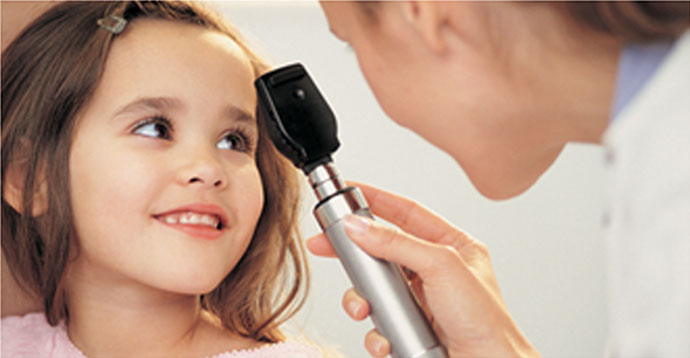
Frequently, amblyopia is not recognized by parents until a doctor identifies it during an eye exam. For this reason, it’s crucial that all children receive a vision screening at least once between the ages of 3 and 5.

The procedure used to test your child’s vision depends on their age and developmental stage:

  • Preverbal children: Cataracts can be found with a lit magnifying tool. Other evaluations might measure a baby’s or toddler’s capacity to fixate their eyes and track a moving object.
  • Children age 3 and older: The child’s vision can be assessed using images or letters. To test the other eye, each eye is temporarily covered.

How is amblyopia treated?

Treatment for amblyopia is far more effective if it begins in early childhood, when the connections between the brain and the eyes are still forming.
Treatment options consist of:

  • Children’s eye patches: Your youngster is asked to cover the better eye with a patch for at least a few hours each day, for months or even years. The weaker eye gradually becomes stronger as the brain is forced to process images from that eye.
  • Glasses: Another typical remedy for lazy eyes is a pair of glasses. By reducing nearsightedness, farsightedness, and eye crossing, they can aid in the treatment of amblyopia.
  • Eye drops: To temporarily blur vision in the better eye, your doctor may advise using eye drops. The objective is the same as with a patch: to make the brain utilize the less-effective eye.
  • Surgery: Your doctor may advise surgery to treat some amblyopia-related conditions, such as cataracts, which are very uncommon.

Ojas – Eye Hospital’s statement on amblyopia

Children frequently lose their vision due to amblyopia. Early and routine vision testing for children is recommended so that medical professionals can identify any visual issues and begin treatments such as a patch or glasses, which can be quite beneficial before any significant vision loss occurs. If your child has any vision or eye concerns, consult our expert eye specialists at Ojas – Eye Hospital in Mumbai, to learn more.

Ojas Eye Hospital A Center of Excellence for Contoura Vision, Femto Bladefree Lasik in Mumbai, India.