Call us

+91-9240214610 (Bandra)
+91-9240214611 (Kandivali)


  • JAS-ANZ Accredited Certification
  • ICS Certified
  • NABH Certified Eye Hospital in Mumbai
Ojas Eye Hospital in Bandra, Kandivali, Mumbai

Month: February 2022

Why Lasik Is Still The Popular Choice For Vision Correction Surgery

Since the beginning of time, people have been concerned about vision. Glasses and contact lenses were the only options before LASIK emerged. And probably, eyeglasses and contact lenses provided people with temporary improvement in vision. But there was still a need for permanent solution.

LASIK was one of the first successful refractive surgeries invented in the 1990s. It changed the way of correcting the vision with excimer laser. It was probably the first highly effective process with fewer side effects that provided a permanent relief solution to vision problems. It can be used for treating near-sightedness, farsightedness, and astigmatism.

History Of Lasik Eye Surgery

In the 19th century, laser procedures were met with partial success with problems in some. It was due to the minimal understanding, less experience, limited availability of skilled surgeons, and advancement in technology. Then came excimer laser in the 1970’s. It was found to have the ability to cut through organic tissue with incredible precision. And in 1971, the very first successful surgery was performed, known as photo refractive keratectomy. In this Excimer laser was used to reshape the cornea. It lead to rapid growth of the use of excimer laser in the field of "Ophthalmology".

In 1991s, an excimer laser was paired with a new device called Microkeratome. A microkeratome is a surgical instrument used to make a précise cut in the corneal flap. It allows the excimer laser to reshape the corneal stroma. This flap is later put back and heals naturally. This new process was called LASIK (Laser-Assisted in-situ Keratomileusis). After successful trials, LASIK received approval from FDA in 1999.

Why Should I Prefer Lasik Surgery For Vision Correction?

Even though other vision surgical options are available, LASIK remains the first and popular choice for many people. Some of the reasons why patients prefer LASIK are:

  • Technology Advancement:  LASIK uses the most advanced technology. The wavefront optimised and wavefront guided technology were incorporated with LASIK. Topography guided LASIK ( Contoura ) helps in correction of number with a topographical map of the cornea. This corneal mapping is unique for each individual. It is like a fingerprint. It helps in providing the most precise result possible. The system used for the excimer laser has very precise results.
  • Safe, Effective, and Reliable: LASIK is a safe vision correction procedure. The most important consideration while choosing any procedure is safety. According to data released by FDA, it was confirmed more than 95% received 20/20 vision or better the following day. In addition, it showed a 96% patient satisfaction rate, the highest for any elective process.Less than 1% of cases are reported to have complications. They are also found to be temporary and short-term.
  • Lasik is quick with Less Downtime:  The actual procedure for LASIK is rapid. You will be at the clinic for one or two hours in all. However, it takes around 15 minutes per eye. The laser contacts the eye for less than 60 -120 seconds.
  • Produces Immediate Results:  You will see an immediate improvement in your vision within 24 hours. As per the latest report, more than 96% of patients have achieved 20/20 vision, and almost 99% have achieved at least 20/40 vision. This short recovery period and quick results make LASIK popular and still the first choice for many people.
  • Improves and Supports Active Lifestyle: LASIK supports an active lifestyle. Now, you do not have to worry about losing, breaking, or fogging your glasses. There will be no need to worry about removing the contact lens while swimming or sleeping. You can participate in any sport. It helps in simplifying your lifestyle and adding confidence to your personality.

LASIK is permanent and once the cornea is reshaped, it will maintain its shape for years. The results are so good that most people do not need further treatment. Only 1% of patients go for second/enhancement surgery. LASIK is your investment in your vision and future happiness.

When Can I Go For Swimming After The Lasik Eye Surgery?

In LASIK, a flap is created in the cornea of the eye. Then the corneal flap is gently lifted and excimer layer is used for reshaping the eye. The flap is later put back on, which heals naturally. Once done, the cornea focuses the light accurately on the retina. It helps in creating sharp and clear images leading to perfect vision. LASIK is used for treating vision problems, which include near-sightedness, far-sightedness, and astigmatism.

You should avoid contact with water and hence avoid swimming immediately after LASIK surgery. You should consult your surgeon regarding the same. You should adhere to the instructions as directed by your surgeon to avoid any compilations. Your eyes are more vulnerable to infections and irritations for a few weeks of surgery as your cornea is still healing.

Risk Of Going To Swimming After Lasik Eye Surgery

The swimming pools are chlorinated for disinfection. The chlorine in the water may reach toxic proportions for vulnerable eyes causing complications. Chlorine used in pool water is toxic for the tear film of the eye. It may lead to discomfort, redness in the eye, irritation, dry eyes, or interfere with sensitivity.

Natural bodies of water such as the sea, lakes, rivers, and ponds aren’t chlorinated. However, they may have toxic levels of microorganisms which cause infection and eye diseases. The bacteria may also enter the inner part of the eye through the corneal flap opening and give rise to sight threatening infections. Also, it contains dirt and sand particles, which may irritate the eye.

Time Frame For Swimming

You may follow these timelines and general guidelines.

  • The first two weeks after surgery:  You should avoid getting into pools for swimming in the first week after surgery. Your significant eye healing takes place in the first week. Your corneal incisions are still healing. Exposing the eyes to unclean water can increase infection risk.
  • The third week after surgery: you must enter the pools only with well fitting goggles to protect the eyes
  • Four and Fifth weeks after surgery: You can swim in swimming pools and natural water bodies without goggles and engage in low-impact water sports.
  • Six weeks: Once you reach six weeks, you can enter the water without worries. You should also take care of your eye post-surgery.
  • Always wear your sunglasses when you are outdoors. It is to protect the eyes from harmful UV rays. UV rays can damage the eyes. Wear your sunglasses when you are at the pool or beach. It is essential in the first six weeks of surgery.

What Measure Should I Follow While Swimming After Lasik Eye Surgery?

  • Swimming pool water or seawater enters your eye: Do not worry if your eyes sting. Kindly wash your eye with clean water. Do not rub your eyes. Use the eye drops which your surgeon prescribes. If none, try using the artificial eye drops few times a day.
  • Eyes turn red after swimming: This happens when you open the eyes underwater. The chlorine in the water irritates the eye. Use artificial tear or antibiotic drops a few times a day. If symptoms persist after a day or worsen, it is best to see the doctor. The doctor will check for infection and will help you with medication accordingly.
  • Wait after LASIK eye surgery: You should wait for 3-4 weeks before entering the swimming pools. You should also avoid using soaps and shampoo overhead for at least the first week after the surgery. Your eyes are extremely vulnerable and sensitive after the surgery. You should be extra cautious about your eyes for the first few weeks after the LASIK. You should always wear your sunglasses when you are going out.
  • Drink plenty of water: You should drink plenty of water after surgery. It helps in keeping eyes hydrated and moist. It also helps in preventing the severe dry eye problem after LASIK. You should always use the drops as directed.

What To Expect After Lasik: All You Need To Know About

Immediately after the LASIK is performed, you may experience some discomfort in your eyes for a few hours. You might want to involuntarily want to rub your eyes. But you should not, as it may displace the flap from its set position and disturb vision.

You may experience:

  • Mild Pain
  • Blurry or hazy vision
  • Itching or burning in the eye
  • Watery eyes
  • The white part of eyes may look red for some days
  • Sensitivity to light, glare, and haloes surrounding lights

Usually with the routine post surgery medications, these symptoms of discomfort settle well.

How Much Time Required For Complete Eye Healing After Lasik Surgery?

Most patients have clear vision within 24 hours, and some take 36-48 hours. You will need to visit your doctor within 24-48 hours of surgery. During the first post-operative visit, the doctor will examine your eye and check for vision. Then, he may give you eye drops required for eye healing.

You will need to visit your doctor within 24-48 hours of surgery. During the first post-operative visit, the doctor will examine your eye and check your vision. The doctor will also prescribe you certain medications (eyedrops)

Is It Important To Use The Eye Drops After Surgery?

Yes, it is mandatory to use the eye drops as prescribed and directed by your surgeon. These are antibiotic and anti-inflammatory eye drops. They are essential for preventing eye infections and for adequate healing after surgery. Along with these, lubricants or tear substitutes are advised for up to 4 weeks.

Should I Have Someone To Drive Me Back Home After Surgery?

Yes, you should bring some relative with you to drive you back home on the day of surgery. Also, your eyes might be sensitive to light initially, you may have mild pain or numbness from the pre-surgery and watery eyes. You are generally permitted to drive after 2 days during the day and after a week at night.

How Soon Can I Watch Tv And Exercise After Lasik?

You should give time to heal the eye. Kindly avoid putting unnecessary strain on your eyes. You should avoid watching TV, working on a laptop, and reading for at least 24 hours. Our eyes are extra sensitive to light after surgery. Any type of screen time will put a strain on the eye. It can even lead to headaches. Also, avoid any heavy exercise after LASIK.

Is It Normal To Have A Red-Eye After Lasik?

The red spots in the eyes are caused by small bursts in blood vessels. You may have red spots on the white part of the eye. Don’t worry, it is entirely normal, and it will get back to normal in 2 To 3 days. They are usually created by the pressure of the suction ring used during surgery. The surgeon uses a suction ring to hold the eye.

Is It Normal To Have Blurry Or Cloudy Vision After Surgery?

You will experience blurry and hazy vision immediately after the surgery. It will persist for at least 4-5 hours. Within the first 24 hours, you will start seeing improvement and clarity in your vision. With advanced laser technology, it can take approximately 24-48 hours days to attain a fine vision

For How Long Do I Need To Wear The Sunglasses After Surgery?

After LASIK, the eyes become sensitive to light, leading to haloes and glare.  Hence, you should wear sunglasses. You should wear sunglasses for the first 12-24 hours to protect the eyes from sunlight and sharp lights.

Do I Need Something For Dry Eyes?

Dry eyes usually last for two to three weeks and are very common after LASIK. Your doctor will prescribe you some eye drops for dry eyes. Kindly take the eye drops as directed. You should take the eye drops even if you don’t feel your eyes dry as dry eyes interfere with the healing process. If dryness is more persistent, your doctor may also add an eye ointment for night time application which is more long lasting in its action.

6 Most Common Questions Associated With Lasik

LASIK is one of the common and popular techniques used for vision correction. LASIK stands for "Laser Assisted-In-Situ-Keratomileusis", which is one of the effective vision correction surgeries. The technique was introduced in the early 90’s. It is the most popular surgical method used to correct farsightedness, near-sightedness, and astigmatism. LASIK is entirely safe and has high patient satisfaction and success rate.

How To Evaluate If I Am Eligible For Lasik Eye Surgery?

Before undergoing LASIK, it is essential to be eligible for LASIK. Your LASIK surgeon will perform some tests to assess coirneal shape and strength and then determine whether you are eligible for LASIK or not.

Several conditions are taken into consideration while deciding the eligibility. For a suitable candidate for LASIK eye surgery, the person must be:

  • 18 years or above
  • Should have an appropriate corneal thickness for surgery
  • Have stable glass power
  • No history of any eye disease, scarring, or infection
  • Should not be suffering from autoimmune diseases like HIVs, AIDS, Rheumatoid arthritis
  • Should not be pregnant or nursing

Do I Feel A Pain During Or After Lasik Eye Surgery?

The eye surgeon uses the anaesthetic drops in your eyes when performing the surgery. It will give a numbing effect to the eyes. So you will not feel any pain at the time of surgery. Overall, the surgery is painless.

You may experience mild pain after completion of surgery once the numbness effect wears off. The doctor will prescribe some medications and eye drops after surgery. A routinme pain killer can be taken if required.

How Will My Ophthalmologist Perform Lasik Eye Surgery?

An experienced and trained surgeon performs the surgery. The highly computer-guided lasers reshape the eye to focus the light correctly on the back of the eye at the retina.

Firstly, to ensure a painless process, the surgeon will administer the anaesthetic eye drops in the eye. It is to numb the eyes. Then a small eyelid clip is placed on the lids to prevent them from closing.

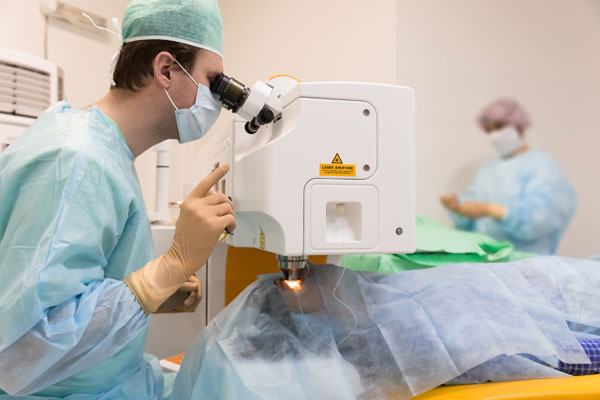
The surgeon will use the femtosecond laser to create a thin "flap" within the third layer of the cornea.The flap is then folded back. It is done to allow a surgeon to access the stroma (underlying cornea). Using the computer-guided laser, a beam of laser removes the small part of the cornea.It is done to reshape the cornea.

Once laser surgery is completed, the light is focussed accurately on the retina. Then optic nerves transmit the message to the brain to convert it into a clear image.

Do I Need To Have A Concern About The Risk Of Lasik Eye Surgery?

The risks associated with LASIK are generally negligible if the preoperative tests are performed well.

The theoretical risk associated with LASIK is flap complications.

You may experience the following minor side effects post-surgery:

  • Dryness of eyes
  • Mild pain
  • Itching or burning in the eye
  • The white part of eyes may appear red for few days
  • Sensitivity to light, glares, and haloes surrounding lights

These are uncommon with Advanced LASIK procedures such as Contoura and will get better within a week.

How Much Time It Takes For Complete Recovery After Lasik Eye Surgery?

Most patients have clear vision within 24 hours, and some take 36-48 hours. You will need to visit your doctor within 24-48 hours of surgery. During the first post-operative visit, the doctor will examine your eye and check your vision. The doctor will also prescribe you certain medications (eye drops)

What Results Can I Expect After Lasik Eye Surgery?

Most patients experience improvement in their vision immediately after the surgery and it further improves within the first week. You may also feel some grittiness or irritation in the eyes just after the surgery. Mild occasional blurry vision might be there in a few patients, but it is temporary and usually settles within a few days. For best results, always follow your doctor’s advice and administer the medications as per the schedule.

Can I Get A Refractive Lens Exchange If I Have A Cataract?

Introduction

In recent times, people have been more concerned about having perfect vision without dependence on glasses. Glasses and contacts may get frustrating, even for people over 45 years. Patients would prefer an advanced procedure that helps remove the cataract and eliminate the need for glasses altogether.

Although LASIK gives a wonderful resultin correcting refractive errors, itmay not be the best option for patients with presbyopia and cataract.

There are other options for patients with presbyopia andcataract. These include Presbyopic Refractive lens exchange (PRELEX) for presbyopia and Microincision cataract surgery with Premium IOLs for treating cataracts.

What is RLE?

Presbyopic Refractive Lens Exchange (PRELEX) is amicro-surgical procedure wherein a patient with presbyopia undergoes exchange of the natural lens with an advanced IOL.

RLE is considered as a minimally invasive surgical procedure. It exchanges the natural lens of the eye with an artificial lens (Trifocal/ Extended Depth of focus/ Extended Range of Vision lens). This artificial lens is known as an intraocular lens or IOL.

These IOLs are designed to correct mild to moderate astigmatism, farsightedness and/or nearsightedness. In addition, RLE enables you to eliminate the dependence on your glasses or contact lenses permanently.

What is a cataract?

The natural lens becomes cloudy and light rays cannotpass through it, hence leading to blurry vision. This condition usually occurs with age and is known as a cataract. There are various grades of cataract.

Microincision Cataract surgery with phacoemulsification is the treatment of cataract.

A cataract becomes harder and more opaque over time affecting vision severely. Cataractous lens needs to be replaced with an intraocular lens for improvement of vision.

The cataract surgery and RLE procedure are similar in technique. Both involve the procedure of exchanging the natural lens with an artificial IOL.

The surgeon by approaching the early cataractous changes can aim to remove both the cataract and the glasses in the same procedure. If the natural lens is removed at the beginning of the cataract, the chances of developing cataracts after RLE is eliminated. Because the cataract can never develop in an artificial lens.

IOLs

There are several different kinds of intraocular lenses. These include Monofocal IOL’s , Multifocal IOL’s , Trifocal IOL’s , Extended Depth of focus IOL’s , Toric IOL’s , Toric Trifocal IOl’s. The choice of IOL for every patient is an individualised decision that you and your eye surgeon will jointly make. Your surgeon will help you select the best IOL as per to your visual and lifestyle needs.

  • A Monofocal lens has one set refractive power. It helps focus light rays clearly at on particular distance and hence achieve clear vision.

With monofocal lenses a small adjustment known as monovision can be done with a combination of the two different powered lenses, one for far and one for near. Monovision is to have the ability to focus on near objects and far objects with both eyes open. The combination of the lens provides you better vision at most distances. But sometimes you still need to wear glasses for reading or seeing smaller things near you.

Premium IOLs

Premium IOLs are advanced IOLs that include Multifocal IOL’s , Trifocal IOL’s , Extended Depth of focus IOL’s. It can give you the perfect vision you’ve ever wanted.

Premium IOLs can eliminate the need for reading glasses too. These multifocal or trifocal lenses are available in all refractive powers. A biometry scan of patient’s eye will be done to assess suitability and decide the IOL as per various eye parameters.

Procedure of RLE

RLE procedure involves instillation of topical anaesthetic eye drops before the surgery. These will make your eye numb and hence procedure will be painless and comfortable.

The surgeon creates a sub 2 mm small opening in the eye. The cloudy fragments of the natural lens are removed via a laser probe. A foldable IOL is then inserted into the capsular bag via the same small opening.The entire surgery hardly takes 20 minutes to complete. But you may still have to wait for 2 hours before leaving the hospital.

Someone has to drive you home on the day of surgery. In addition, you may experience mild blurry vision for a few days after the surgery.

Are you a Good candidate for RLE?

  • Patients of 45 plus age group who do not want to wear glasses.
  • Patients with astigmatism, nearsightedness or farsightedness can opt for RLE.
  • The patient who does not wish to wear glasses or contact lens.
  • Patients wearing Monovision contact lenses or Multifocal Contact lenses may be good candidates
  • Candidates who do not have significant cataracts.

Conclusion

There are multiple options are available for seeking perfect vision. This depends on your eye number, Astigmatism, age and other factors. Your doctor will advises you to choose the IOLs from a wide variety. If you have a cataract, you should know the stage of the cataract. You can even opt for RLE at the beginning of a cataract. Consult your doctor and select the best procedure wisely.

Misconceptions About Pink Eye

Introduction

Conjunctivitis is defined as the inflammation or infection of the outer transparent membrane of the eyeball and the inner eyelid, which is due to several causes. It is also known as pink eye. It can be bacterial or viral, or allergens such as pollen, smoke and other harmful pollutants. It can be acute, lasting for 1-2 weeks, or chronic, lasting for 3-5 weeks. Untreated conjunctivitis may cause serious complications.

Pink Eye (Conjunctivitis)

Pink eye (conjunctivitis) is defined as an inflammation or infection of the transparentmembrane (conjunctiva). When small blood vessels in the conjunctiva or the eye become inflamed, their diameter increases and so visibility increases. Whites of the eyes appear reddish or pink due to conjunctivitis.

Conjunctivitis is mainly caused due to viruses such as adenovirus and herpes virus, which are primarily responsible for pink eye. In addition, coronavirus is also a virus that causes pink eye. These can be treated with the help of anti-inflammatory eye drops, antiviral agents, lubricants and applying a cold compress for symptomatic relief.

Many bacteria also cause pink eye, such as staphylococcus aureus, Haemophilus influenza, Streptococcus pneumonia, and pseudomonas aeruginosa. They can be treated using eye drops and eye ointments containing antibiotics.

Many allergens cause pink eyes, such as moulds, pollen grains, and other substances. These substances cause allergies. Redness of the eye can also be due to irritating substances present in shampoo and cosmetics. These can be managed by using oral anti-histaminic drugs such as cetirizine and levocetirizine and topical antiallergic agents.

Infective conjunctivitis spreads mainly by touching the contaminated surface previously touched by an infected person or by skin-to-skin contact. It can be prevented by using continuous hand wash or using sanitiser frequently. It can also be spread by the sneezing or coughing of an infected person to a healthy person via air droplets.

Apart from medications, self-care is necessary for people with conjunctivitis by reducing contact with allergies and the infected person. Regular cleaning of the eyelashes and eyelids is important to avoid secondary infection.

Conjunctivitis can become more serious when they affect the cornea. They include conjunctivitis caused by gonorrhoea, chlamydia and other potent viral strains.

Symptoms

The most common visible symptoms of a person suffering from the pink eye are:

  • Redness is commonly seen in the inner side of eyelids
  • Excessive watering or tear secretion from the eyes.
  • A thick yellow discharge after sleep is primarily seen in people with conjunctivitis.
  • Grey or white discharge from one or both eyes.
  • Gritty feeling in one orboth of eyes.
  • Itching with redness of eyes which is commonly due to allergens (Allergic Conjunctivitis )
  • Burning sensation
  • Blurry vision
  • People suffering from conjunctivitis are seen to have increased light sensitivity.
  • Swollen eyelids
  • In some people, watery eyes are seen due to the over activation of tear glands.
  • Swollen lymph nodes, fever and headache, are also seen.
  • Symptoms in newborns include red, tender and puffy eyelids.

Misconceptions

The major misconception about conjunctivitis or pink eye is as follows:

  • Conjunctivitis patients do not needto be consulted by a doctor.
  • May self medicate with over the counter medicines from a chemist
  • Pink eye affects only kids.
  • There isno treatment for conjunctivitis.
  • People who once have conjunctivitis means they will develop immunity to conjunctivitis.
  • Conjunctivitis always means pinkish eyes or red eyes.
  • Pink eye is the reason for blindness.
  • Conjunctivitis can only be treated with antibiotics when taken for a long time.
  • Pink eyes can also be caused by rubbing eyes.
  • Pink eye spread by eye contact with an infected person.
  • Staying home can prevent conjunctivitis.

RELEX SMILE

Introduction

Many people undergo laser vision correction to get rid of the spectacles and contact lenses. Modern technology has evolved for the betterment of the people. So in this modern era, correction of vision is much easier than before. Many laser vision correction technologies have come up, but they have many drawbacks. So to cover up the drawback of other laser surgery, RELEX SMILE is the newer technology for vision correctness. Many laser vision correctness methods are available today. SMILE laser eye surgery provides faster recovery and long-term benefits. It provides one of the most successful treatments for vision correction.

RELEX SMILE

RELEX SMILE or SMILE stands for Small Incision Lenticule Extraction. It is one of the modern technology used today for the correction of vision. SMILE is mainly used to correct shortsightedness, myopia, and astigmatism, due to an irregularly shaped cornea. With this technique, the shape of the cornea is changed, which helps more light to focus on the retina, giving a clear vision. It reduces the need for lenses for seeing nearby and faraway objects. The recovery is faster after the surgery, so people can get back to work fast. The chances of failure of SMILE laser eye surgery are very rare.

Eligibility

Following are the eligibility criteria for the person undergoing SMILE laser eye surgery-

  • The patient must be of more than 21 years of age.
  • A patient should have good health.
  • The cornea of the patient must be healthy.
  • The patient should have an eye prescription which is not changed for more than a year.
  • If a woman is undergoing SMILE surgery she should not be pregnant or lactating.
  • No infection or injury should be there in the eyes.
  • People with advanced glaucoma can’t undergo SMILE laser surgery.
  • Hyperglycemic patients are not eligible to undergo SMILE laser surgery.

Procedure

The following procedure is used during SMILE laser eye surgery

  • Before the surgery, the doctor administers an aesthetic eye drops in the patient’s eye for painless surgery.
  • The laser called Carl Zeiss VisuMAX is used, which places pulses of laser on the cornea with accuracy and precision.
  • The pulses then form a tiny bubble layer over the tissue, which is to be removed.
  • The laser makes a small connecting layer over the tissue, which allows the surgeon to remove the tissue. In addition, it assists in altering the shape of the cornea and enhances eye vision.

The complete procedure takes 15-20 minutes, during which Femtosecond laser is used to remove a disc of tissue from the cornea providing clear vision.

Advantages

Following are the advantages of SMILE over the other surgical methods-

  • During LASIK , the flap is made, but no flap is made in the SMILE laser surgery which reduces the chances of flap dislocation.
  • The complication of dry eyes is minimal in SMILE.
  • The healing period is shorter in SMILE than in lasik.
  • The efficacy of SMILE is very high.
  • The corneal disk of tissue is removed through a small incision, so the chances of corneal damage are less.
  • It is a quicker procedure than the lasik treatment, which completes within 15 minutes.
  • The whole process is comfortable, and after surgery, there is no flap related complications.

Conclusion

With fewer side effects and more benefits, SMILE is one of the best laser eye surgery to correct vision-related problems. SMILE provides a good long-term solution for vision correction with low failure and high success rates. The whole procedure completes quickly, so one can get back to work without much delay.

Managing Dry Eyes

Introduction

Dry eyes disease is a common condition in which natural tears cannot provide adequate lubrication to the eyes. As a result, the volume of tears can decrease or become unstable for many reasons. For example, if the eyes produce poor-quality tears, that can lead to dry eyes. This tear film instability results in inflammation and damage to the surface of the eyes.

The person with dry eyes feels uncomfortable. They might have a burning or stinging sensation due to dryness of the eyes. People may also feel the dryness of eyes in certain situations such during bike riding, using a computer or any screen for a long time.The eye dryness can be treated by changing lifestyle and using eye drops.

Dry Eyes And Symptoms

Patients with dry eyes may experience many symptoms, some of which are as follows-

  • A stinging or burning sensation in the eyes and a feeling of dryness, grittiness, and soreness in the eyes
  • A feeling like foreign material is present in the eyes.
  • Some mucus near the corner of the eyes.
  • The eye becomes sensitive to wind and light
  • Ocassional watering
  • Redness of the eyes
  • Difficult for the person to focus on specific things.
  • Pain in the eye soon after reading.
  • Difficult to see at the end of the day.
  • Sensitivity to light is increased
  • Feeling uncomfortable while wearing contact lenses.
  • Tearing of the eye
  • Occasional double or blurry vision
  • Sticking of eyelids after waking up

Causes Of Dry Eyes

  • Computer use: While using the screen or working on the computer, there is less blinking of eyes, leading to dryness of the eye.
  • Contact lenses: Wearing contact lenses tends to lead to dryness of the eye.
  • Ageing: As the person ages up, the eyes natural tear secretion decreases, resulting in eye dryness. Dryness of eyes is more common in the elderly than the young people.
  • Menopause: Post-menopausal women are at higher risk of eye dryness than males due to hormonal changes.
  • Indoor environment: The use of A.C, ceiling fans, and air heaters causes a decrease in moisture in the indoor environment, which causes dryness of the eyes.
  • Outdoor environment: Dry climate or high altitude area and hot air can also cause dryness of eyes.
  • Air travel: People who fly frequently tends to have dry eyes due to the dry ambient environment of aero planes.
  • Smoking: Major cause of eye dryness and also causes other eye disorders such as optic nerve weakness and cataract.
  • Medications: Anti-histamines, birth control pills, and antidepressants cause eye dryness.
  • Eyelid problems: Incomplete closure of eyelids during sleeping or less blinking of eyes causes eye dryness. Ocular diseases may also result in long term dryness of the eyes.
  • Laser surgery: It may be a cause of eye dryness.
  • Diet: Diet containing less vitamin A leads to various eye disorders such as eye dryness.

Lipiflo Treatment For Dry Eyes

LipiFlow is a new, non-invasive treatment designed to get rid of dry eye symptoms. LipiFlow works by applying heat into both the inner and outer eyelids and then massaging the eyelid from the outside.

The treatment is done by an external device placed under the eyelids to apply heat outwardly of the eyelids. Then it massages the eyelids gently. This process is as least-invasive as possible, and it does not have any side effect on the eyes. The purpose of this gentle massage is to open the ducts of the meibomian glands, expelling any obstructions as these blockages warms up and turn into liquid form. The major disadvantage is that it lasts only for 2-3 years.

Intense Pulsed Light Treatments For Dry Eyes

Intense pulsed light treatment is also effective in the management of dry eyes. The treatment is based on the principle that inflammation is one of the critical causes of dry eyes. Therefore, if it reduces the inflammation, it will better the eye dryness too.

The treatment is effective in managing inflammation. The doctors also use this treatment strategy in managing the inflammation of the skin, such as in rosacea or telangiectasia.

The intense pulsed light treatment is effective in the management of meibomian gland dysfunction. Generally, the lipid-rich secretion of the meibomian gland, also known as meibum, possesses antimicrobial properties. In addition, it aids in maintaining a clear lid margin. However, the formation of abnormal blood vessels near the meibomian glands secretes several inflammatory mediators. It results in meibomian gland dysfunction. The intense pulsed light treatment manages the formation of these abnormal blood vessels, thereby treating the meibomian gland dysfunction. The therapy prevents inflammation, improves cellular function, and reduces infection.

Corneal Mapping

Corneal Mapping (Corneal Topography)

Corneal topography is an advanced device used by ophthalmologists to produce detailed images of the shape, curvature and thickness of their patients. These images give ophthalmologists excellent information about the condition of the corneal surface.

Different Types Of Corneal Topography

  • Placido disc topography: Placido disc reflection systems measure curvature, irregularities and the quality of the tear film and the outer bodies and other parts of the anterior cornea.
  • Scheimpflug and scanning-slit topography: They provide information about the anterior and posterior surface of the cornea, its shape and also give detailed information about the corneal thickness.

Different Maps Obtained Through Corneal Topography

The ophthalmologists may obtain the following maps through corneal topography:

  • Axial Display Map: It is a standard mapping system and is not very accurate. Axial maps are a handy tool for selecting a primary curve for a soft contact lens due to displaying of average bending angle.
  • Tangential Demonstration Map: They provide very accurate results for measuring the accurate shape and curvature of the cornea and are, therefore, useful for the application of contact lenses, especially ortho-k lenses. This map is also helpful in measuring contact lens power while the lens is in the eye. It helps the patient wear a multifocal contact lens to obtain appropriate visual acuity. They are ready to detect changes in corneal curvature that may occur due to corneal distortions due to contact lenses.
  • Elevation map: This map helps determine the cornea’s actual condition and aids in selecting the best contact lens design for a person. The map display is very useful when deciding between scleral gas permeable lenses (GP) or a contact lens. Elevation mapping is also helpful in ortho-k management, as the shape of the angle is vital in determining whether ortho-k lenses will fit a patient and in choosing a double-axis or single-axis lens.
  • Corneal thickness map: This map display is used to locate ocular diseases, such as keratoconus, but they help monitor changes in corneal thickness during contact lens contact.
  • Tear-splitting indicator ( Tear Break Up time ) : This map shows the quality of the natural tear film and shows how the quality of the tears is affected by the wearing of a contact lens. It helps to measure the tear film before the patient wears contact lenses. They were then compared with the measurements taken after the patient wore contact lenses.

Purpose Of Corneal Mapping

Corneal mapping is used to diagnose, and monitor various eye conditions. The doctor uses this before advising of contact lenses and while planning for surgeries such as laser vision correction. The eye doctor utilizes corneal topography maps in conjunction with other tools regarding laser vision correction. It precisely determines how much corneal tissue needs to be removed to correct the patient’s vision.

Advantages Of Corneal Mapping

One of the advantages of corneal topography is that it can detect abnormal conditions (minute changes in corneal shape ) that are not detectable in a routine examination.

Corneal topography provides a detailed, visual description of the shape of the cornea. The doctor uses this information to diagnose, monitor, and treat various eye conditions. The doctor also implements corneal topography in prescribing contact lenses and surgical planning, including laser correction.

Differences Between Corneal Topography And Corneal Tomography

Following are some of the differences between topography and tomography:

  • Corneal topography is a non-invasive method of mapping the upper extremities and the shape of the anterior corneal surface. It is performed using a Placido disc that examines the cornea based on the reflection of fixed rings. The devices used are Orbscan, Atlas, and NIDEK OPD.
  • Corneal tomography makes 3D images of the cornea and examines the entire cornea from posterior and anterior regions. It is done using scheimpflug imaging that looks at the cornea using two cameras that images the cornea 360 degree as it rotates. Devices used are Pentacam, Galilei, and Sirius. This images both the front and back surfaces of the cornea hence gives more information about the corneal shape. Pentacam HR is a gold standard device.

Performance Of Corneal Topography

You are asked to sit in front of a lighted round device containing a ring pattern and rest your head against the head rest. A series of data points will be collected, and a colourful image of your cornea shape will be displayed on a computer screen. The images will contain various colours to differentiate the height, similar to a map.

Contoura Vision

Introduction

Wearing spectacles to improve vision for far and nearby things is not always comfortable for some people. Therefore, many modern techniques have come up to treat vision problems. Like all modern techniques, Contoura vision can treat vision-related problems without any pain or damage to the eyes.

What Is Contoura Vision?

Contoura vision, also known as topography-guided LASIK surgery, is the latest technique for people undergoing spectacle removal surgery. The advantage of Contoura vision is that it treats vision-related problems and helps in treating corneal irregularities. In addition, this is USFDA approved treatment with more safety and fewer side effects.

Why Should You Opt For Contoura Vision?

  • Contoura vision helps treat the visual axis of the eye, which is the natural axis at which eyes see, while other procedures such as LASIK surgery treat only the pupillary axis.
  • Contoura vision consists of a special topolyser that helps mark and remove corneal irregularities.
  • Contoura vision helps create an optically perfect smooth surface of the cornea, enhancing visual sharpness and quality.
  • Contoura vision is much beyond power correction.
  • Contoura vision also helps treat corneal curvature, which other surgical treatments can’t.
  • There are no side effects if preoperative evaluation is done well, and
  • The healing time is faster in Contoura than in LASIK surgery.
  • Compared to others, the Contoura vision has the advantage that the physician can adjust the Q value, which defines the shape of the cornea.
  • When pre and post-operative topographies of the cornea were checked after treatment from Contoura vision, the uniform ablation zone was formed, which was missing in refractive wavefront-optimized treatment.
  • Contoura vision comprises computerized eye movement tracking, which ensures that when the laser is used, it delivers pulses with more accuracy. This feature is absent in other corneal treatments such as SMILE.
  • The rate and time of recovery in Contoura are very fast, while SMILE treatment takes 7-10 days.
  • Contoura vision helps treat astigmatism, while LASIK and SMILE do not help in treating astigmatism.
  • Contoura vision eye treatment is also beneficial to those people who drive at night. This modern treatment can reduce vision problems in low light conditions.

Who Is Eligible For Contoura Vision?

Contoura Vision is a USFDA approved technique that delivers better results than LASIK and SMILE. Following are the eligibility condition for which people can undergo Contoura vision eye surgery-

  • The patient should have a prescription for eyewear.
  • The patient undergoing surgery must be more than 18 years of age.
  • The cornea of the patient should be of adequate thickness when undergoing surgery.
  • The patient should not be suffering from any corneal disorders.

What Is The Difference Between Contoura And Lasik Surgery?

Following are some of the differences between Contoura and LASIK surgery:

  • Corneal irregularity treatment: This is only done in Contoura vision surgery, not in LASIK surgery.
  • Corneal tissue: The corneal tissue is saved more in Contoura vision than LASIK surgery.
  • Recovery: After Contoura surgery, recovery time is very fast as the patient can go home immediately.
  • Astigmatism: Is treated with much more accuracy with Contoura LASIK.
  • Precision: Contoura works with a combination of three machines which include Femto laser, topolyser, and excimer laser. In contrast, LASIK surgery works with the combination of two lasers: excimer laser and Femto laser.
  • Cost: The cost of Contoura surgery is more than other surgery. However, Contoura vision provides more successful results than others and the accuracy and precision of Contoura surgery are more than others.

Conclusion

Contoura vision has more advantages over LASIK or any other eye surgery. The Contoura surgery is best possible way which can treat other irregularities present in the eye.

Benefits Of Lasik For Athletes

Introduction

In today’s competitive world, every person wants to have a significant advantage over the other. Athletes are not an exception to this. They practice and work hard to achieve success. Vision plays a vital role in the performance of athletes. Athletes need a perfect vision for excellent perception, hand-eye coordination, and quick response. Unfortunately, the result of their hard work and years of practice can suddenly change because of poor eyesight/ thick glasses. To achieve a successful career, the athletes require perfect vision. LASIK surgery is one of the options that provide several advantages to athletes who re dependant on glasses.

What Is Lasik?

LASIK stands for LASER in-situ keratomileusis. This procedure helps people correct several refractive errors such as nearsightedness, farsightedness, and astigmatism. The cornea is the upper transparent layer of the eye. It helps in focusing light and assists in creating an image on the retina. The corneas focus light on the retina to create a perfect image. However, in people with refractive errors, the light may either focus in front or beyond the retina resulting in blurr vision.

People generally use glasses or contact lenses to create a clear retinal image and hence perfect vision. However, these have some disadvantages, especially in the case of athletes. LASIK surgery helps in reshaping the cornea. It will help the cornea focus the light correctly on the retina. LASIK is a painless surgery completed in 15 minutes to 30 minutes. It provides immediate results in most patients.

Sports And Benefits Of Lasik

The doctor performs LASIK surgery in patients of all types. However, one section that achieves significant benefits from LASIK is athletes. LASIK eliminates the need for contact lenses, resulting in tremendous convenience to the athletes. It also improves the overall performance. Players primarily related to the following sports achieve significant benefits from LASIK:

  • Football: Football is the game of speed. There is a high risk of breaking the glasses. The contact lenses may also get cloudy due to sweat and dust. LASIK surgery is effective in such athletes.
  • Golf: Several sports persons playing golf have opted for LASIK surgery to improve their performance as there is a need to view the goal, which is far away.
  • Baseball: Baseball players require sharp vision.There is a high risk of breaking the glasses. LASIK surgery helps in improving vision without glasses and contact lenses.
  • Swimming: People cannot swim with their contact lenses. It will increase the chances of eye infection. Those who are professional swimmers / scuba divers especially benefit from LASIK.
  • Boxing: Athletes cannot box with their glasses on. LASIK surgery is the perfect choice for them.

What Are The Benefits Of Lasik For Athletes?

There are several advantages of LASIK surgery in athletes. Some of them are:

  • Better vision: Excellent vision is more than an advantage for the athletes. It is a necessity. Whether it is hitting the ball or anticipating the move of the opponent, perfect vision is required for good performance. Better vision improves the performance of the athletes without any risk of eye injury due to breaking of glasses or contact lens related eye infection.
  • Superior vision in all weathers: Sports are held in different parts of the world in various weather conditions. They may be in summer, winter, rainy, or dusty. Vision improvement through LASIK surgery provides superior vision in all weather conditions than glasses and contact lenses.
  • Get back to the game quickly: LASIK surgery offers fast recovery. As a result, athletes undergoing LASIK surgery may soon join their training sessions.
  • Convenience:Glasses during sports results in significant inconvenience. They may break during contact sports. In some sports, the glasses also come as an obstruction with wearing face and head helmets. Dirt, pollution, and sweat in contact-lens wearers cause irritation and risk of eye infection. LASIK surgery helps to increase convenience in athletes.
  • More sports options: LASIK surgery offer various sport options for the players. Many athletes who were good in particular sports were unable to join them due to poor vision and the risk of wearing glasses and contact lenses. With the LASIK surgery, these players choose to take any sports of their interest.
  • Also many who desire to do adventure sports such as Scuba diving , Sky diving , LASIK helps them attain freedom from glasses and contact lenses to pursue their passion.

Conclusion

LASIK surgery is a fast, effective and excellent way to correct the vision in athletes with nearsightedness, farsightedness or astigmatism. It offers several advantages and improves performance. It also reduces the risk of injury (wearing glasses) and risk of eye infection (during wearing of contact lenses).

Active Lifestyle And Your Ocular Health Benefits

Introduction

A sedentary or unhealthy lifestyle can affect various body parts, including the eye. Overeating or unhealthy eating, tobacco smoking and binge drinking may be the causes of visual disturbances. You should lead an active lifestyle to improve your ocular health. Several lifestyle changes reduce the risk of several ocular diseases, such as age-related macular degeneration, diabetic retinopathy, cataract, and glaucoma. A healthy diet also plays a crucial role in improving and maintaining ocular health.

Sedentary Lifestyle And Risk Of Eye Diseases

An unhealthy lifestyle increases the risk of several diseases such as diabetic retinopathy, glaucoma, and cataracts. You may reduce the risk of these diseasesby making simple alterations in your lifestyle and choosing a healthy lifestyle.

Some of the risks include:

  • Smoking is often associated with a nuclear cataract.
  • Diabetes leads to quicker progression of cataract and a posterior subcapsular cataract
  • Drinking alcohol is associated with cataracts.
  • High radiation exposure may affect ocular health.
  • Lack of vitamin C causes cortical cataracts and posterior subcapsular cataract.

Reducing Risk Of Eye Diseases With Active Lifestyle

Several lifestyle adjustments help you in improving eye health. Some of them are:

  • Quitting smoking and alcohol.
  • Reduced exposure to UVB light by using a hat or wearing dark glasses. It alsohelps to protect you from nuclear and cortical opacities.
  • Adequate intake of vitamin C or carotenoids helps to reduce the risk of cortical cataracts.
  • Eating green leafy vegetables and zinc-rich foods with antioxidants helps prevent eye disease.
  • Regular exercise is one of the most promising ways to reduce the risk of cataracts.
  • Excessive use of a screen or electronic gadget is also associated with dryness and blurred vision. Therefore, it is necessary to reduce screen time.

Active Lifestyle And Age-Related Macular Degeneration

The risk of onset and progression of age-related macular degeneration can be reduced through the following measures:

  • Eating foods rich in antioxidants, especially carotenoids, can help prevent age-related retinal degeneration.
  • A healthy diet formula containing lutein, zeaxanthin, vitamin C, vitamin E, and zinc has only been found to be helpful for those with moderate or advanced dry AMD in at least one eye.
  • Quitting smoking can help prevent AMD because nicotine and other toxins may affect the eye.
  • Weight loss may also be helpful to AMD and Diabetic Retinopathy.

Active Lifestyle And Glaucoma

You may also reduce your risk of glaucoma through an active lifestyle. Some of the lifestyle alterations include:

  • Intraocular pressure is high at night while patients are asleep and sitting down
  • Exercise has been shown to significantly reduce IOP in proportion to strength training.
  • Antioxidants prevent oxidative damage to the trabecular meshwork and free radical reactions by retinal ganglion cells.
  • Using omega-3 dietary supplements can also help with glaucoma.

Active Lifestyle And Diabetic Retinopathy

Lifestyle changes that may help in reducing the risk of retinopathy are:

  • Exercise (and a healthy diet) improves blood sugar and helps people maintain a healthy weight. Obesity is one of the leading causes of retinopathy.
  • Smoking and consuming other tobacco products are linked to an increased risk of diabetic retinopathy.

Active Lifestyle And Cataract

People can reduce the risk of cataracts through the following lifestyle adjustments:

  • A cataract is formed when the eye lens becomes opaque and causes eye damage. Often, cataract affects the elderly.
  • Exercise reduces low-density lipoprotein and raises high-density lipoprotein, also known as good cholesterol. It is necessary to reduce inflammation and oxidative stress that promotes cataracts.

Foods That Improve Eye Health

The following dietary habits enhance the overall ocular health:

  • Age-related eye disease can be treated by eating many nutritious foods such as zinc, copper, vitamin C, vitamin E, and beta carotene.
  • Fishes have high omega-3 fatty acid content. Fish containing high omega-3 levels include tuna, salmon, and trout.
  • Peanuts are rich in omega-3 fatty acids. In addition, they are rich in vitamin E, protecting the eye from age-related damage.
  • Flax seeds have a high amount of omega-3 fatty acids and are a rich source of vitamin E that helps to maintain eye health.
  • Orange is rich in vitamin C. Vitamin C is an antioxidant used to fight age-related eye damage. Citrus fruits that contain vitamin C include lemons, oranges, andgrapes.
  • Carrots have both Vitamin A and beta carotene. Beta carotene gives carrots their orange colour. Vitamin A plays an important role in eye health.
  • Eggs are an excellent source of zeaxanthin and lutein, which reduces the risk of age-related vision loss.
  • Good water intake helps maintain adequate tear nourishment to the eyes.

Ojas Eye Hospital A Center of Excellence for Contoura Vision, Femto Bladefree Lasik in Mumbai, India.