Call us

+91-9240214610 (Bandra)
+91-9240214611 (Kandivali)

  • JAS-ANZ Accredited Certification
  • ICS Certified
  • NABH Certified Eye Hospital in Mumbai
Ojas Eye Hospital in Bandra, Kandivali, Mumbai

Tag: Symptoms Of Astigmatism

Can Laser Eye Surgery Treat Astigmatism? A Simple and Clear Guide

Living with astigmatism can be frustrating. No matter how strong your glasses are or how carefully you use contact lenses, vision may still feel unclear or strained. Many people feel tired of depending on eyewear every day and start looking for a long-term solution. This is where laser eye surgery often comes into the picture.

If you are wondering whether laser eye surgery can fix astigmatism, the answer is yes. With modern procedures and expert care, laser vision correction has helped many people with sharper and clearer vision.

In this article, we will learn about astigmatism, how laser eye surgery treats it, the types of procedures available and what you should know before choosing treatment.

What Is Astigmatism?

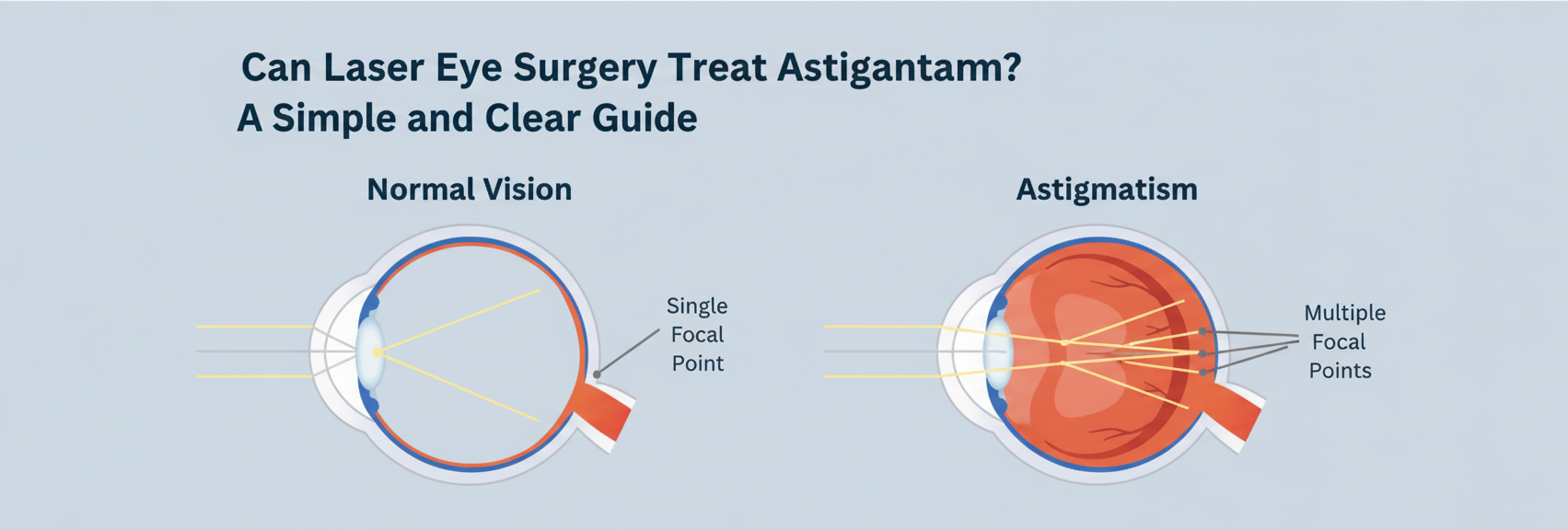
Astigmatism is a common eye condition. It happens when the cornea, which is the clear front surface of the eye, is not perfectly round. Instead of being shaped like a smooth ball, it is slightly oval. Because of this uneven shape, light does not focus properly on the retina, which leads to blurred or distorted vision.

Astigmatism can occur on its own or along with near-sightedness or far-sightedness. It can affect people of all ages and is usually diagnosed during a routine eye check-up.

What Are the Symptoms of Astigmatism?

People with astigmatism may experience:

  • Blurred or unclear vision at any distance
  • Headaches caused by eye fatigue
  • Difficulty seeing clearly at night
  • Squinting to see better
  • Eye strain or tired eyes, especially after screen use

Many people manage these symptoms with glasses or contact lenses. However, these options only correct vision temporarily and do not change the shape of the cornea.

How Is Astigmatism Diagnosed?

Astigmatism is usually detected during a routine eye check-up. An eye specialist checks how well your eyes focuses light.

Simple and painless tests are used, such as:

  • Vision test: Reading letters from a chart
  • Keratometry: Measuring the shape of the cornea
  • Corneal topography: Creating a detailed image of the cornea

These tests help determine how strong the astigmatism is and based on the results, the doctor recommends the best treatment, such as glasses, contact lenses or laser eye surgery

Can Laser Eye Surgery Correct Astigmatism?

Yes, laser eye surgery can correct astigmatism very effectively. The goal of the surgery is to reshape the cornea so that light enters the eye evenly and focuses clearly on the retina. Once this shape is corrected, vision becomes sharper and clearer.

For people with mild to moderate astigmatism, laser eye surgery can significantly reduce or even remove the need for glasses or contact lenses. Results are long-lasting and many patients achieve excellent vision after treatment.

Suitability for surgery depends on factors like corneal thickness, eye health, age and prescription stability. A detailed eye examination is always required before deciding on surgery.

What Are the Types of Laser Eye Surgery for Astigmatism?

There is no single procedure that suits everyone. Eye specialists choose the best procedure based on each patient’s eyes.

LASIK (Laser-Assisted in Situ Keratomileusis)

LASIK is one of the most commonly used laser eye surgery procedures. During the treatment, a thin flap is gently created on the cornea and a laser reshapes the tissue underneath to improve vision. It is best suited for people with mild to moderate astigmatism. One of the main advantages of LASIK is its quick recovery time and minimal discomfort after the procedure. However, the eye must have sufficient corneal thickness to safely undergo this treatment.

PRK (Photorefractive Keratectomy)

PRK is a type of laser eye surgery that reshapes the cornea without creating a flap. During the procedure, the surface layer of the cornea is removed and a laser reshapes the tissue beneath and then allowed to heal naturally over time. PRK is a good option for people with thin corneas or for those who are not suitable candidates for LASIK. It is a safe and effective treatment for many eye conditions, although the healing process may take a little longer compared to LASIK.

SMILE (Small Incision Lenticule Extraction)

SMILE is a newer and minimally invasive laser eye surgery procedure. It works by removing a small piece of corneal tissue through a tiny incision to improve vision. This procedure is suitable for certain cases of astigmatism and short-sightedness. SMILE offers benefits such as a smaller incision and stable visual results. However, it may not be suitable for all eye prescriptions. After a detailed eye examination, your eye surgeon will recommend the safest and most effective treatment option for your eyes.

Is Laser Eye Surgery Safe for Astigmatism?

Laser eye surgery is considered very safe when performed by experienced eye specialists using advanced procedures. Complications are rare and most patients recover smoothly with proper care and follow-up. Modern laser systems allow high precision and customized treatment, which improves both safety and results.

Life After Laser Eye Surgery

Most patients notice improved vision within a short time after surgery. Daily activities become easier and dependence on glasses or contact lenses reduces greatly. Regular follow-ups help ensure proper healing and long-term eye health.

Laser eye surgery corrects existing astigmatism permanently, but natural age-related changes in the eyes may still happen later in life. This is normal and not a failure of the surgery.

Why Book an Appointment at Ojas Eye Hospital in Mumbai?

Laser eye surgery can successfully correct astigmatism and offer clear, comfortable vision for many years. With the right diagnosis, the right procedure and expert care, life without glasses is truly possible.

Ojas Eye Hospital offers advanced and trusted eye care under the guidance of skilled and experienced eye surgeon in Mumbai. The hospital provides a wide range of services, including eye check-ups, advanced laser vision correction, cataract treatment and care for complex eye conditions. Visit now!

Clear vision starts with the right choice – See the world better with us.

Astigmatism May Affect Your Night Vision: Know Why And Its Management Options

Overview

Astigmatism or cylindrical power is referred to as a condition in which the shape of the cornea or the lens of the eyes become irregular in curvature. This condition prevents the light from focusing evenly on the retina of the eye. In the united states, about every 1 in 3 people are having this problem. This can cause blurry or distorted vision at night. This may result in difficulty in driving at night time. If you have been diagnosed with astigmatism, then there are options to treat it.

What Is Astigmatism?

Astigmatism or cylindrical power is a very common refractive error in which the eye of the person is affected. It can be defined as ovalisation of the shape of either cornea or the lenses in your eye. Because of the imperfection in the curvature of the cornea or lens, it may affect the process of focusing light. It can make your vision blurry and affect the ability to see clearly especially during nighttime.

What Are The Symptoms Of Astigmatism?

These are the symptoms of astigmatism:-

  • Difficulty in seeing at night.
  • Headaches.
  • The blurring of vision.
  • Eyestrain or feeling of discomfort in eyes
  • Squinting to see clearly during driving at night
  • Distortion in vision, especially at night

While the most common and noticeable symptom of astigmatism is blurring of vision at both long and short distances, for some people, the symptoms may not be that much disturbing during the daytime.

What Is The Effect Of Astigmatism On Night Vision?

If you are facing problems in seeing at night, for example, if you have noticed issues like halos around street lights or glare from the headlight of the upcoming vehicles, then that does not mean that you are suffering from astigmatism. At night or in other low light conditions, our pupil dilates and allows more lights to enter the eyes for seeing better. This increases the symptoms of astigmatism and may increase the blurring and night glares. Many other medical conditions like myopia, cataracts, and glaucoma can also lead to these kinds of symptoms.

Effect Of Astigmatism On Driving At Night

All outdoor light sources such as traffic lights, headlights, reflective traffic signal board, neon display boards and brake lights illuminate brightly. This is for the drivers to see clearly during the night. These lights are very important for maintaining safe driving conditions. These artificial lights may cause scattering  of light resulting in glare, haloes, starbursts.

Astigmatism may affect your driving in the following ways:-

  • Fuzzy light beam or glares.
  • Feel of need to squint to focus
  • Streaks of light beams or glares from the headlights of the vehicles
  • Increase of vision-related problems during rain.
  • Lights or other things may look blurry.
  • There may be halos present around the light source.

Treatment Options For Astigmatism Improving Night Vision

Astigmatism may affect your vision quality at night and can progressively get worse over time. Fortunately, several options are available for treating this medical condition. Some of them are listed below:-

  • Eyeglasses: Glasses are an effective way to correct astigmatism. This will help you to look in a better way. The lenses in eyeglasses can correct the other eye problems also.
  • Contact lenses: Contact lenses works in the same way eyeglasses do. They have to be worn every morning after a bath and removed before bedtime. There are many varieties of lenses available. You can choose from soft disposable lenses, hard gas permeable lenses, and extended wear lenses.

Conclusion

Astigmatism can cause blurry vision and can typically affect your seeing ability at night. If you are suffering from this condition, then you may notice that lights look fuzzy, streaky, and there may be the presence of halos around lights. All this may make your driving difficult at night. If you are having fuzzy vision or eyestrain problems, then you must visit an eye specialist.

Ojas Eye Hospital A Center of Excellence for Contoura Vision, Femto Bladefree Lasik in Mumbai, India.