Call us

+91-9240214610 (Bandra)
+91-9240214611 (Kandivali)

  • JAS-ANZ Accredited Certification
  • ICS Certified
  • NABH Certified Eye Hospital in Mumbai
Ojas Eye Hospital in Bandra, Kandivali, Mumbai

Tag: Causes of cataract

Best Cataract Surgery To Correct Cloudy Vision

Overview

A cataract is an eye disorder in which the normally clear lens of the eyes becomes cloudy. For people with a cataractous lens, seeing things feels like they are looking through a frosted or fogged-up window. Clouded vision can make reading and driving very difficult. It can be corrected by performing cataract surgery.

What Is Cataract Surgery?

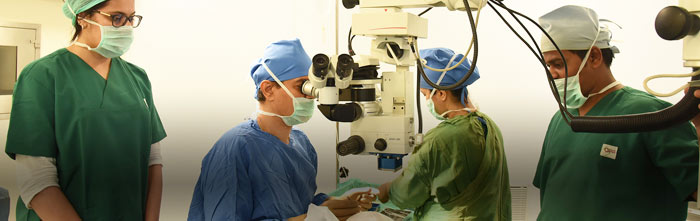
Cataract surgery is a surgical procedure used to treat the condition of cataract. In this surgery, the cloudy lens of the eye is removed with an advanced ultrasonic laser and replaced with a foldable artificial lens.

How Is Cataract Surgery Performed?

  • It is done as a day care procedure. It takes about 20 – 30 minutes to complete this surgery.
  • An eye drop is administered to your eye to dilate the pupil.
  • Topical anaesthesiai.e simple anaesthetic eye drops are used to numb the eye
  • In rare cases,  Local Anaesthesia may be used
  • General Anaesthesia is not required
  • An ultrasound probe is used to clean up and aspirate the cloudiness of the lens
  • Then the clouded lens is aspirated, and a new clear artificial lens is placed into the eyes.
  • This is a safe and painless procedure,

Surgical methods used to remove the cataract surgery are:-

  • Making a small incision in the eye and removing the cataractouslens in one piece: This is a less commonly used method. It requires a slightly larger ( 5.5mm ) incision. The lens is removed as a whole part through this incision. Only the outer capsule is removed, but the inner capsule is left in place. This inner capsule act as a support for the artificial lens to rest.
  • Using ultrasound energy for removing cataract: In this procedure, a micro (very tiny) opening is made into the eye. Aultrasound probe is inserted through this. Then, the cataract is broken using ultrasound, and then aspirated using the suction.

This being a microincision procedure, it requires no stitches or no injection.

What Are The Causes Of Cataract?

There are several reasons for the cause of cataracts:-

  • Age factor: People whose age is above 60 years are at a higher risk of getting cataracts.
  • Harmful UV rays: Vision can also be affected by overexposure to ultraviolet rays.
  • Blood sugar level: Cataract is more likely to affect the person with high or fluctuating sugar levels.
  • Eye injury: An eye injury is a serious problem. It can also trigger a cataract or even lead to vision loss.
  • Prolonged use of drugs: Cataracts may also be caused by prolonged prescription of some drugs and steroids.

When To See A Doctor For A Cataract?

You must see an eye doctor soon if you are experiencing any of the following symptoms:-

  • Double vision
  • Blurry vision
  • Impaired night vision
  • If you are experiencing halo around the light source
  • If you require to change your eyeglasses more frequently
  • If the colours seem to appear faded

Tips To Keep In Mind During The Recovery Phase

  • Always follow up as advised with your doctor after the surgery.
  • There is no requirement for eye patch after the surgery.
  • Protective glasses are advised to protect eyes from water and dust.
  • Your doctor will prescribe you some eye drops and some medicines to prevent the chances of infection after the surgery. These are mainly antibiotic and anti-inflammatory eyedrops.
  • Do not miss any follow-up appointments with the doctor. It is the most crucial part of taking care after surgery.
  • Avoid touching the eye.
  • You might feel a little bit of discomfort after surgery, do not worry.

How Can I Prevent Cataracts?

No studies to date have been proved to slow down the progression and prevent the cataract, but according to doctors, the following methods will be helpful in slowing down the onset of the cataract.

  • Quit smoking: Ask your doctor about how to quit smoking. Various medicines and counselling are available for it.
  • Have regular eye checkups: You should never skip an appointment for an eye checkup. A routine yearly eye examination is important as it can figure out the various eye problems initially.
  • Reduce the intake of alcohol: Excessive intake of alcohol can also trigger cataracts. Hence, reduce the intake of alcohol with immediate effect.
  • Wear sunglasses: Ultraviolet rays emitted by the sun can also trigger the cataract condition. Therefore, wearing sunglasses is beneficial in preventing cataracts.

What is a Cataract?

Iris implantation, Iris implant surgery, Best Eye Surgeon in Mumbai, Eye Hospital in Mumbai, Best Eye Hospital in Mumbai

Like a camera, the eye sees when light enters it. Inside your eye is a natural clear lens, much like the lens of a camera. It focuses the light rays coming through the pupil onto the retina at the back of the eye. The different parts of the retina collect this light and send a message to your brain, enabling you to see.

For perfect vision the lens should be clear so that light can pass through it. Light enters through the cornea, passes through your natural lens and is focused onto your retina, resulting in clear vision

When the lens becomes cloudy or opaque, light cannot pass through it. Cataract scatters the light rays passing through the eye, thus resulting in blurred vision. A cataract is a condition when the natural lens inside your eyes gets cloudy. Compared to vision with a clear lens, your vision with a cataract may look fuzzy, colors might be muted, and you may experience difficulty in reading signs while driving at night. The symptoms of cataracts are progressive and cannot be corrected with glasses or contacts. When symptoms become bothersome or limit your daily activities, it’s time to consider treatment.

What causes cataract?

The most common cause of cataract is degenerative changes due to the ageing process. With age, proteins in the natural lens degenerate, resulting in a clouded lens called a cataract. There might be other causes such as:

  • Health conditions like diabetes, kidney disease, glaucoma, smoking, eye injuries, infection, and inflammation inside the eye
  • Prolonged use of certain medications can also lead to cataract formation
  • Cataract may also occur in children due to genetic or metabolic defect or due to infection and trauma

What are the symptoms of cataract?

If you have cataract, you may experience some or all of the following symptoms.

  • Cloudy vision
  • Colors of objects may appear faded
  • Poor eyesight at night
  • Difficulty in driving at night, especially because of the glare of lights
  • Difficulty in reading in dim light
  • Colored haloes
  • You may see multiple images or double images

How can the cataract be removed?

In cataract surgery your natural clouded lens will be replaced by an artificial intraocular lens (IOL). This lens helps the incoming light rays to focus properly on your retina, thus enabling you to see clearly. Your new lens should be able to restore vision to nearly what it was earlier, though you may need to wear glasses for reading or driving.

The lens options include MONOFOCAL lenses – corrects distance vision, and bifocal lens – corrects distance and near vision and trifocal lens corrects distance, intermediate and near vision. In some cases when the shape of the eye is not circular resulting in distorted vision – a condition called as astigmatism,  an option of customized “toricmonofocal lenses” or “toric multifocal lenses” can be used.

What surgical techniques are available at ojas to remove the cataract?

OJas offers various advanced, cutting edge surgical techniques to treat cataract. Based on the type of cataract you have, your health condition and your lifestyle, the Ophthalmologist will recommend the best suitable option for you. The three commonly used surgical techniques are:-

Small Incision Cataract Surgery (SICS):

This is also a new technique where the cataract is removed manually through a slightly larger incision. This technique is used if your cataract is excessively hard, making phacoemulsification difficult.This is rarely used

Phacoemulsification:

  • In this method a tiny instrument is inserted through a small incision – (approximately 2.2 – 2.8 mm wide).
  • Ultrasound vibrations break the cataract into tiny pieces.
  • These pieces are gently suctioned out by vacuum.

Usually no stitches are required to close the incision. This minimally invasive surgery allows faster and safer healing, and you can return to your normal activities in no time.

Microincision Cataract Surgery ( MICS)

Phacoemulsification is carried out through an extremely small incision sized 1.8 mm. The primary advantage is extremely reliable and predictable outcomes  with fast healing.

Ojas Eye Hospital A Center of Excellence for Contoura Vision, Femto Bladefree Lasik in Mumbai, India.