

+91-9240214610 (Bandra)
+91-9240214611 (Kandivali)




March 4, 2026 | Author: Admin
Sunlight is a natural part of life. It helps our body make vitamin D, keeps our sleep cycle healthy, and lifts our mood. But too much sunlight, especially ultraviolet (UV) rays, can quietly harm our eyes over time. Many people protect their skin from the sun but forget that their eyes also need care. Understanding how UV rays affect your eyes and how to prevent your eye damage can help you maintain clear vision for years to come.
UV rays are invisible rays that come from the sun. They reach the earth even on cloudy, foggy, or rainy days. These rays can pass through clouds and reflect off surfaces like water, sand, roads and snow, this means your eyes are exposed more often.
Long-term exposure to UV rays can slowly damage different parts of the eye. This damage builds up over time and may lead to serious eye problems later in life.
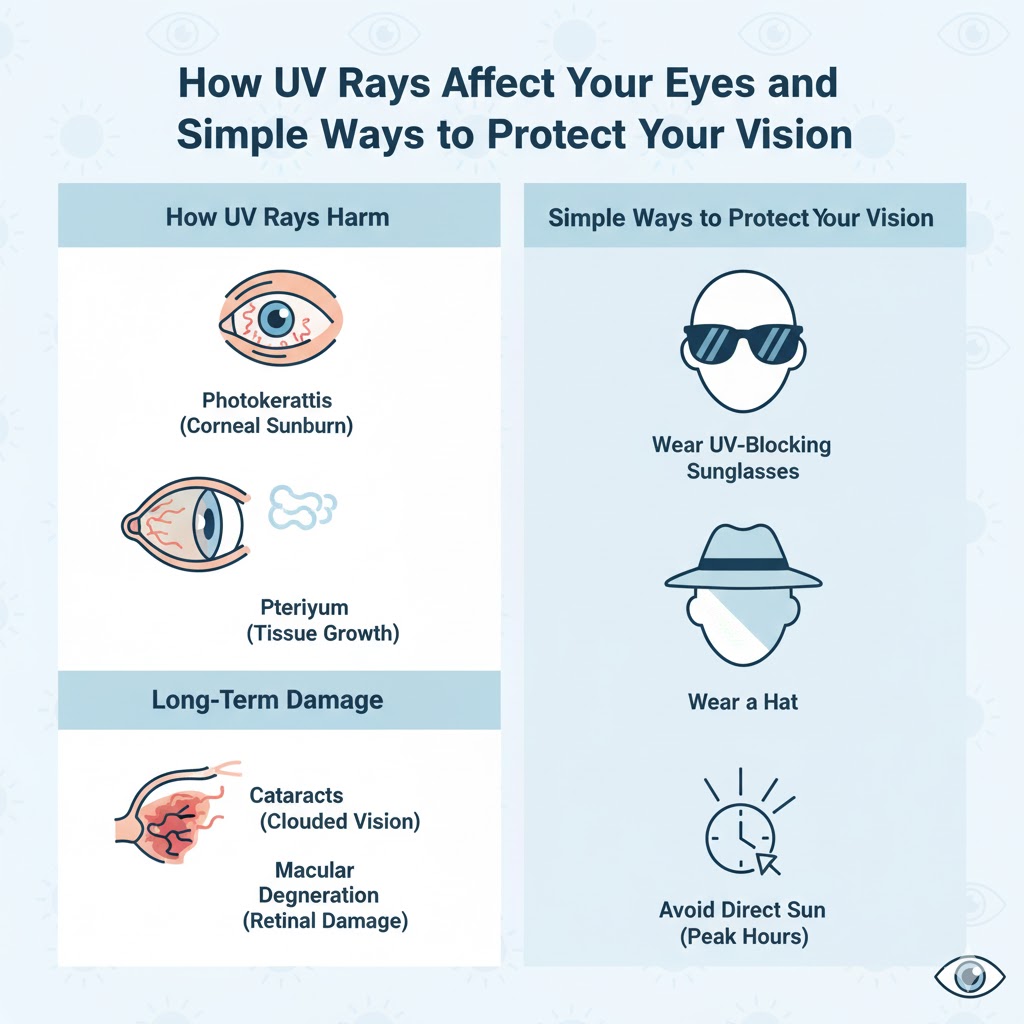
UV rays can affect almost every part of the eye, from the outer surface to the inner structures. Some of the most common problems caused by UV exposure include:
Cataracts develop when the natural lens of the eye becomes cloudy. This leads to blurred vision, glare and difficulty in seeing clearly. UV rays speed up this process by damaging the proteins inside the lens. Since this damage happens slowly, regular protection from a young age is important.
The macula is the central part of the retina that helps us see fine details, read, and recognize faces. Continuous UV exposure can damage this area, leading to age-related macular degeneration. This condition affects central vision and can interfere with daily activities.
Pterygium is a fleshy growth on the white part of the eye that can spread over the cornea. It is more common in people who spend a lot of time outdoors, such as farmers or those working near water. If it grows large, it can distort vision and may require surgery.
This is like a sunburn of the eye. It can happen after short but intense exposure to UV rays, such as sunlight reflected from water or snow. Symptoms include pain, redness, tearing and sensitivity to light.
UV rays also increase the risk of cancer on the eyelids, the surface of the eye and surrounding skin. In severe cases, these cancers can affect vision and may require extensive treatment.
Some early signs of UV-related eye damage include:
Regular eye check-ups can help detect these issues early and the treatments are more effective then.
Protecting your eyes from UV rays does not require complicated steps. Small daily habits can make a big difference.
Below are some easy and effective tips:
Remember, dark lenses alone do not mean better protection. Always check for proper UV protection labels.
UV damage often happens slowly and without pain in the early stages. A routine eye examination can detect early signs of cataracts, macular degeneration or surface growths. Early diagnosis allows timely treatment and helps preserve vision.
Ojas Eye Hospital is known for its patient-friendly approach, modern procedures and complete eye care services. From detailed eye check-ups to advanced treatments for cataracts, retinal disorders, corneal problems and refractive errors, the hospital offers complete solutions under one roof.
Patients trust the hospital for its experienced team, expert guidance and focus on long-term eye health. If you are looking for eye treatment at the best eye hospital in Mumbai, Ojas Eye Hospital stands as the trusted choice for safe and effective eye care.
Book your eye check-up today and give your vision the care it truly deserves.

