
+91-9240214610 (Bandra)
+91-9240214611 (Kandivali)



February 5, 2026 | Author: Admin
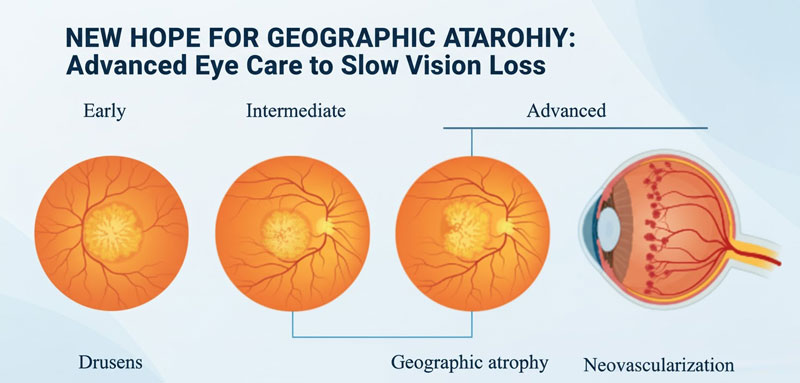
Geographic Atrophy (GA) is a serious eye condition that slowly damages central vision. It is an advanced form of age-related macular degeneration (AMD), usually seen in people above 60 years of age. GA affects the macula, the most sensitive part of the retina that helps us see fine details, read, recognize faces and drive. Over time, GA causes patches of retinal cells to die, leading to blurred or missing central vision.
For many years, people living with GA had no effective treatment to slow the disease. Doctors could only monitor the condition and help patients adapt to vision loss. Today, things are changing. New medical advancements have enabled better management of GA and improved the quality of life for patients.
In this article, we will discuss geographic atrophy, its causes and symptoms, the latest treatment options and how advanced eye care can help slow vision loss.
Geographic Atrophy develops slowly but steadily. The damage usually starts small but grows larger over time. As the affected area increases, daily tasks become more difficult.
Common symptoms include:
GA does not cause pain, but the vision loss can deeply affect independence and confidence.
One of the most important recent developments in GA care is SYFOVRE. This is the first approved treatment designed specifically to slow the progression of Geographic Atrophy.
SYFOVRE works on a part of the body’s immune system called the complement system. In GA, this system becomes overactive and damages healthy retinal cells. The medicine helps control this process, reducing further damage to the retina.
SYFOVRE is given as an injection into the eye at fixed intervals, either monthly or once every two months. While it does not bring back lost vision, it helps protect the remaining vision by slowing down the spread of damaged areas.
Clinical studies have shown that patients receiving this treatment experienced slower growth of GA lesions over time. This means vision is preserved for longer, allowing patients to maintain daily activities and independence.
The procedure is done in a clean, controlled clinical setting by a trained retina specialist in Mumbai. It is quick and usually well tolerated. Patients are monitored closely before and after each injection to ensure safety and comfort.
Possible side effects may include:
Rare but serious complications like retinal detachment and wet AMD can occur, whichrequire immediate medical attention.
Early diagnosis of GA plays a major role in treatment success. Regular eye check-ups help detect changes in the retina before vision loss becomes severe. Advanced imaging tests allow doctors to track disease progression and decide the right time to start treatment.
At Ojas Eye Hospital in Mumbai, the latest diagnostic methods and experienced specialists ensure earlydiagnosis and personalized treatment planning.
SYFOVRE is a major step forward, but research continues. Scientists are working on future treatments such as regenerative therapies, retinal cell repair, and advanced implants. These developments offer hope for even better vision care in the coming years.
Until then, timely treatment, regular monitoring, and lifestyle guidance remain the best way to manage GA effectively.
If you or a loved one is experiencing symptoms of macular degeneration or Geographic Atrophy, early care can make a real difference. Booking an appointment at Ojas Eye Hospital means choosing expertise, advanced treatments and care you can trust.
The hospital offers complete services for retinal diseases, macular degeneration, cataracts, glaucoma, LASIK and more – all under one roof. Under expert guidance from the best eye specialist in Mumbai, patients receive treatment based on global standards. Book your appointment today!
Protect your vision today – for every clear moment of life you deserve to live.

