
+91-9240214610 (Bandra)
+91-9240214611 (Kandivali)


December 9, 2025 | Author: Admin
If you are searching for clear vision without glasses or contact lenses, LASIK is one of the safest and most effective solutions available today. However, certain criteria must be met before undergoing LASIK, and corneal thickness is one of the most important. The cornea must have enough tissue to safely create a flap. If the remaining corneal bed measures less than 300 microns after the flap is made, LASIK is not considered a suitable option for that patient.
As the demand grows for the best LASIK eye surgery in Mumbai, understanding LASIK eligibility is essential before choosing the procedure. Not everyone qualifies, and the most important factors include age, prescription stability, corneal thickness and the overall health of your eyes.
This detailed article explains who can get LASIK, why corneal thickness plays an essential role, the power limitations for treatment and what options exist for patients with thin corneas. Whether you’re searching for the best LASIK specialist in Mumbai or exploring thin cornea LASIK in Mumbai, this article covers everything you need to know.
LASIK (Laser-Assisted In Situ Keratomileusis) is a highly accurate laser vision correction procedure that reshapes the cornea of the eye to correct refractive errors.
LASIK corrects refractive errors, such as:
During the LASIK eye surgery process:
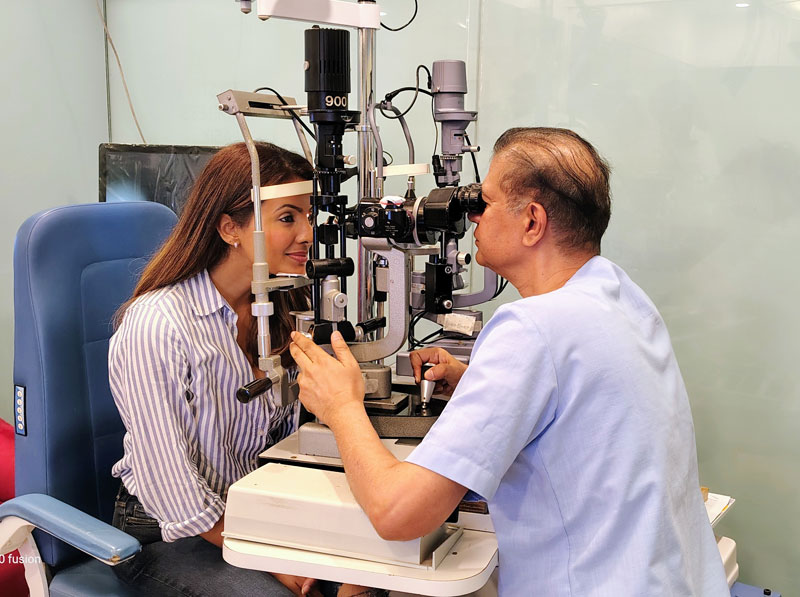
To determine whether you are a suitable candidate, your LASIK surgeon will evaluate several important parameters to assess your LASIK eligibility.
You must be at least 18 years or more in age and have had a stable prescription for 12 months. And after 40, you may need options like Presby LASIK or PRESBYOND for both distance and near vision.
Your refractive error should not have changed significantly in the past 6 to 12 months. Unstable power may lead to unpredictable results.
Corneal thickness is one of the most important factors in determining LASIK eligibility. If the cornea is thin or shows irregularity, the surgeon may suggest alternative procedures for safer vision correction.
You may not be eligible for LASIK if you have conditions such as keratoconus, severe dry eye, cataracts, glaucoma, uncontrolled diabetes, autoimmune disorders or corneal scarring.
Your general medical condition also influences LASIK eligibility. Some autoimmune disorders and specific medications can interfere with proper healing after the procedure.
LASIK effectively treats:
If your power exceeds these limits, alternative procedures such as may be recommended.
The cornea normally measures 540 – 560 microns and to qualify for LASIK, you usually need at least 485 microns of corneal thickness. Around 12 – 14 microns are removed per diopter of power correction. LASIK creates a corneal flap, reshapes the tissue and corrects issues like myopia, hyperopia and astigmatism.
Some people naturally have thin corneas, while others develop thinning due to eye rubbing, allergies or dryness. In such cases, safer alternatives like PRK or Phakic IOL implantation are preferred because they don’t require a corneal flap.
Many people think that having thin corneas means they can never get LASIK, but that isn’t true anymore. Thanks to modern eye surgery procedures, several safe and effective alternatives can still give excellent vision correction results.
Alternatives to LASIK for Thin Cornea Patients
PRK removes only the surface layer and reshapes the cornea without making a flap, making it ideal for thin corneas. Healing takes 3 – 5 days with temporary blur and discomfort, but vision results are similar to LASIK after a week.
SMILE uses a femtosecond laser to remove a tiny lenticule through a small incision. No flap, fewer nerve disruptions and faster recovery than PRK. It mainly treats myopia and simple astigmatism, not farsightedness.
A thin, biocompatible lens is placed behind the iris without touching the cornea, it is fully reversible and ideal for very high power or thin corneas. Since it’s an intraocular procedure, risks like infection, cataracts or increased eye pressure exist, so long-term follow-up is important.
LASIK is one of the safest and most effective vision correction procedures today, but only when performed on eligible candidates. Age, stable power, eye health and corneal thickness are the foundations of LASIK eligibility. If your corneas are thin or your power is high, advanced alternatives like PRK, SMILE or ICL ensure you still have excellent options for spectacle-free vision.
Ojas Eye Hospital is renowned for offering the best LASIK eye surgery in Mumbai with world-class technology, advanced diagnostics and the best LASIK eye surgeon in Mumbai. Whether you want the best LASIK or the top treatment for thin cornea LASIK in Mumbai, Ojas provides expert guidance and patient-centric care. With an expert team and state-of-the-art infrastructure, Ojas stands as the best LASIK eye hospital in Mumbai for laser vision correction.
Visit us to see the world with crystal-clear, glass-free vision.

