

+91-9240214610 (Bandra)
+91-9240214611 (Kandivali)



April 22, 2026 | Author: Admin
Many people dream of getting rid of glasses or contact lenses. But when you are told that your cornea is “too thin for LASIK,” it can feel disappointing and confusing. The good news is that a thin cornea does not mean you cannot have refractive eye surgery at all. With the right tests, experience and modern procedures, safe and effective options are still available.
At Ojas Eye Hospital, patients with thin corneas are carefully evaluated and offered personalized solutions that focus on safe and long-term eye health.
The cornea is the clear, dome-shaped front layer of the eye. It helps bend light so that images focus properly on the retina. Corneal thickness is measured in microns and naturally varies from person to person.
During refractive surgery, some amount of corneal tissue is reshaped or preserved depending on the procedure. If the cornea is already thin, removing too much tissue can weaken it. This may lead to problems like corneal bulging over time. That is why corneal thickness is one of the most important safety checks before any vision correction surgery.
A thin cornea is not a disease. It simply means that the surgical approach must be chosen carefully.
In traditional LASIK surgery, a thin flap is created on the cornea. A laser then reshapes the tissue underneath to correct vision. This process uses corneal tissue twice, once for the flap and once for the correction.
If the cornea is thin or the spectacle power is high, this can leave the cornea too weak after surgery. For this reason, the best eye surgeon in Mumbai usually avoid flap-based LASIK in thin cornea cases and recommend safer alternatives that preserve corneal strength.
Thanks to advances in eye care, several safe alternatives are now available for patients with thin corneas.
These procedures do not involve creating a corneal flap, which helps preserve more tissue.
ICL surgery takes a completely different approach. Instead of reshaping the cornea, a soft, flexible lens is placed inside the eye, behind the iris and in front of the natural lens. It is like a permanent contact lens placed inside the eye.This option is often recommended when laser procedures are not the safest choice.
Benefits of ICL for thin cornea include:
In selected cases, doctors may suggest customized surface treatments or combined approaches. If early corneal weakness is detected, corneal strengthening procedures may also be advised before or along with vision correction.Such decisions depend on high-qualityimaging and the surgeon’s experience.
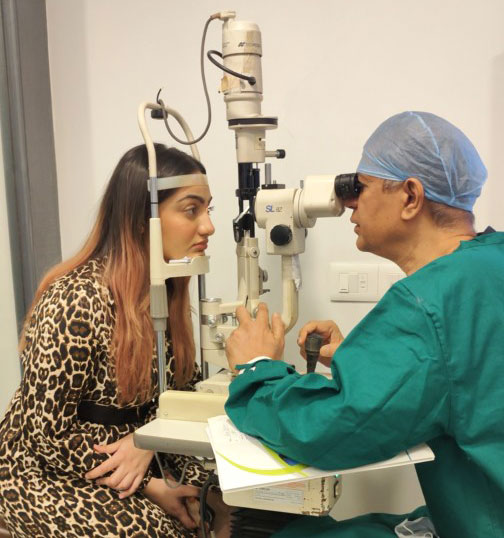
At Ojas Eye Hospital, the best eye hospital in Mumbai, thin cornea cases are assessed with great care. The evaluation usually includes:
Based on these findings, the doctor explains which option is safest and most effectiveor whether waiting is the best choice.
Recovery depends on the procedure chosen and the team provides clear instructions and regular follow-ups to ensure smooth healing.
When handled by experts, thin corneas can be treated safely for clear vision.Ojas Eye Hospital in Mumbai is trusted for its advanced approach and patient-focused care.
If you are searching for the best refractive eye surgery in Mumbai, Ojas Eye Hospital offers care you can rely on.
Because the right choice today protects your eyesight for years to come.

