
+91-9240214610 (Bandra)
+91-9240214611 (Kandivali)

February 9, 2026 | Author: Admin
Clear vision plays an essential role in our daily lives. From reading messages and working on screens to driving and recognizing faces, healthy eyesight supports almost everything we do. As we grow older or due to natural eye structure, many people notice changes in their vision. Two very common yet often confused eye conditions are hypermetropia and presbyopia.
Although both conditions affect near vision, they are not the same. Understanding the difference helps people seek the right treatment at the right time and avoid unnecessary discomfort.
In this article, we will discuss both conditions in detail, highlighting their differences, common symptoms, diagnostic methods and available treatment options.
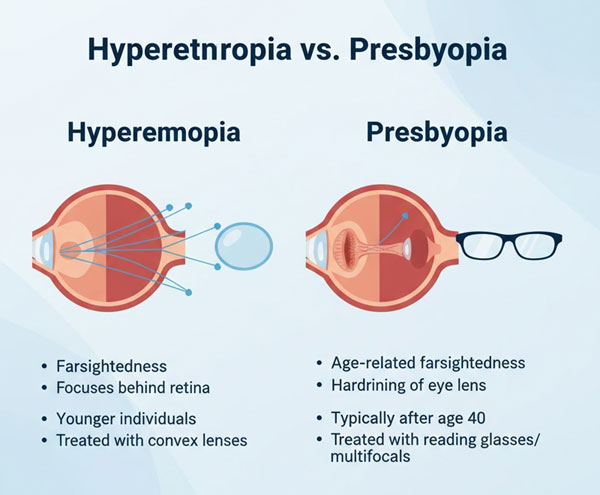
Hypermetropia, commonly known as farsightedness, is a vision condition where distant objects appear clearer than nearby ones. People with this condition may face difficulty while reading, using a phone or working on a computer, especially for long periods.
This situation happens because light entering the eye focuses behind the retina instead of directly on it. As a result, near objects appear blurred.
Hypermetropia is usually linked to:
Many children are born with mild hypermetropia. Young eyes can often adjust automatically, so symptoms may not appear early. However, as the eyes age, this ability reduces, making vision problems more noticeable.
Presbyopia is a common vision change that comes with age, usually starting after 40. It affects everyone at some point in life. With presbyopia, the eye slowly loses its ability to focus on close objects.
Unlike hypermetropia, it is not related to eye shape. It happens because the eye’s natural lens becomes:
This makes reading small print, using a phone or doing close work difficult. Holding reading material farther away is often the first noticeable sign. Presbyopia is not a disease – it is a normal part of aging.
Yes. A person can have hypermetropia from a young age and later develop presbyopia. When both conditions occur together, near vision becomes more challenging and often requires specialized corrective lenses.
Hypermetropia is related to the structure of the eye and can appear in childhood or early adulthood. Presbyopia is linked to aging of the eye lens and usually starts after 40.
Both affect near vision, but their causes, progression and treatment approaches are different. An eye specialist can easily identify the condition through a detailed eye examination.
Symptoms of Hypermetropia may include:
Symptoms of Presbyopia often include:
Both conditions are diagnosed through a routine eye check-up, which may include:
A proper diagnosis ensures the right treatment and prevents unnecessary strain on the eyes.
Treatment depends on severity and lifestyle needs. Options include:
Presbyopia cannot be avoided, but it can be managed well with the following options:
While lifestyle cannot cure these conditions, healthy habits can reduce discomfort:
Ignoring vision changes can affect work, learning and overall quality of life. Early diagnosis allows simple and effective solutions before problems worsen.
At Ojas Eye Hospital, patients receive advanced eye care under experienced specialists using modern diagnostic tools and personalized treatment plans. The hospital is recognized as thebest eye hospital in Mumbai, offering trusted care for all age groups.
With expert doctors, advanced procedures and patient-focused care, Ojas is home to the best eye specialist in Mumbai, ensuring early diagnosis and safe treatment for every vision concern.
Whether you’re experiencing blurred near vision, eye strain or age-related vision changes, timely consultation can make a lasting difference. Ojas Eye Hospital provides – complete eye examinations, advanced vision correction options, personalized treatment plans and trusted expertise. Book your appointment now!
Clear vision starts with the right diagnosis and timely care.

