

+91-9240214610 (Bandra)
+91-9240214611 (Kandivali)




September 10, 2026 | Author: Admin
Red eyes are common and can happen to anyone. Sometimes the reason is as simple as tired or dry eyes. At other times, redness may be linked to an infection, allergy or another eye problem.
So, when should you actually see a doctor? In many mild cases, the redness settles on its own. But if it continues or comes with other symptoms, it is better not to ignore it. If you can recognize the warning signs you can get the right treatment at the right time.
Red eye usually happens when the small blood vessels on the surface of the eye become enlarged and more visible. It may involve one or both eyes.
The normal reasons are:
This is why the cause of red eye matters. The same symptom can have very different reasons behind it.
A mild red eye may improve within a few days. However, you should consult an eye doctor if you notice any of below symptoms:
If your vision becomes blurred, doubled or reduced, seek medical attention promptly. Vision changes along with a red eye are important warning signs.
A thick yellow or green discharge may occur with bacterial conjunctivitis. Depending on the cause, prescription eye drops or ointments may be needed.
Redness along with strong or intense pain should not be ignored. It can sometimes indicate a more serious eye condition and needs expert diagnosis.
If your eye remains red for few days, despite you doing the basic home care, it is worth getting it checked. Persistent or repeated irritation should not be just ignored.
Sudden sensitivity to normal light or pain from normal light can be caused by inflammation or infection. An eye check-up will help determine the cause.
If you have existing conditions like diabetes or autoimmune disorders, be more cautious if you develop red eyes. Medical advice can rule out possible complications.
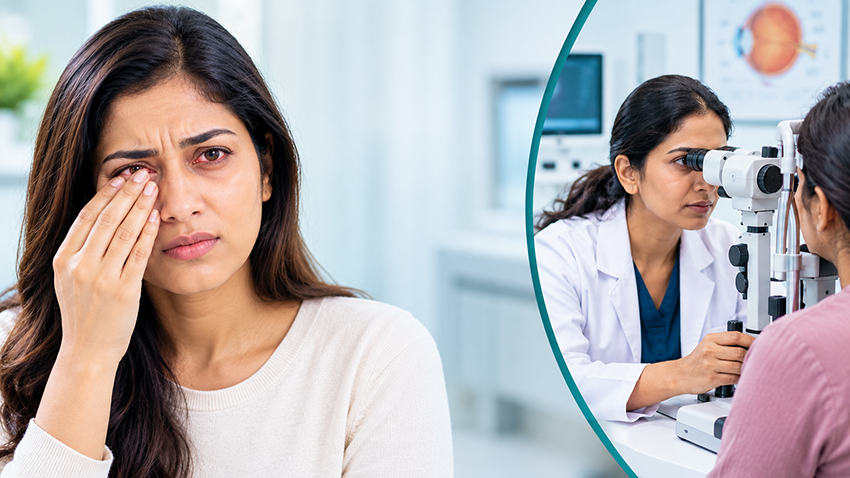
When you visit an eye doctor, they usually try to understand your symptoms. The doctor may ask when the redness started and if you have pain, itching or discharge or changes in vision. After that, you may be tested on an eye chart for your vision. The doctor may also look at the eyelids and the surface of the eye for swelling, irritation or discharge or foreign object.
A slit-lamp exam may be done to closely look at the cornea and iris and other parts of the eye. Sometimes a yellow dye called fluorescein is put in the eye to look for scratches or other damage to the surface of the eye. Depending on what the doctor suspects, other tests such as eye-pressure measurement, allergy testing or a sample of eye discharge may be recommended.
There isn’t one treatment for every red eye. How it is handled depends on why it is red. Viral conjunctivitis is treated with artificial tears, cold compresses and rest. Bacterial conjunctivitis may be treated with antibiotic eye drops or ointment. Medicines such as antihistamines or other prescribed eye drops may be needed for allergy-related redness. Lubricating drops or ointments may be helpful for dry eyes. Hence it is better to know what causes the redness, rather than to treat the redness itself.
Some everyday habits can help reduce the chances of eye irritation.
If your red eye doesn’t go away, is painful or is affecting your vision, see an eye specialist to check it out. Your eye doctor can tell you what is causing your red eye and what treatment will help you. Ojas Maxivision Eye Hospital is an eye hospital in Mumbai with branches in Bandra (West), Kandivali (East) and Juhu. The hospital’s team includes ophthalmologists and eye surgeons across areas such as cornea, cataract, glaucoma, retina and paediatric ophthalmology.
A red eye can be a minor irritation or something that requires further treatment, an eye exam at Ojas Maxivision can help determine the cause and the need for further treatment.
Red eyes may seem like a small problem, but don’t wait – get your eyes checked.

